ecosystem-guides
....exploring the planet's ecosystems
INDO-PACIFIC
Tropical Sandy Seashore
Like any ecosystem, the tropical seashores include a distinct range of specific plants and animals. However, because of the wide distribution ability of marine, intertidal and island organisms, many of these same seashore flora and fauna species are found all around a huge part of the planet.
The seashore itself can be mudflats, a rocky shore, or the classic sandy beach. This very narrow habitat is adjacent to a rich array of other habitats around the world. In the shallow warm water just off the beach are Sea Grass beds. If you are lucky there can also be patches of Coral Reefs. Salt tolerant mangroves communities start to grow on the edge of the ocean (different regions are covered in Australasian Mangroves and Indo-Malayan Mangroves and Neotropical Mangroves and Afrotropical Mangroves). Above the land plants the littoral forest transitions into other forests. In wetter areas in Australasia it turns into Australasian lowland rainforest and in South America, the Neotropical lowland jungle. On the seasonally wet coast in east Africa there is African Monsoon forest.
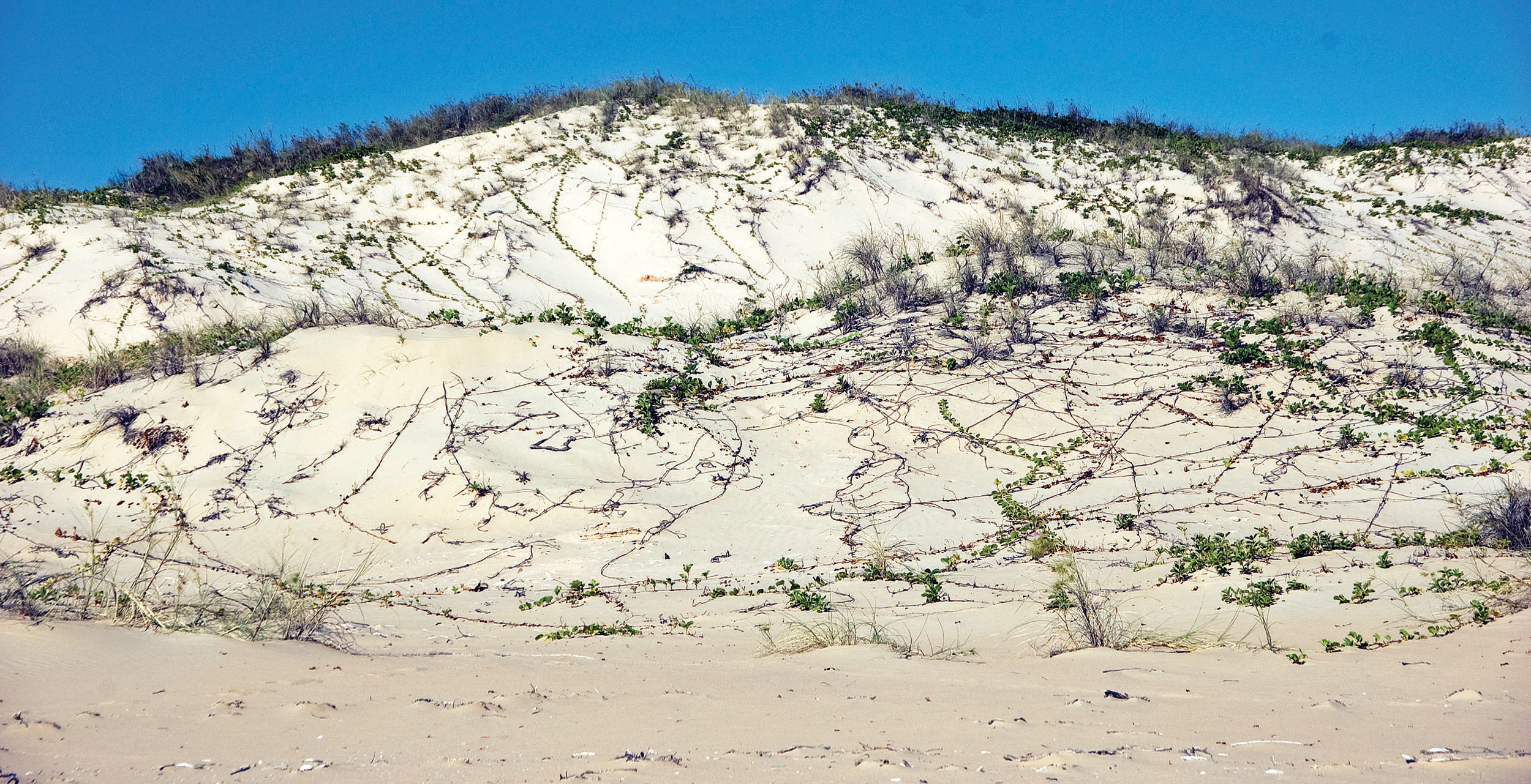
The long white sandy beach is the image many visitors often have of the tropical seashore. The reality is somewhat different. There are many different types of sands and beaches. On the more typical large grained beaches of the tropics, the soft sand is often interspersed with sharp coral. On some beaches it may in fact be made up entirely of coral. Tropical beaches are not all that conducive for obvious life. They are exposed and therefore hot. Their shifting substrate of sand in the intertidal area means they are bare of large plants (if plants do colonize the beach, it may develop into a mangrove). Many of the larger animals that are seen here are just occasional visitors, such as some shore birds or breeding sea- birds. The obvious resident animals are often scavengers that wait for debris to wash up from the adjacent ocean, such as ghost crabs. But there is also a range of smaller animals at the surface of the sand, and an even larger range of tiny microscopic animals just underneath.
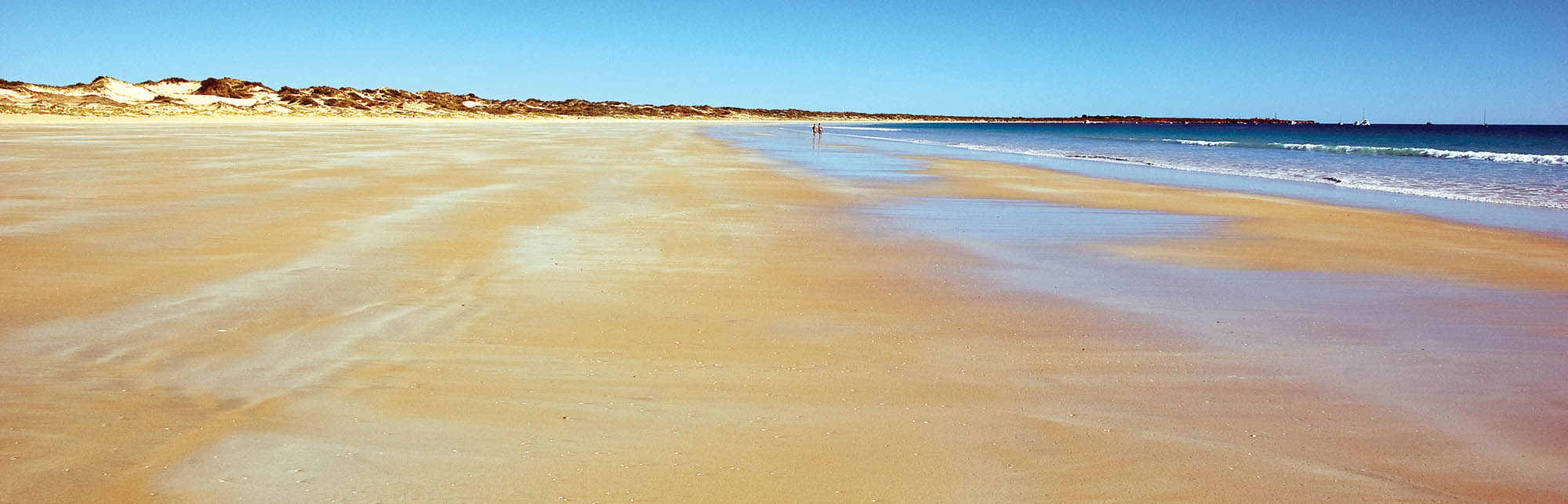 (sandy intertidal area along Cable Beach, West Australia)
There are over 1500 species of ‘brown seaweed’ in the Class Phaeophyceae. As suggested by the common name they are frequently coloured browns and yellows. They have pigments that can photosynthesize in much lower light, and tend to live in deeper waters. Many types of brown seaweed have air-filled, grape-like floats which enable the plant to stay at the surface with the moving tide. Sargassum includes the very few "free-floating" seaweeds. They float around the warmer waters around the world, and are probably the most commonly seen group of seaweeds in tropical water. Because many species are not attached, they commonly wash up on tropical shores (image below).
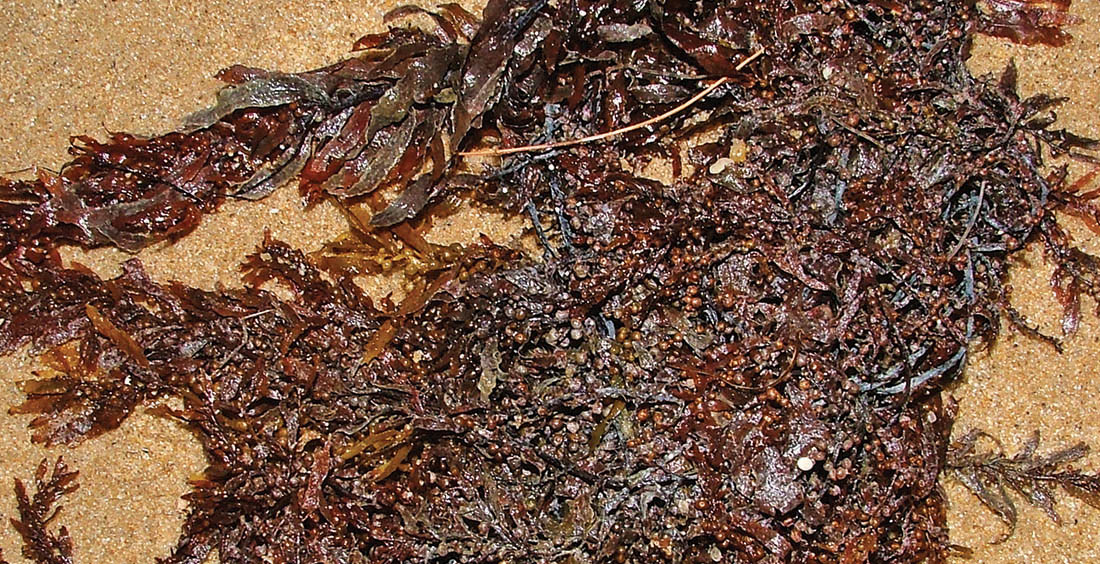 (Cairns, Australia)
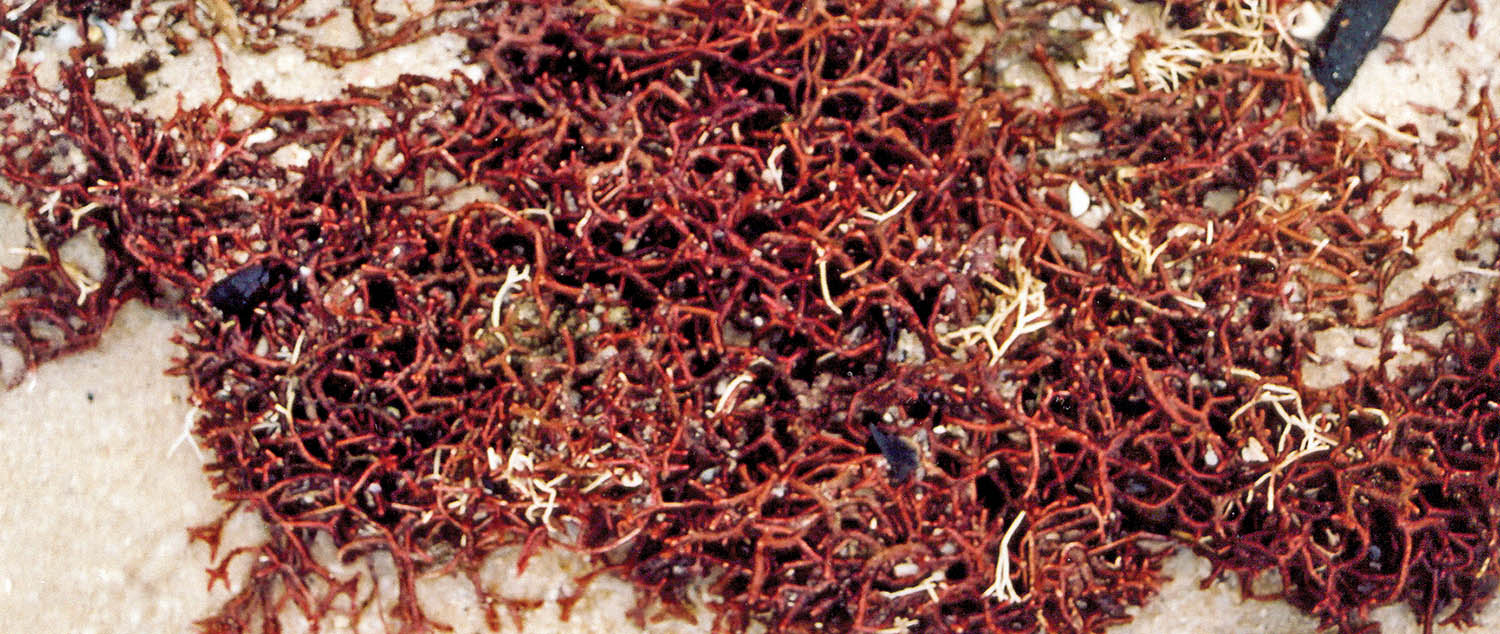
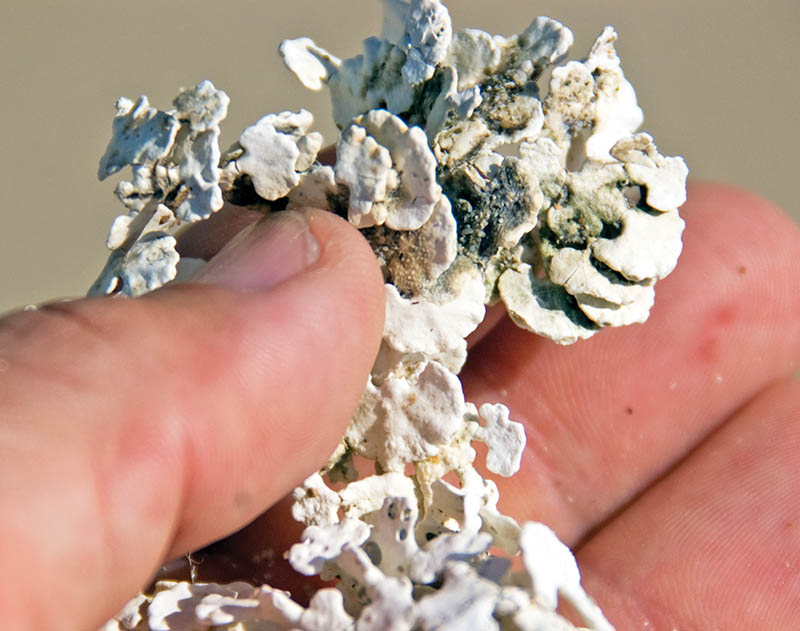
The 4000 or so different species in this newly erected group within the plant kingdom, the division Rhodophyta, the ‘Red Algae’, or commonly known as ‘red seaweeds’. They by far outnumber the brown algae and green seaweeds. Because there are many species of red algae living in warmer seas, they commonly wash ashore on the tropical seashore. Species in the family Galaxauraceae can have dichotomous branching, looking like multiple little stems on a shrub. When washed ashore, red algae often retain attractive red or pink colours. But many will have white; this is from calcification. Because of this, they may remain stiff and solid after being washed up. But they tend to go brittle, and if the joints are not calcified, the plant may fall into a tangled mess (image below)
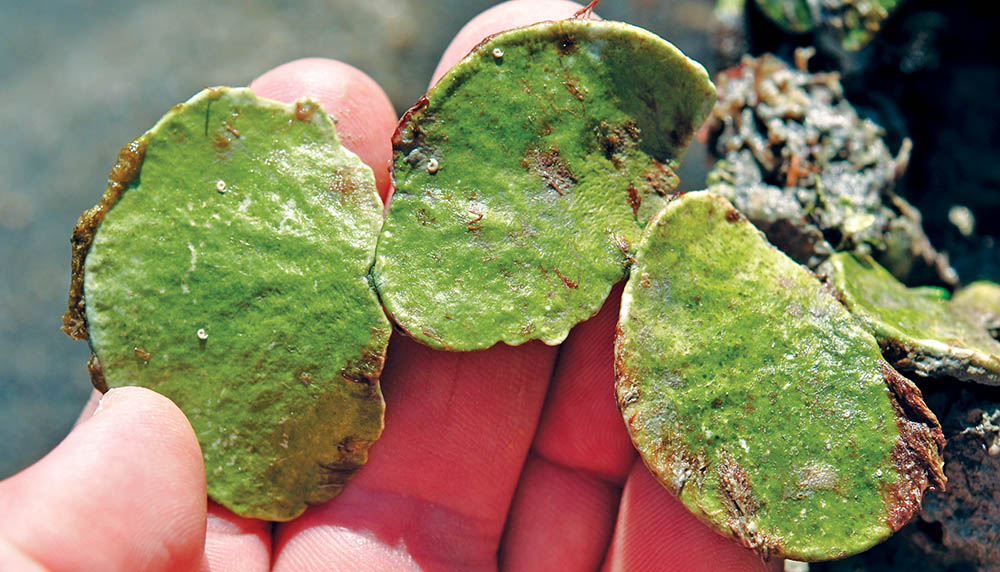
The Green Algae are the most familiar of all seaweeds, and commonly found on seashores around the world. As the name suggests, they tend to be green, but this doesn’t do their range justice, for they occur from deep dark green to bright light green. This green colour is caused by chlorophyll, the same pigment that land plants have. The species in the group Halimeda are one of the more common seaweeds on coral reefs (image below at left), and therefore are regularly washed up on adjacent tropical seashores. They are distinct, being made up of many flattened round or square shapes joined together in chains or fanned clumps. Their most important feature is the calcified stiffness of these tiny ‘leaves’. When they wash up, they will bleach to white (image below at right), and when they break down they contribute greatly to the sand of the softer whiter beaches. Even Anakin likes that sand.
Just above the intertidal area, there is a narrow zone of specific vegetation communities. There are various plants that have adapted to the life on the tropical seashore. These plants are characteristic of the shore, and most species do not grow too far into the forest or woodlands behind it (although there are often closely related species). They are usually technically referred to as littoral plants. But they are often commonly called ‘beach’ or ‘island’ plants.
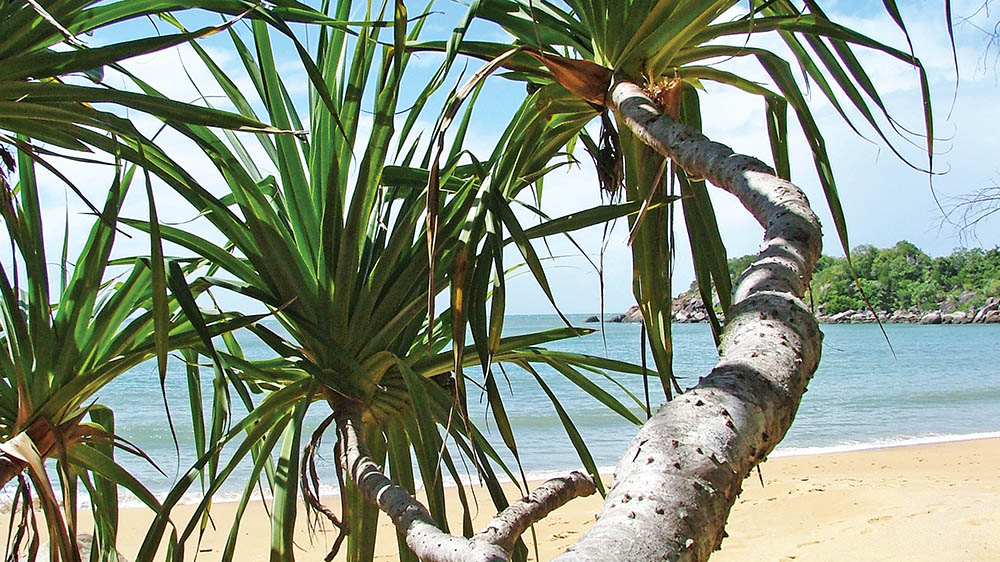 (Hinchinbrook Island, Australia)
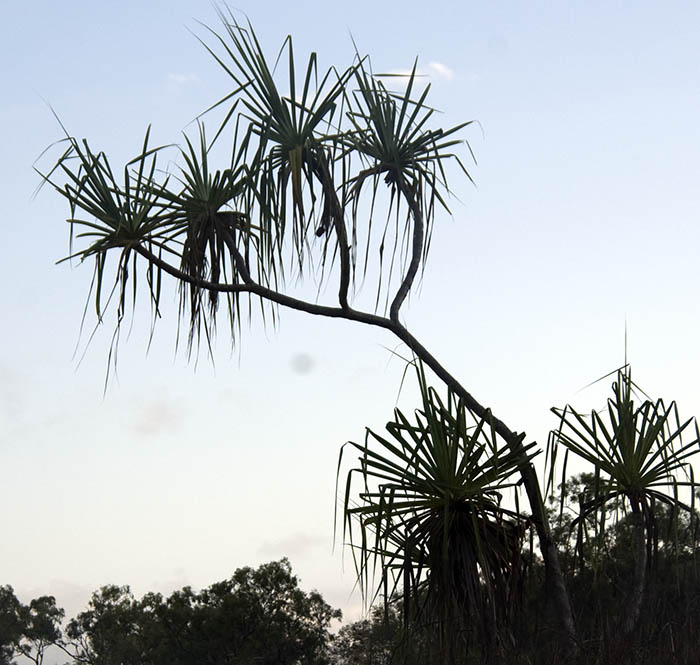
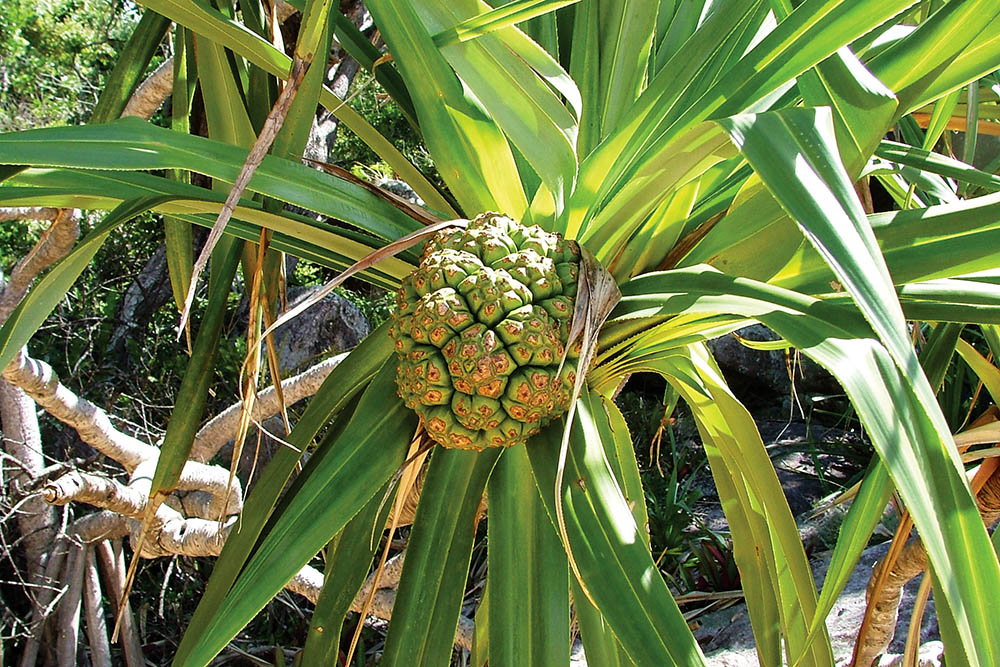
Pandanus are one of the most distinctive and common plants along tropical coasts. They grow slim, almost spindly trunks, superficially rather like a palm, to which they are not closely related. The long strap-like leaves have spines along the edge, and when they fall they persist for some time, making them ideal material for thatching. The fruits that develop are large and aggregate, almost pineapple like, made up of segments that drop to the ground when ripe. Each segment holds a kernel which can apparently be extracted and tastes ‘deliciously nutty’; but good luck trying to open them up! When the segments wash up later on shore, they are brown, and the fibrous end looks rather like a shaving brush.
With at least 2,500 species of what we call ‘Palms’, the Arecaceae is one of the biggest and most recognizable of plant families. Only a few species are common on the sandy shores, but among them is the most famous of palms, and indeed the best known and most recognizable of all tropical beach plants, the Coconut. There is only one species in the genus Cocos: the Coconut.
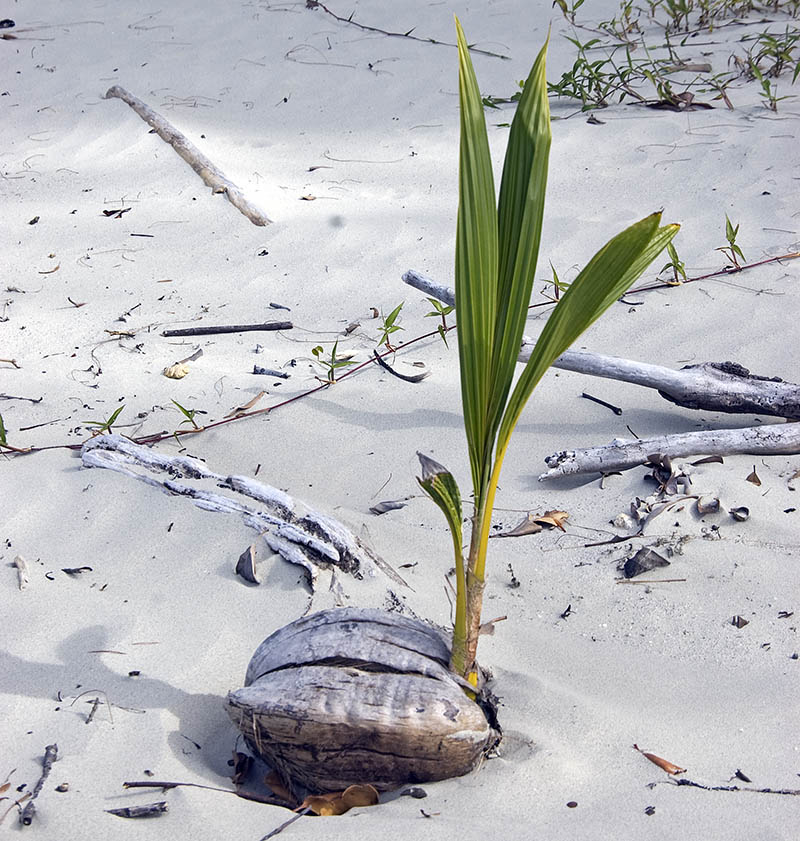
No other plant represents the tropical seashore like the coconut. However, the natural distribution of the coconut palm is an issue of contention, for not only is it a naturally effective disperser, but it has also been spread extensively by humans. It was long noted by European explorers throughout much of the tropical Pacific Ocean, including all the way to the west coast of Coast Rica in Central America; however it is thought to have been introduced into many of these areas. Its original, natural range appears to be centred around the eastern Indian Ocean and south-east Asia.
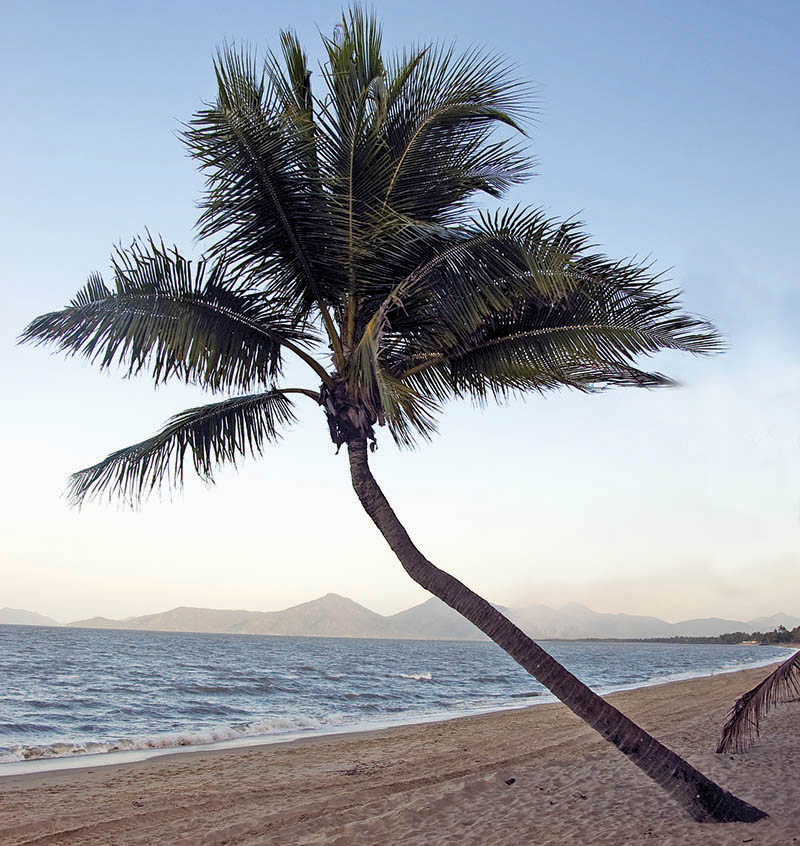 (Holloways Beach, Australia)
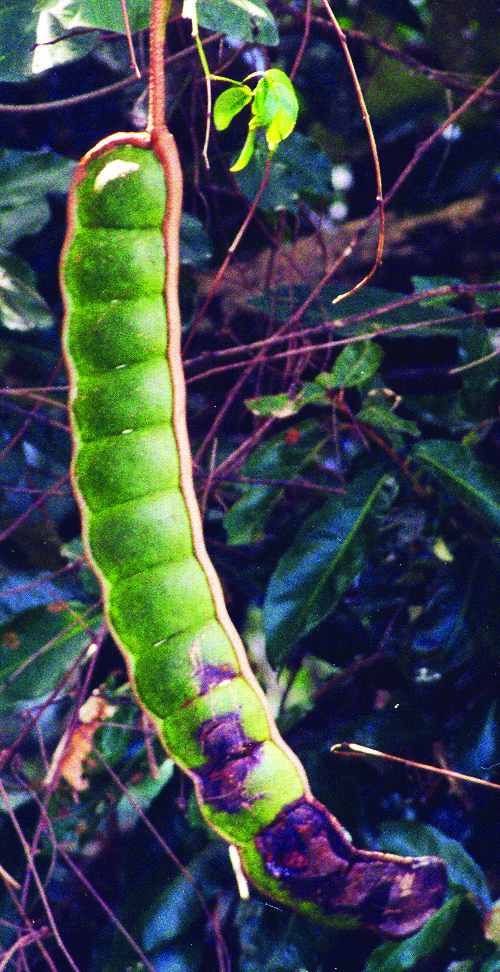
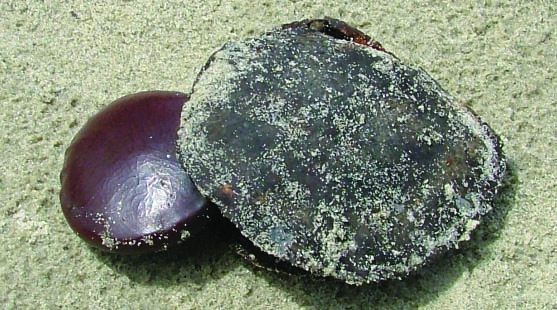
There are 30 species in this genus Entada, and they are widespread throughout the tropics of the world. The woody vines can become quite thick, and with age Entada phaseoloides develops a very distinctive series of sharp-edged twists. The enormous pods go from green to brown, then drop out, leaving an empty border. The pods and the large dark brown seeds are dispersed by the ocean, and therefore frequently wash up on beaches, especially in the wetter tropical areas. They then germinate all over the tropical Indo-Pacific, from eastern Africa, through tropical Asia, and across tropical Australia.
The Canavalia rosea, ‘Sea Bean’ is a prostrate crawler (no, not a prostate crawler) along tropical beaches. It has bright pink pea flowers and a green pea-like seed pod. Along with the 'Goats Foot Ipomea', this is one of the most common creepers along the sandy tropical shores of Australia. Found throughout the tropical Indo-Pacific.
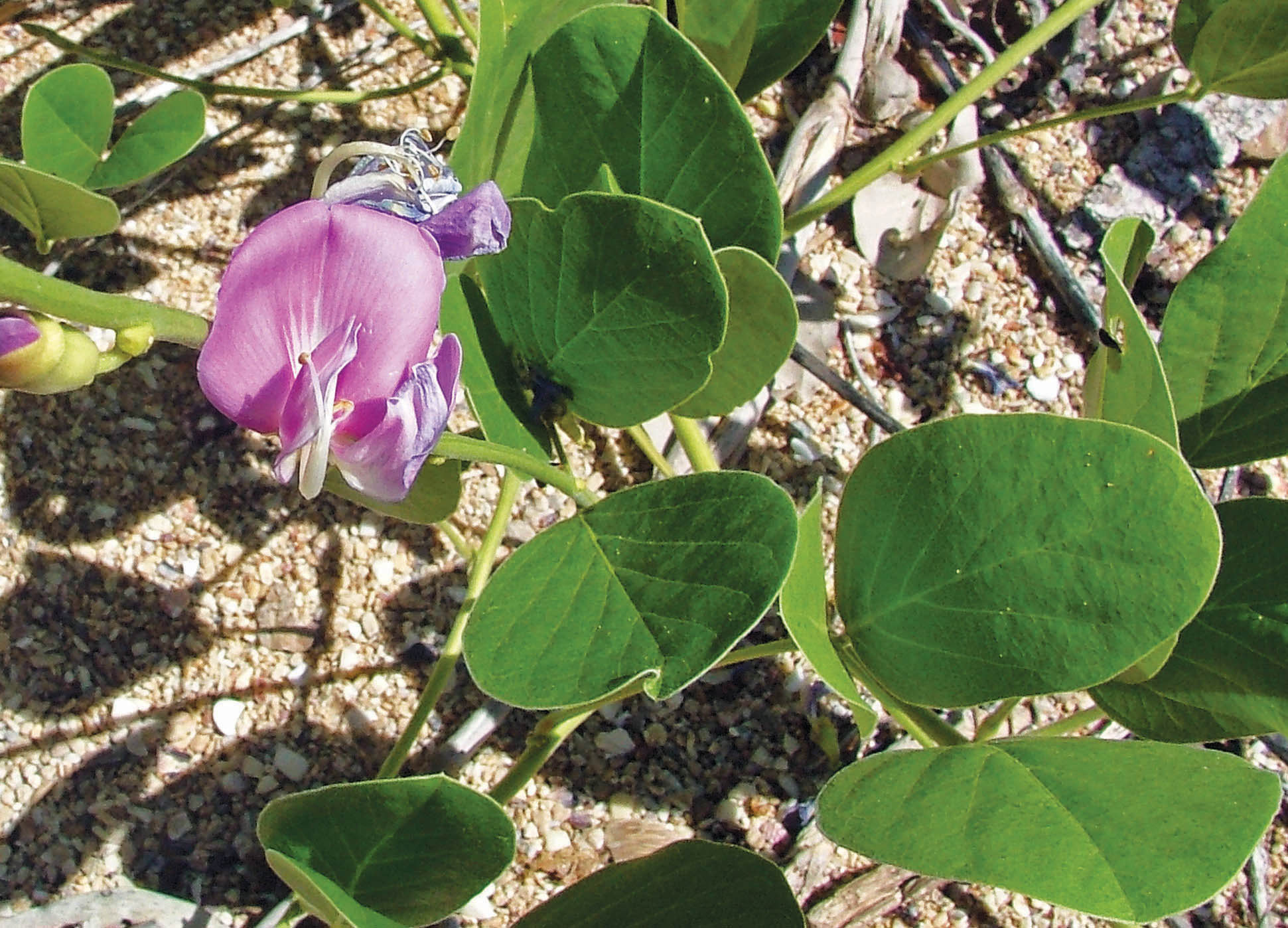 (KImberley coast, Australia)
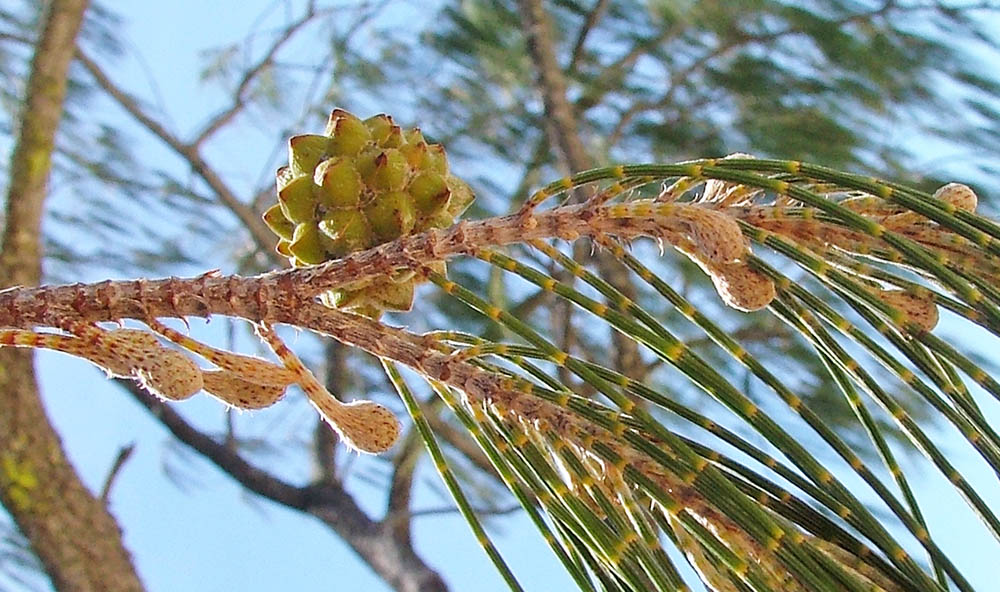
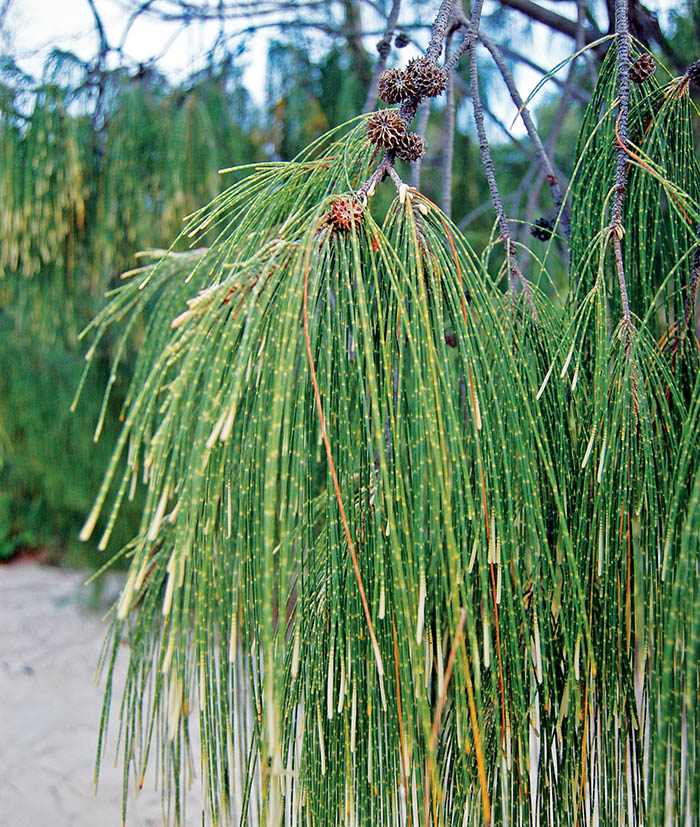
The family Casuarinaceae contains the ‘she-oaks’, a group confined mainly to sandy soils across Australia, from rivers to woodlands to deserts. However, one species is widespread, being found along tropical coastlines around Australia, through South-east Asia, and out into the Pacific - the Casuarina equisetifolia, ‘Beach Casuarina’, ‘Coastal She-oak’. It grows to a large tree and is often one of the first trees to colonize the sandy beach. The flowers are tiny. They are followed by small, spiky, hard fruits (image below). When the wind blows through their foliage they produce a wonderful sigh that is perfect to lay down under on a tropical day.
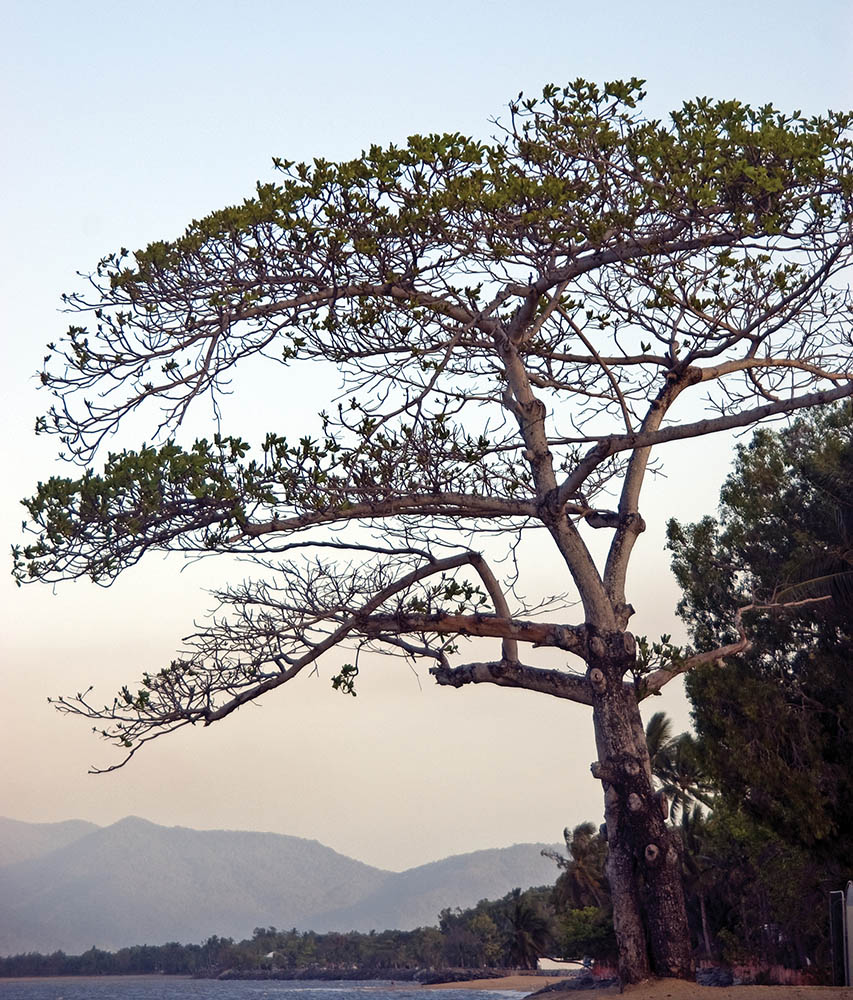
Along the wetter tropical beaches grows Terminalia catappa, the ‘Beach Almond’. It is a wide tree, with layered ‘pagoda’ branches. It has large leaves, widening at end, and growing from end of branch. The leaves go red before falling off, so there are usually many bright red leaves present. The large, canoe-shaped fruits ripen from green to blue-purple and are often seen littering ground along tropical coasts. It grows naturally along the tropical coasts of Australia and Asia, where the wide canopy and large leaves provide much better shade than the wispy Casuarinas and thin leaves of Paperbarks that share the same habitat. It has been planted extensively along coasts all around the world.
 Fruits of Terminalia (Cairns, Australia)
The two following similar looking species are among the most common plants along the tropical Indo-Pacific seashore: Thespesia populnea and Hibiscus tiliaceus. Both species occur in the same beachside habitat, and have similar heart shaped leaves and large flowers with overlapping petals. However, leaves of the Hibiscus are paler underneath and much more developed lobes, and the flowers have protruding red tips from the top of the central column, which Thespesia lacks.
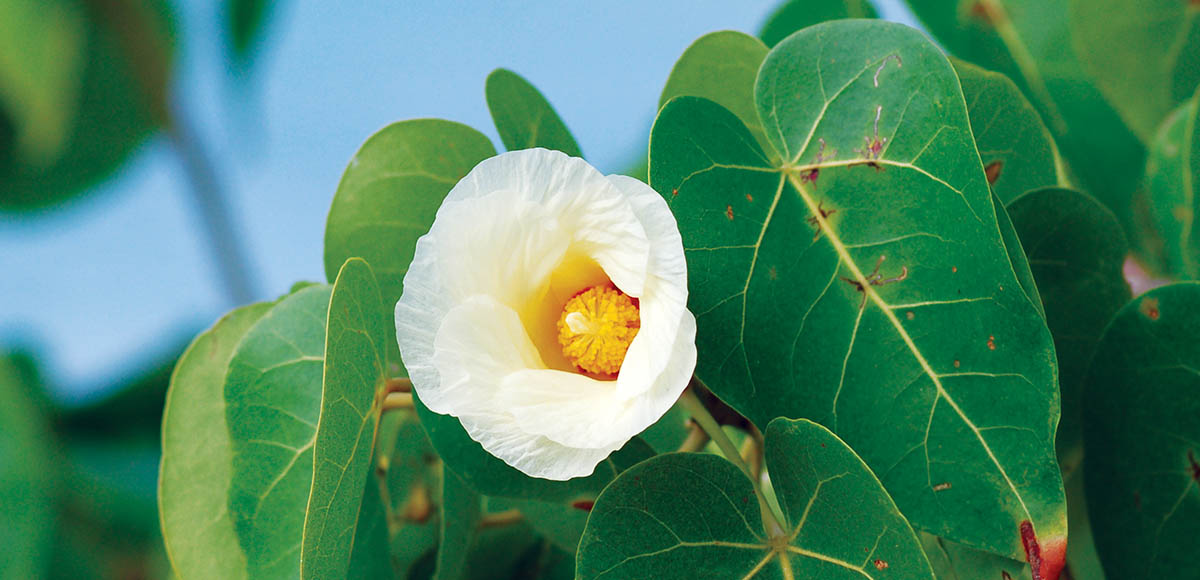 Thespesia populneoides, (Australia)
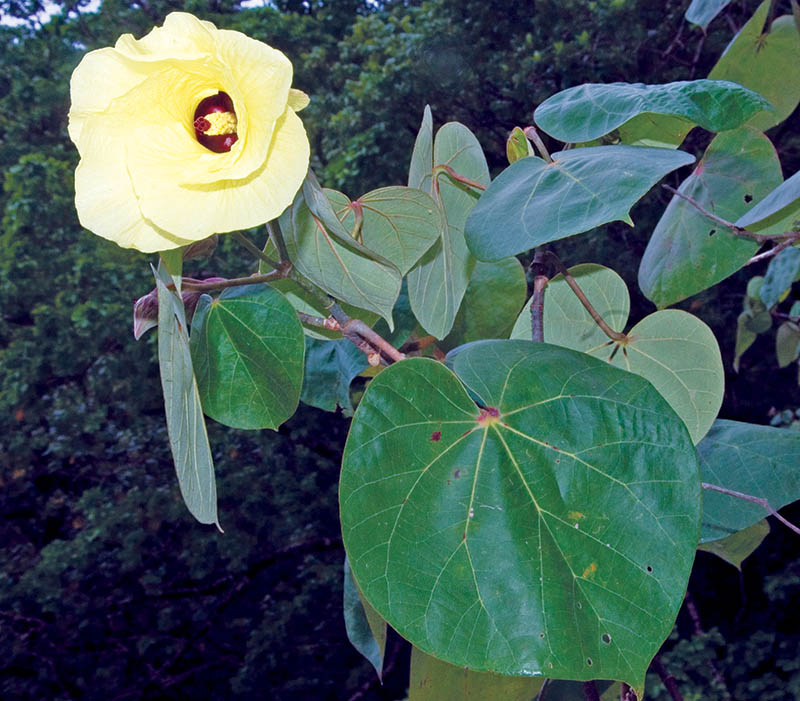 Hibiscus tiliaceus, (Cape Tribulation, Australia)
The genus Pisonia contains over 20 species found throughout the tropics of the world. The fruits in these plants produce exudate, and thus stick to animals to aid dispersal. This results in a strange ‘relationship’ between the some coastal species and seabirds. Birds such as Black Noddies nest in the branches of Pisonia trees, using the large leaves as nesting material. But they may become covered in the sticky fruits, which aids the tree in dispersing its seeds; however, the bird may get so stuck it can’t fly. It is thought the dying bird then provides some nutrients for the seedling to grow within. These bizarre circumstances gives rise to various names such as ‘Bird-trapping tree’ or ‘Bird Lime Tree’.
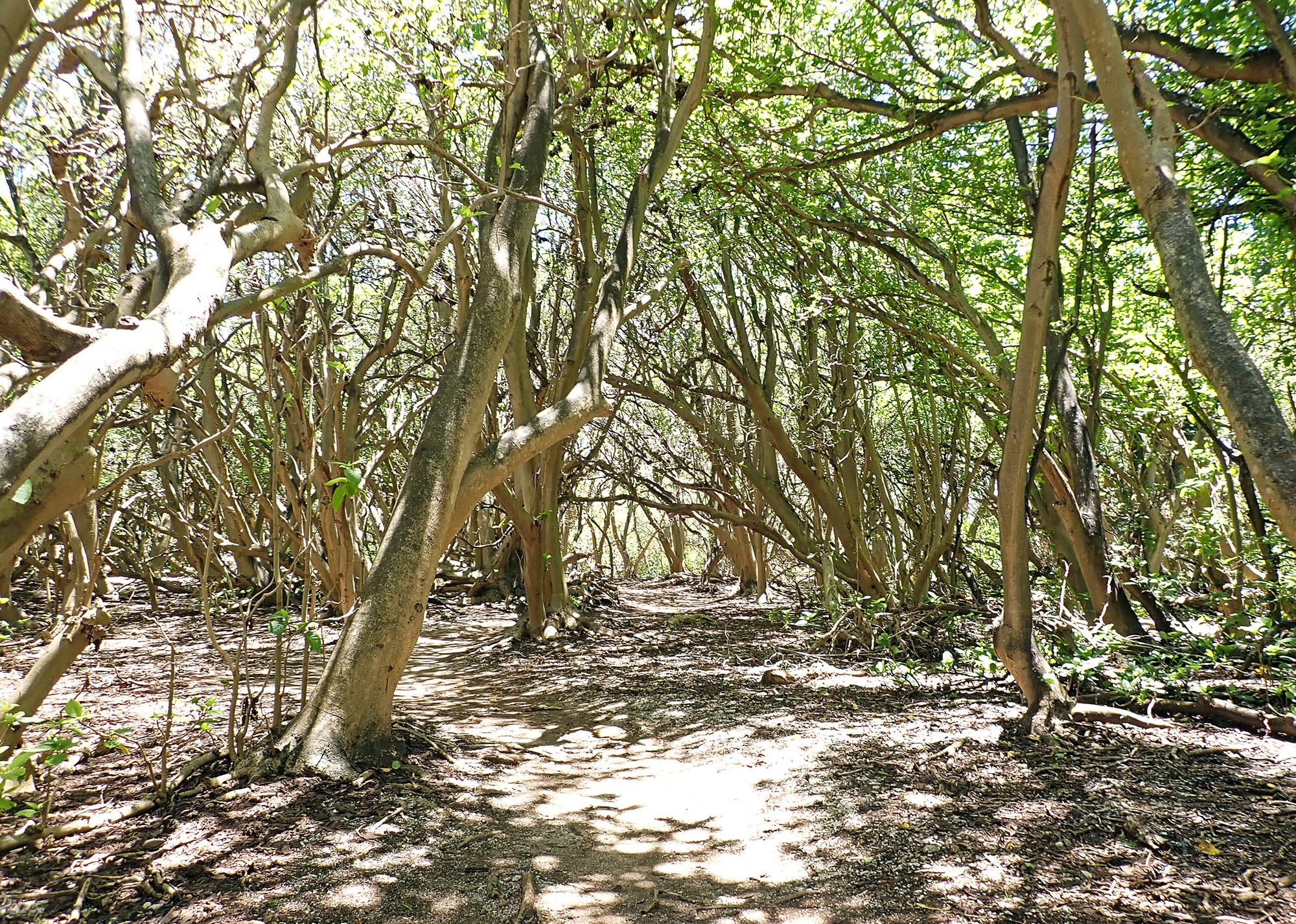 (Lady Musgrave Island)
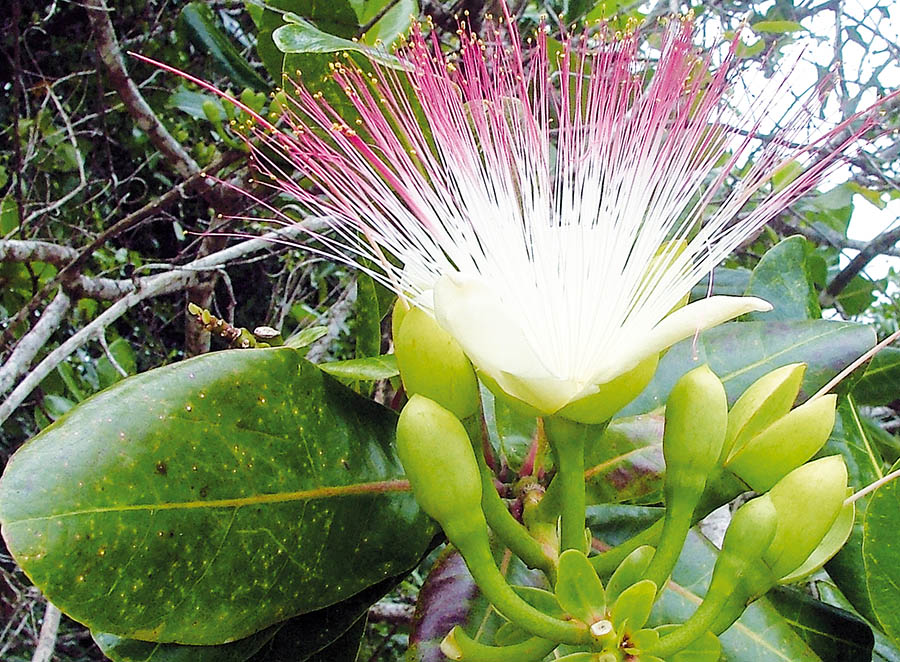
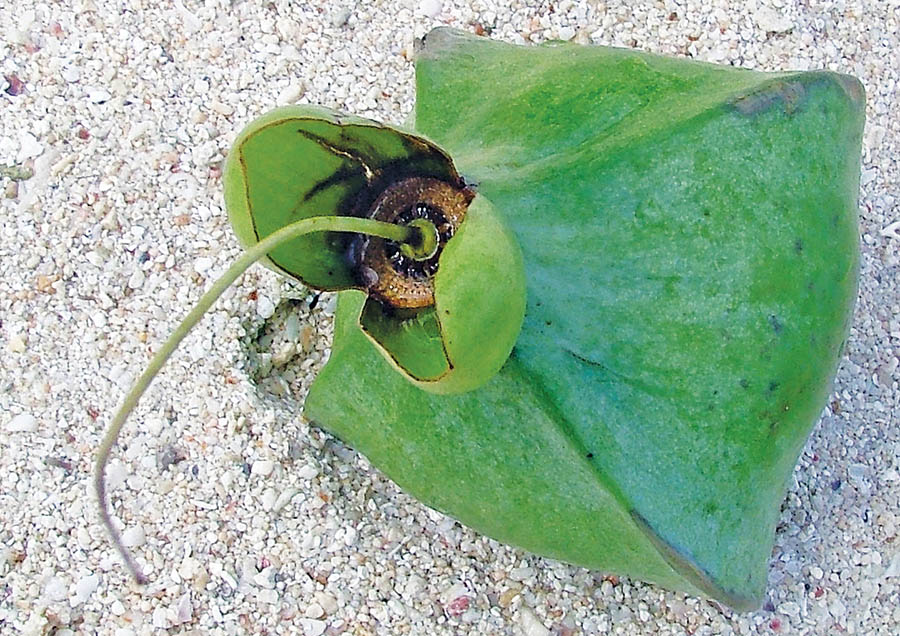
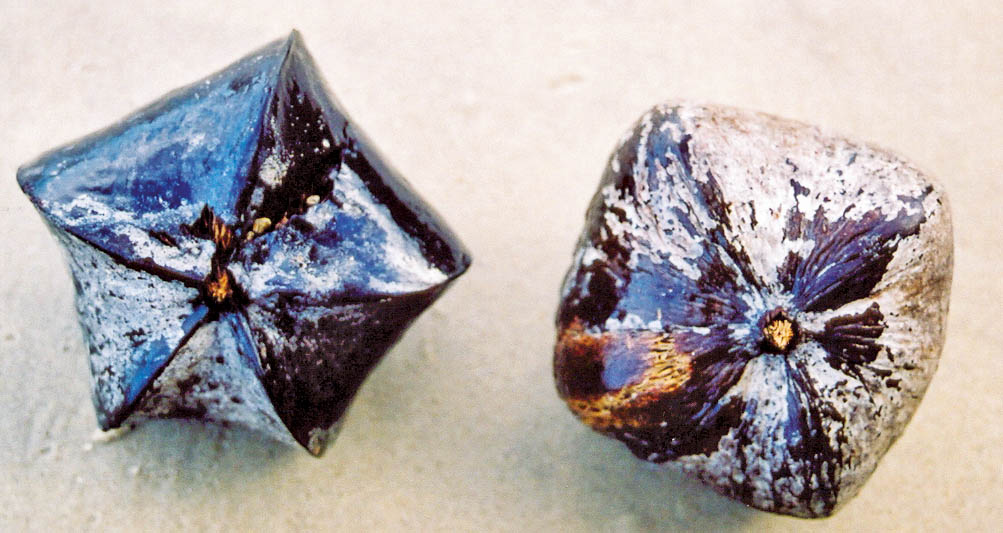
The genus Barringtonia has about 40 different plants found throughout the tropical Indo- Pacific region. Barringtonia asiatica ‘Beach Barringtonia’, 'Fish Poison Tree', 'Box Fruit', 'Futu' produces large upright flowers, many long cream stamens with pink ends. They are followed by very large woody, angular fruits, usually four ridges, sometimes five. Fruits ripen from green to brown, may be found on at either stage. The fruits and buoyant and can float for many years, and they are used as fishing floats.
Ipomea is a large genus with many introduced and native species. The leaves are usually heart shaped. Flowers can be white, red or orange, but the best known are blues and purples. They are normally deep tubular flowers with large spreading petals joined together to form the familiar ‘morning glory’ flower. Ipomea pes-caprae, ‘Goats Foot Morning Glory’ is one of most common plants of the tropical Indo-Pacific beach. It is a vine that crawls along beaches, across sand or rocks. The leaves are shaped like a hoof. It has large purple pink flowers.
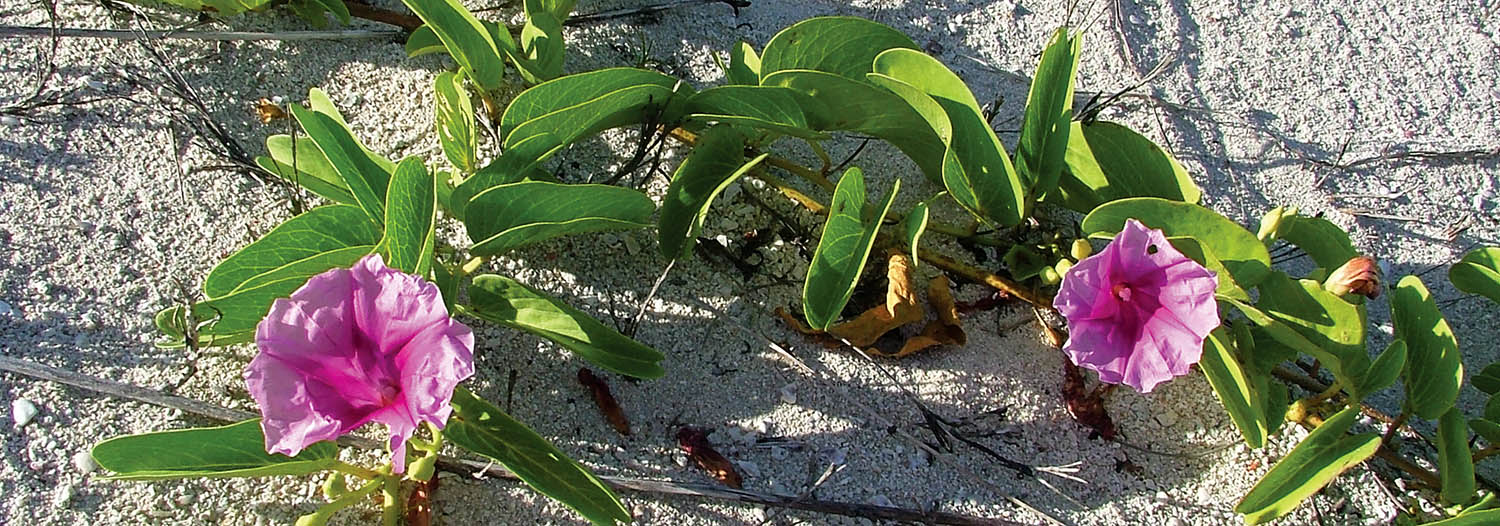 (Kimberley, Australia)
Argusia (previously Tournefortia argentea/Messerschmidia) argentea ‘Octopus Bush’. Grows as shrub. Soft, silvery leaves. Large col- lections of small white flowers arranged in a tight cauliflower like head. A common shrub of the sandy coast throughout tropical Indo-Pacific.
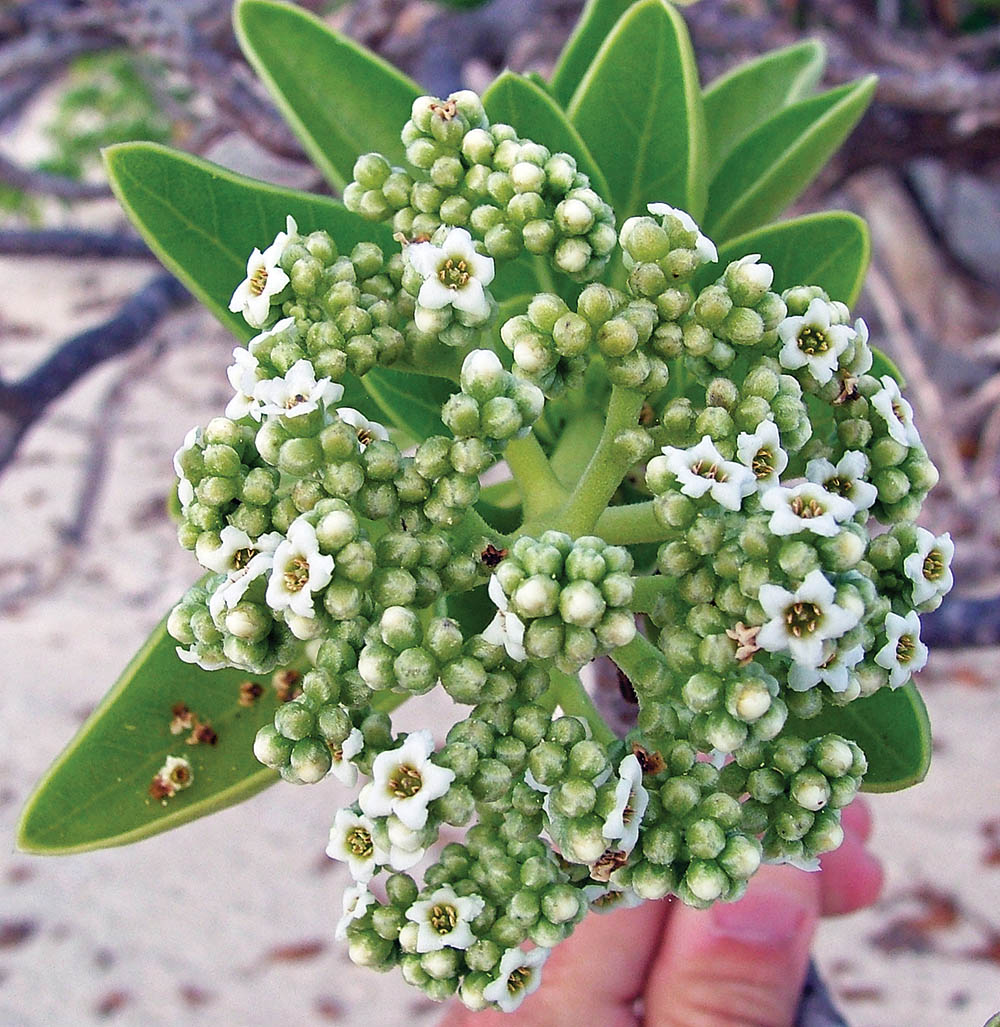 (Magra Island, Australia)
The flowers in the genus Scaevola are unique, having the 5 petals on one side of the flower and not the other, with the name Scaevola meaning ‘left-handed’. This genus contains one of the most symbolic plants of the topical seashore: Scaevola taccada (formerly S. sericea), ‘Sea Lettuce’, ‘Cardwell Cabbage’, ‘Pipe Tree’ usually grows as a shrub or small tree. It has large, light green glossy leaves that widen to a rounded tip, and grow out spirally. The fllowers are white and slightly hairy, with five petals splayed out distinctly on one side of the flower. The following fruits are small, white and fleshy.
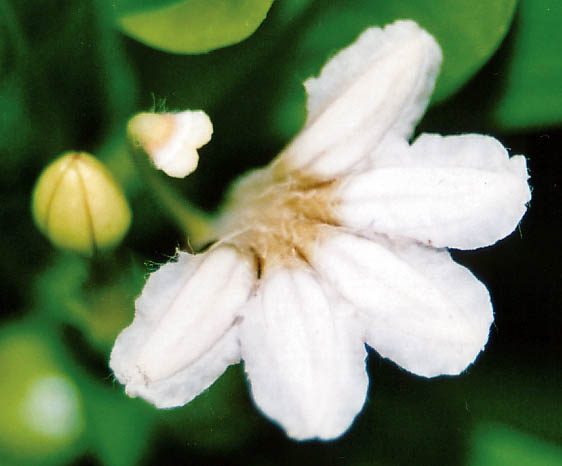
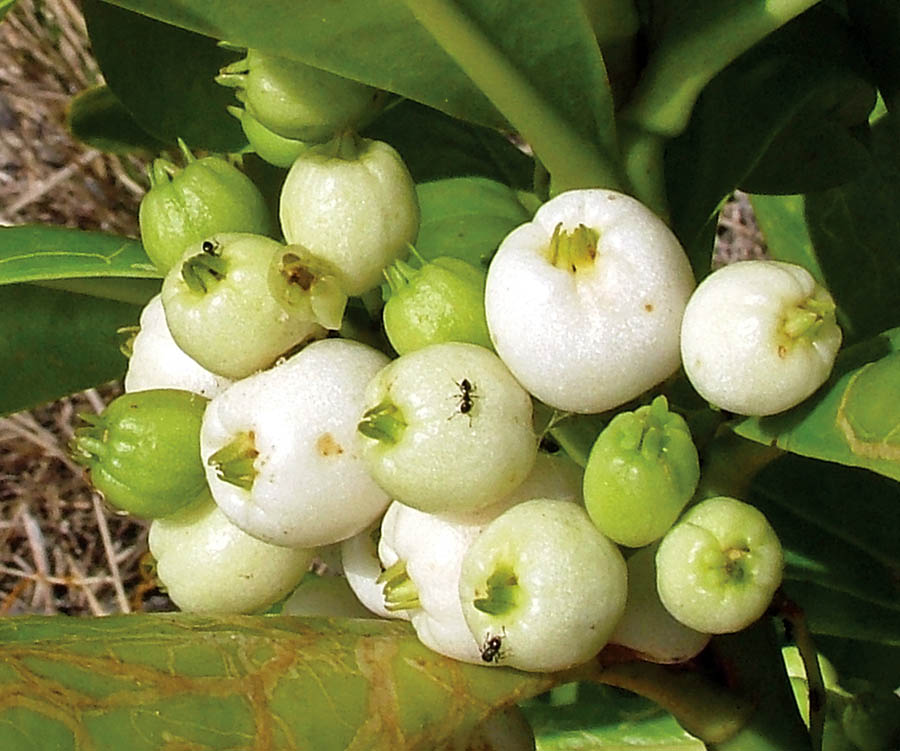 (Lizard Island, Australia)
For my lecture on driftseeds
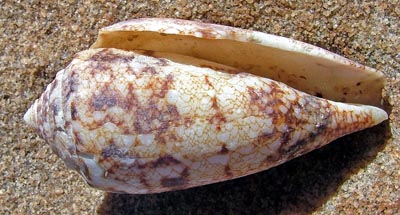
The huge class Gastropoda includes all the 'Spiral' seashells that wash up or live on tropical seashores. These days we do not collect shells, and in fact there are some that one should avoid even picking uo. Many species of 'Cone Shell' in the family Conidae can injure a human, and some species can even kill. Below is the Conus textile, 'Cone Shell', one of the more dangerous. Most of the washed up cone shells are just dead remains and harmless, however it is wise to be cautious and "if it's shaped like a cone, leave it alone!".
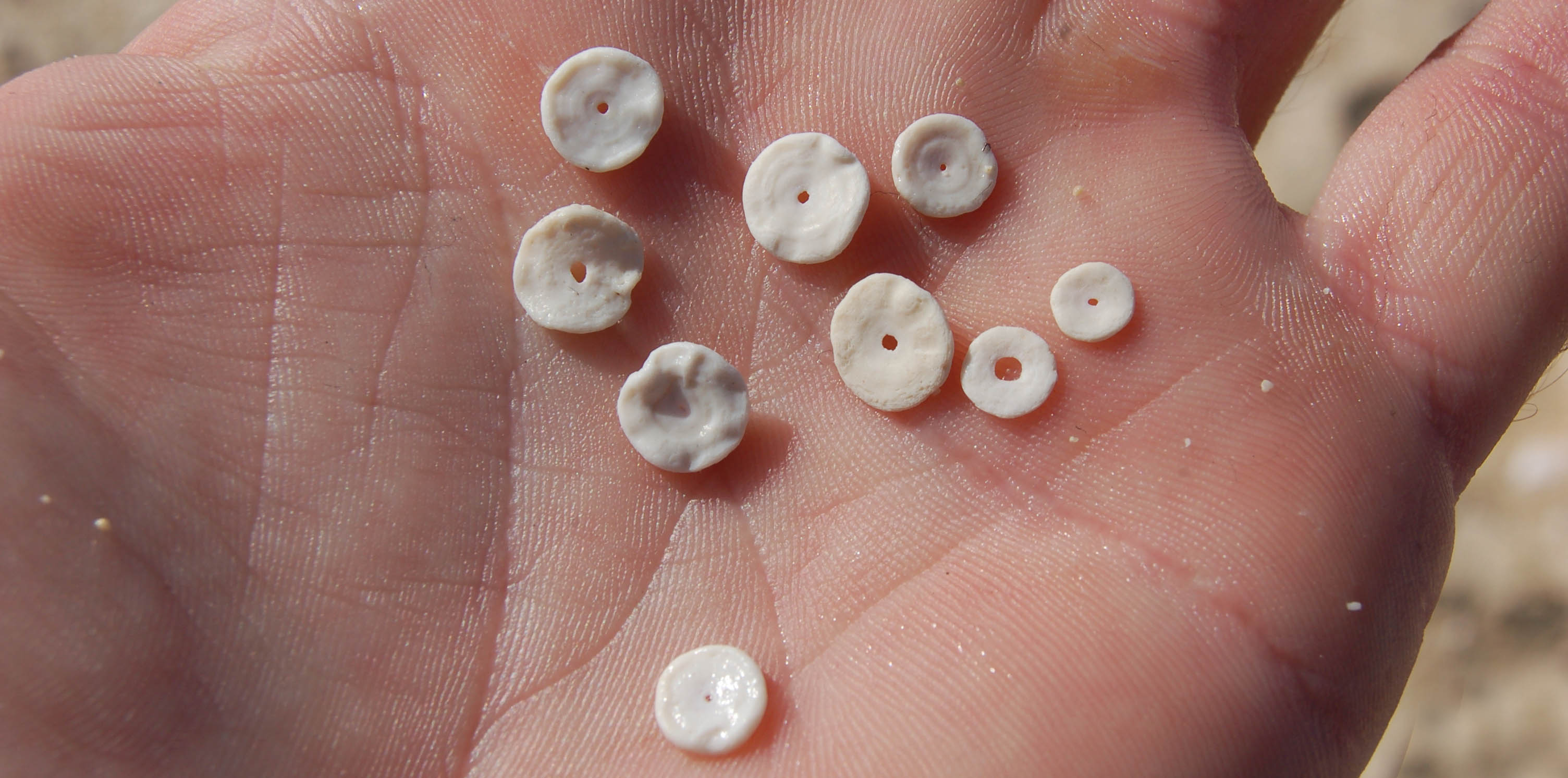
There are many other animals that look like gastropod seashalls, but are not related. The ‘forams’ are single-celled 'animals' that live mainly in marine habitats. They are mostly found on the seafloor, with some attaching to seaweeds, but some may float as part of the plankton. In the context of the tropical seashore, they are usually only noticed when the hard remains of larger species are washed onto the beach. They can be very common in certain areas, but because they are small, they generally go unnoticed. Their shells have a range of different shapes, but the more commonly seen larger ones are usually circular.
‘Ghost crabs’ are medium-sized crabs that are usually sandy coloured to blend in with their favoured habitats. They are evidenced in an area by their large round burrows in the sand. They are only occasionally seen during the day, They are more nocturnal in habit, and can often be seen on tropical shores at night by torchlight. When seen, they can run sideways along the sand at incredible speed, and will often run into the waves or into their burrow. They are scavengers and predators, including feeding on turtle hatchlings and other crabs.
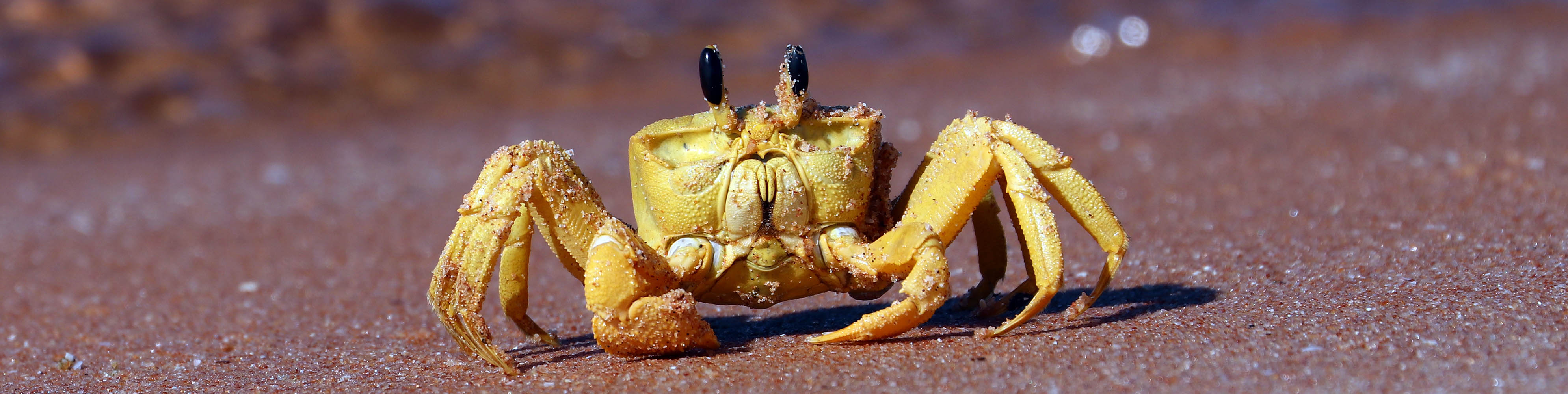 'Golden Ghost Crab', (West Australia)
The largest crustacean on tropical Indo-Pacific seashores is Birgus latro, the 'Coconut Crab' or 'Robber Crab'. Indeed, it is the largest crab on land. In fact, it is the largest invertebrate largest land invertebrate on the planet! Today, they are only normally found on islands where there are no people.
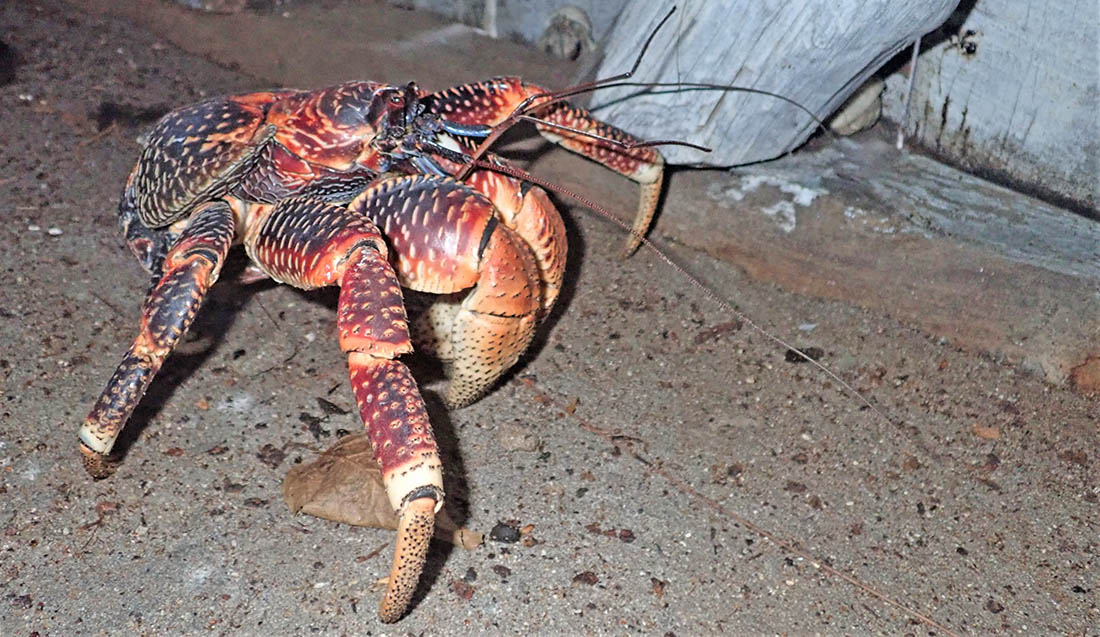 (Seychelles)
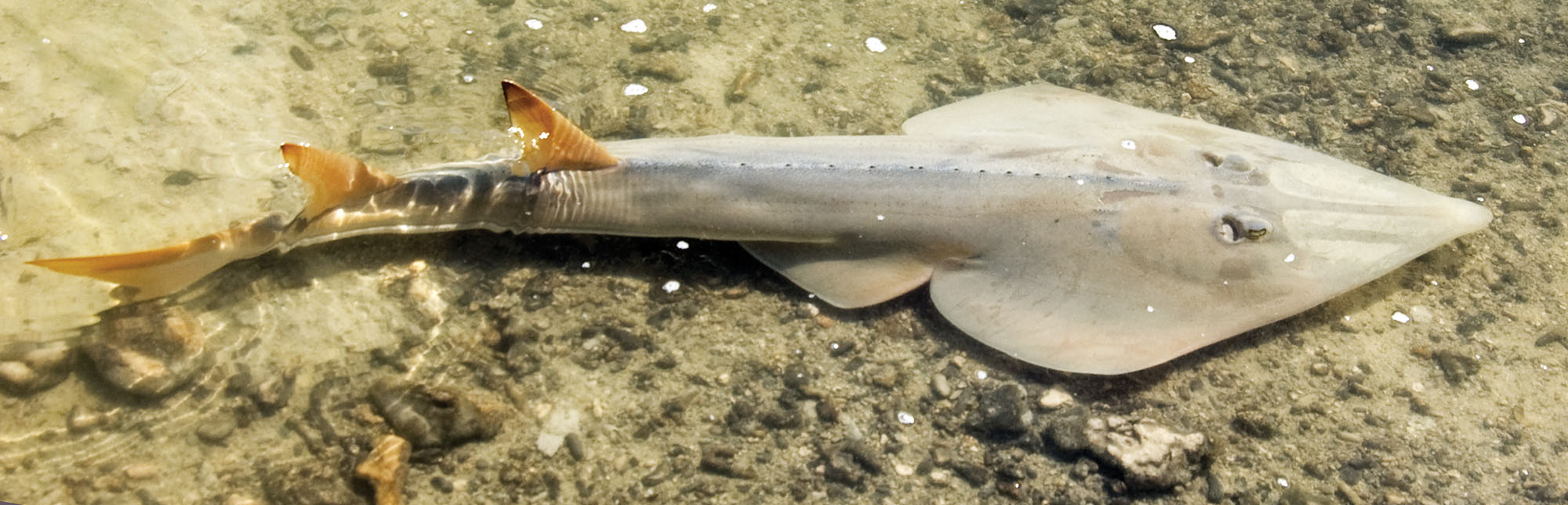
Various rays can be seen in the shallow water along tropical shorelines. Glaucostegus typus, 'Common Shovelnose Ray'. Often seen snuffling around in murky shallows. When in shallow water, their distinctive arrangement of fins can be seen, with three fins following each other, two located far back along the body, and the tail tip. This species was apparently the first type of shark/ray that was proven to see in colour.
The superfamily Chelonioidea includes all the 'Marine Turtles'. The females of these reptiles need to come ashore to dig their nests and lay their eggs. About a month later (depending on the species), hatchlings will dig their way out. Below is a fresh hatchling of Eretmochelys imbricata, 'Hawksbill Turtle'.
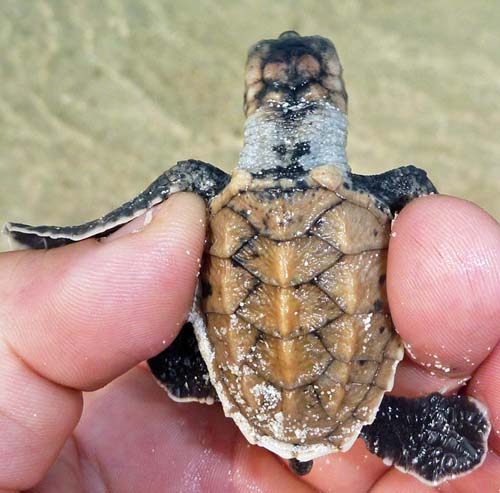 (Arnavon Islands, Solomons)
There are over 10,000 species of birds in the world, and they have successfully established themselves in almost every ecosystem all over the planet, including the most remote coasts and smallest sand islands, where there is little other large land based life. This habitat serves different purposes for different types of birds at different times of their lives. For example; the more marine based birds, such as boobies and terns, are found on the tropical seashores in their greatest numbers when breeding, whereas the waders mostly breed out of the region and use the tropical seashores to feed. Unlike most of the vertebrates, there are even many species that specialize along the tropical seashore. They are not only one of the most abundant groups of animal along the tropical seashore, but with their flight, feeding and behaviour, they are one of the most fascinating.
Below is Arenaria interpres, 'Ruddy Turnstone'. Widespread throughout most of the coasts of the world.
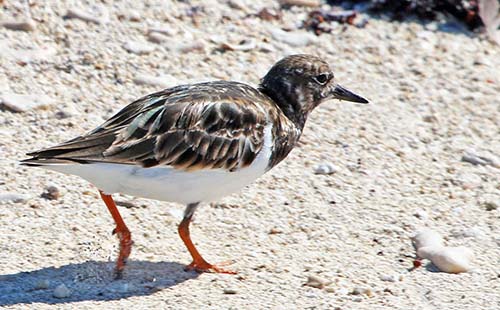 (Lacepede Islands, Western Australia)
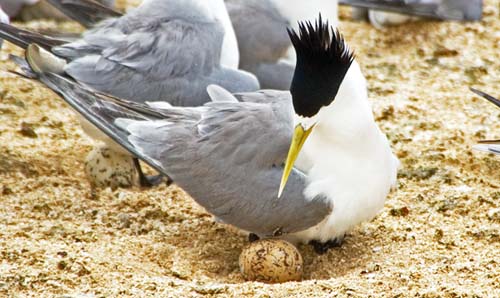
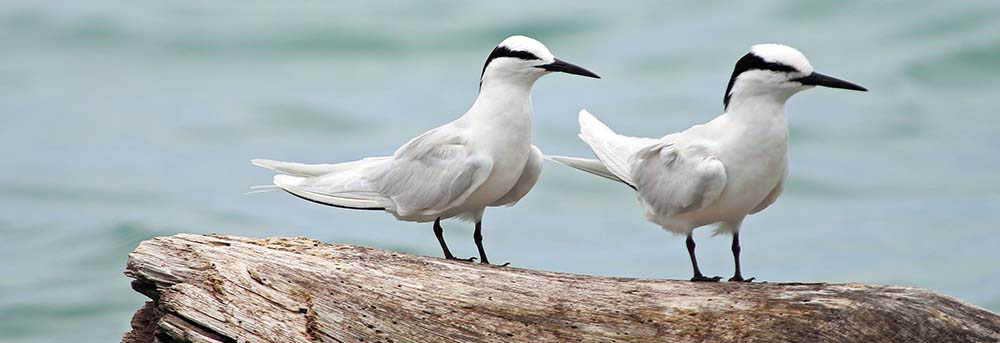
The terns are the most diverse group of birds likely to be seen along the more remote tropical seashores. They typically pick coasts that are inaccessible to land predators, and usually breed in pairs that are monogamous for the season. The many widespread species include:
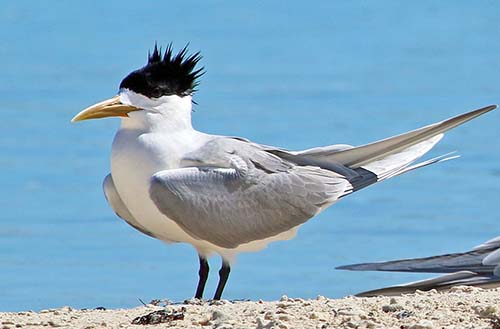 'Crested Tern', (Lacepede Islands, Australia)
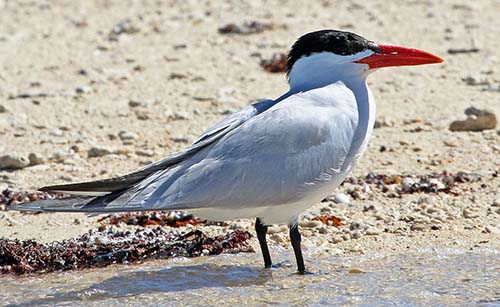 'Caspian Tern', (Lacepede Islands, Australia)
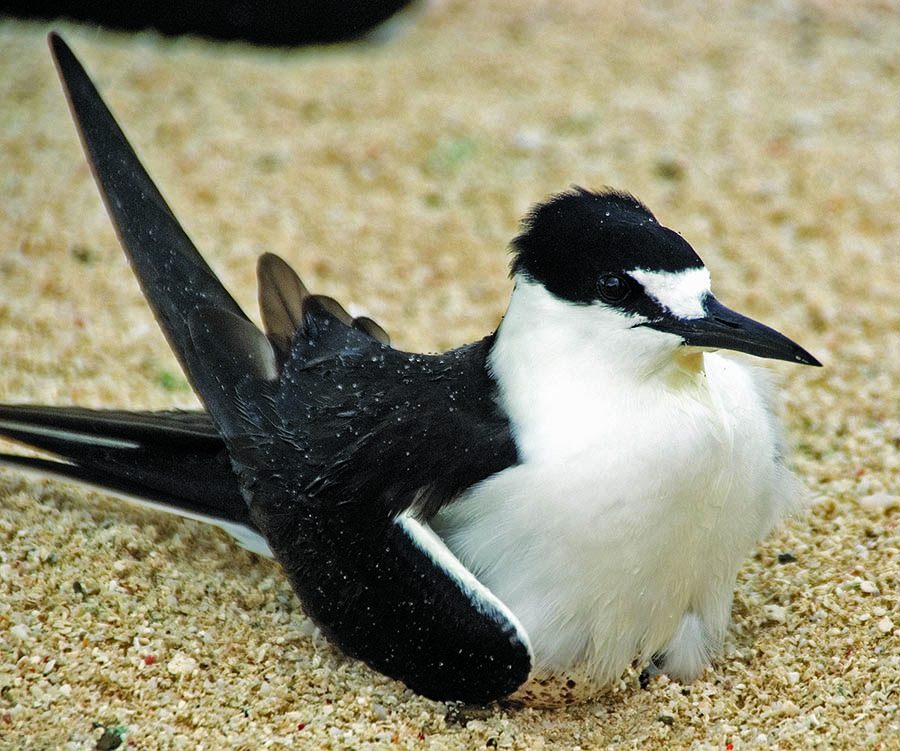 'Sooty Tern', 'Wide-a-awake Tern', (Michalemas Cay, Australia).
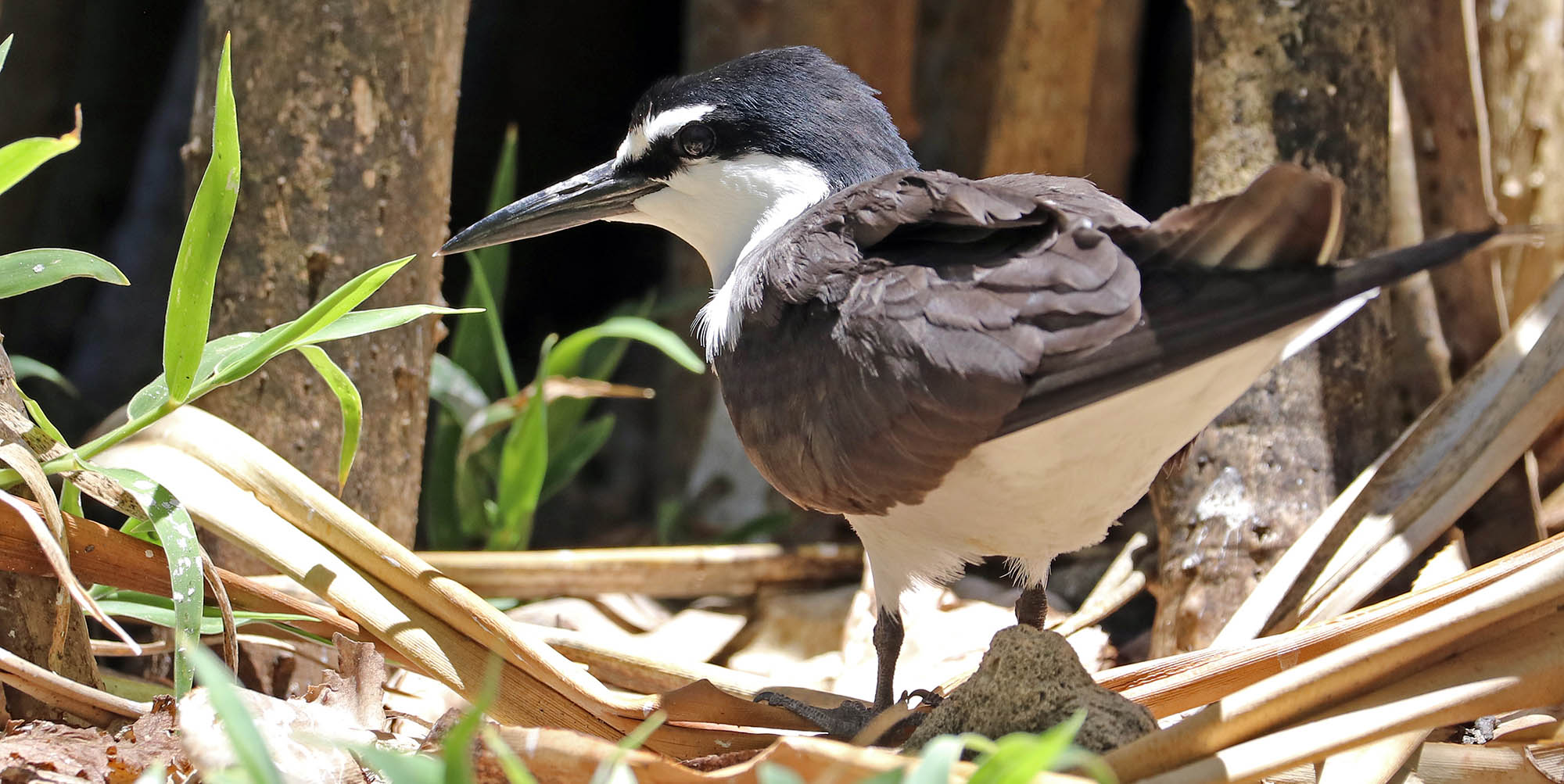 'Bridled Tern', (Lady Musgrave Island)
Noddys are terns with the colours reversed; instead of being white with a dark cap, they are dark with a light cap. They have stronger feet and legs, and broader wings than many other terns. These broader, gull-like wings are used to glide more than other terns. Unlike most other terns, rather than diving into the water to catch prey, they skim through the surface of the water and, like gulls, they are often seen sitting on the surface of the water. When resting from feeding and flying, they have been recorded to perch on sea turtles and even pelicans.
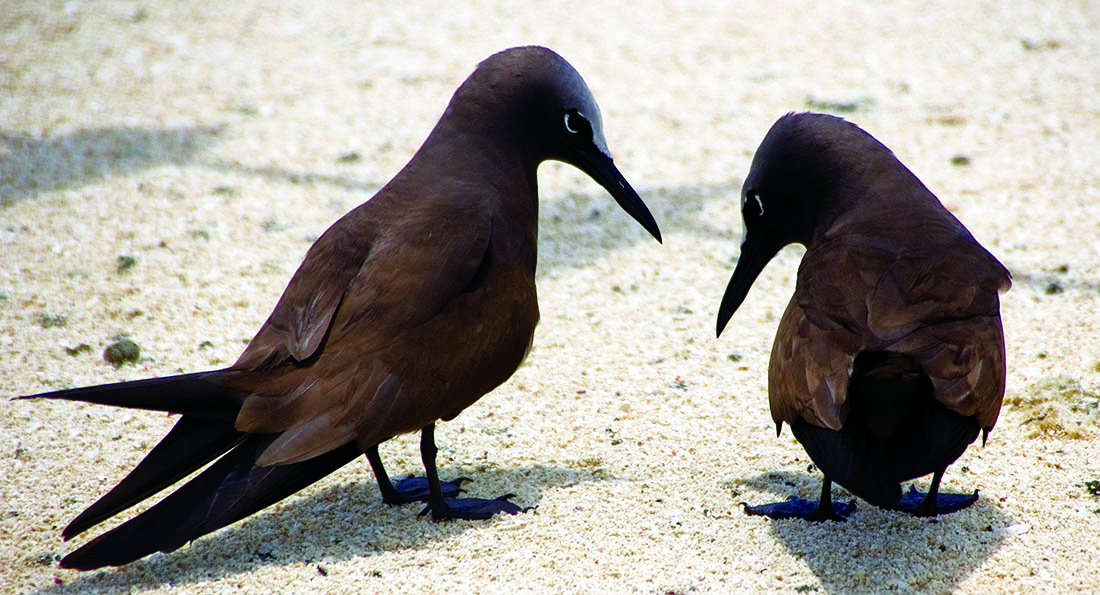 A pair of noddies, nodding.
The family Phaethonitidae is comprised of the Tropicbirds. The chicks are fluffy. And cute.
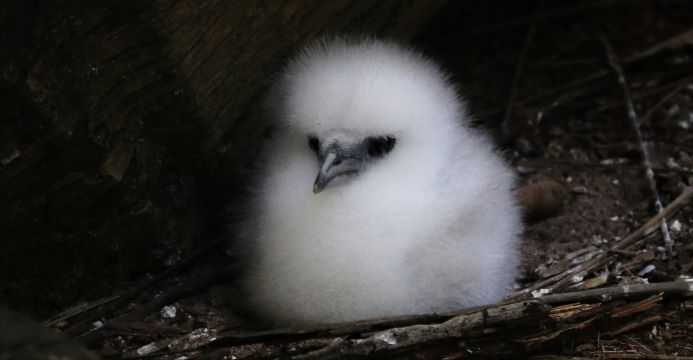 (Seychelles)
The family Sulidae includes all the Boobies (and temperate Gannets).
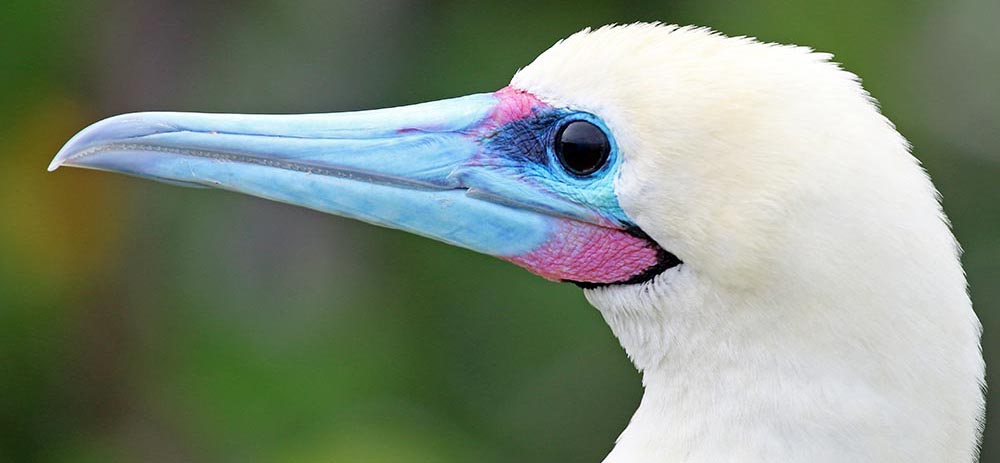 'Red-footed Booby', (Alim Island, Papua New Guinea)
Places to get sunburnt on the Indo-Pacific tropical sandy seashore
In the north east of Australia is the muddy but birdy Cairns esplanade. The east coast of Queensland is of course dominated by the Great barrier Reef and includes Lizard Island, and Michaelmas Cay. On the north west coast of Australia is Broome, and the Lacepede Islands. and there are birds breeding on the islands of Ashmore Reef. Across the Coral Sea is the Solomon Islands with the Arnavon (Arnarvon) Islands. New Guinea includes the remote Alim Island. The Cook Islands include the stunning Aitutaki Atoll. On the other side of the Indian Ocean, off the coast of Africa, are the Seychelles. Included in this island group is Farquhar Atoll.
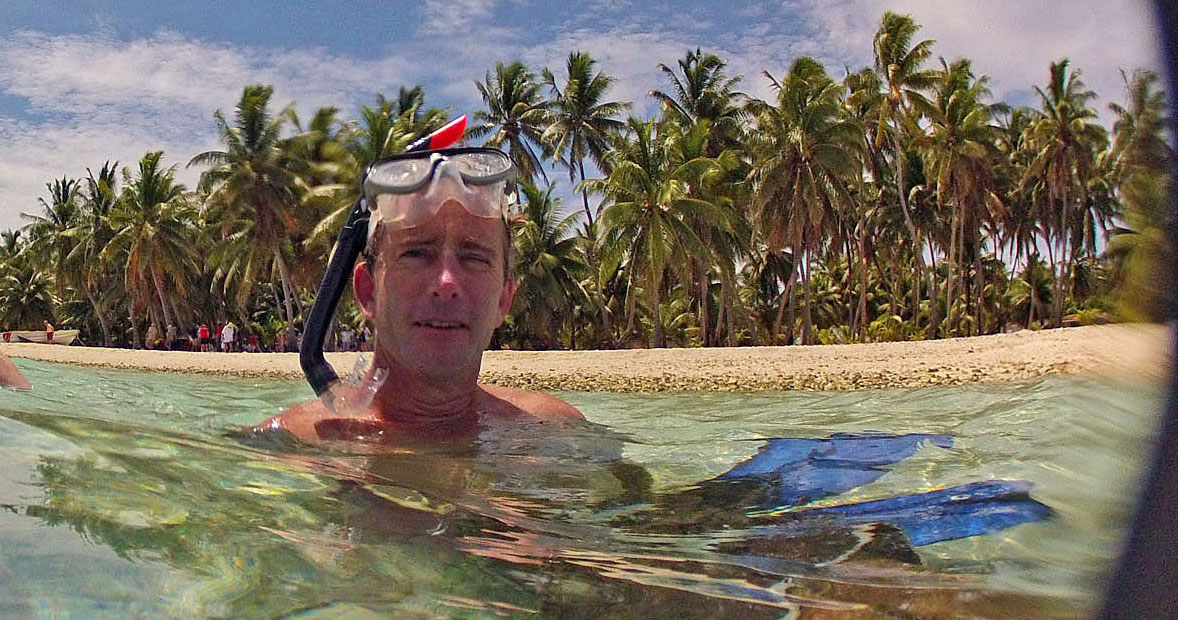 The author Damon Ramsey, taken in Cook Islands 2013! (photo by Jamie Watts)
For LOTS more information on the tropical seashore, in fact a whole book, check out: "Tropical Seashores" written by...me!
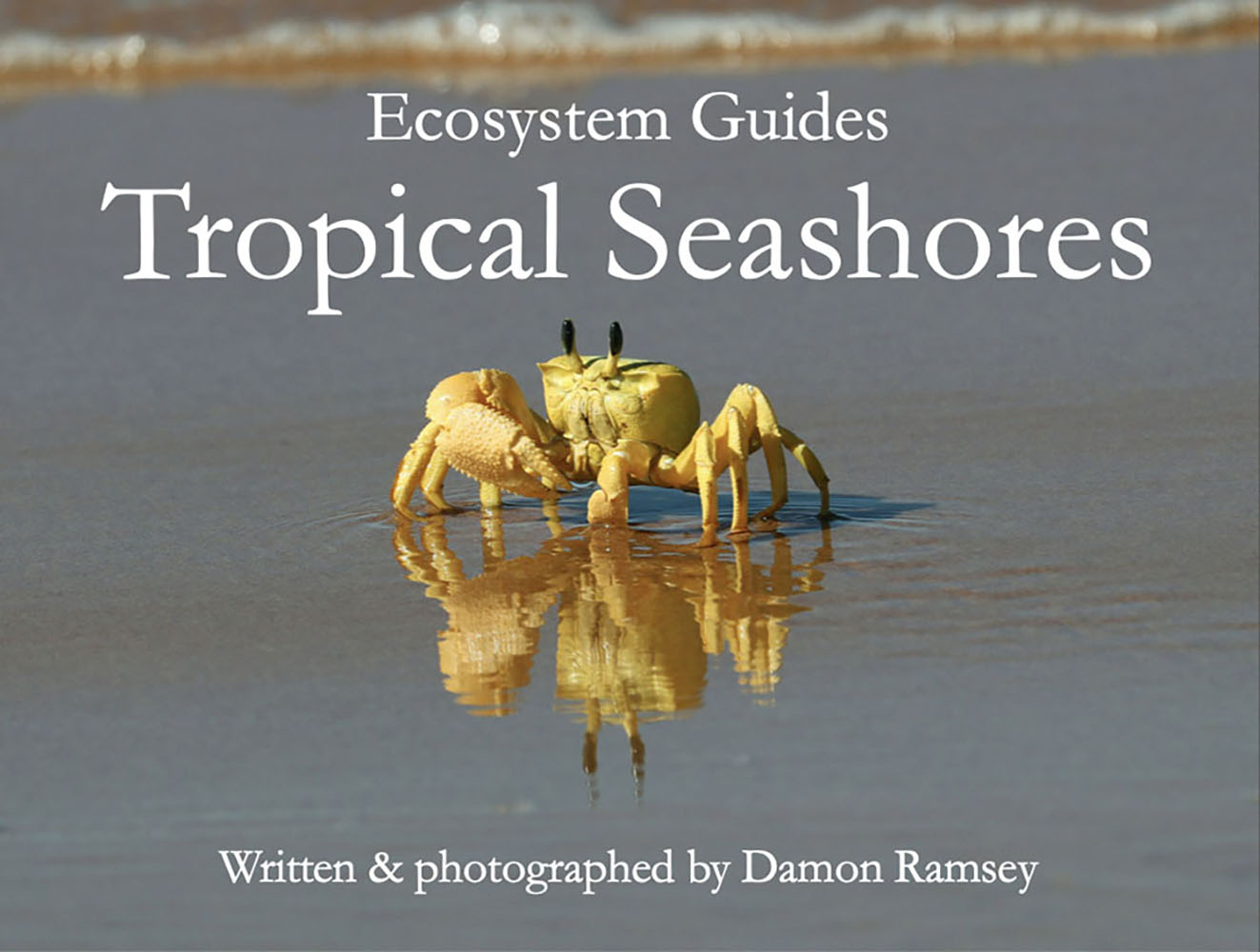
About the author
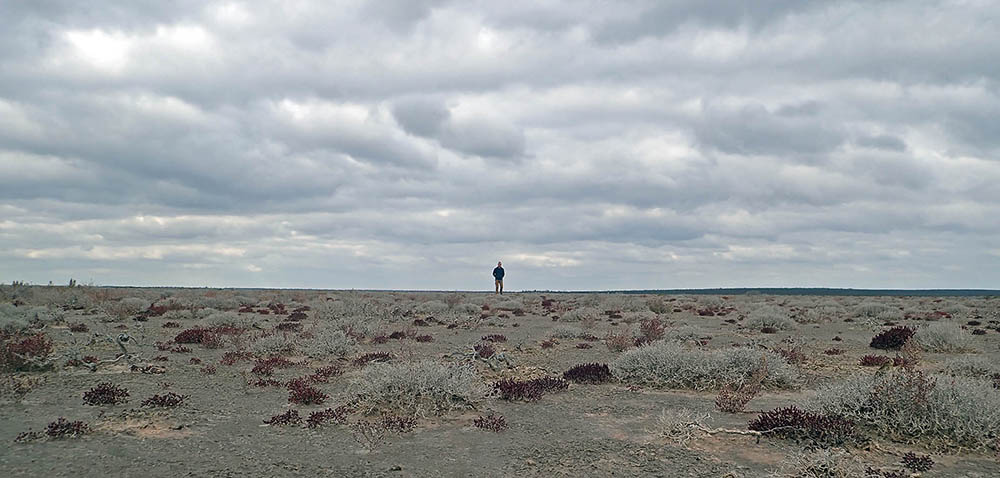 the author isolating during covid in the chenopod shrublands of arid Australia
Written by Damon Ramsey. All photographs by author (unless credited otherwise). This is not AI written. Images and information are added to this website continuously as of 2026. Feel free to copy photographs for educational purposes, but please acknowledge with: www.ecosystem-guides.com. Ecosystem Guides posts pretty shots on Instagram and some sillier photos on Facebook. Contact Email: damon@ecosystem-guides.com
Search this website (and the wider internet):
For books in the "Ecosystem Guides" series on Amazon (international) click on the book cover below
(or go to your country specific Amazon website to order, for example, click here for Amazon Australia)