ecosystem-guides
....exploring the planet's ecosystems
NEOTROPICAL
Inter-Andean Dry valleys
Up and down the valleys in between the peaks of the Andes are areas where people grow a variety of agricultural products, and settlements have followed. Depending on the geographic position, aspect and steepness, some of these valleys are drier than others. Before humans arrived, these valleys were originally dominated by arid shrubland and open woodlands. They have similarities to the Chaco scrublands further south and the thorn scrub of northern South America and the Caribbean, but because they comprise only relatively small patches, they seem to often be left out of habitat maps.
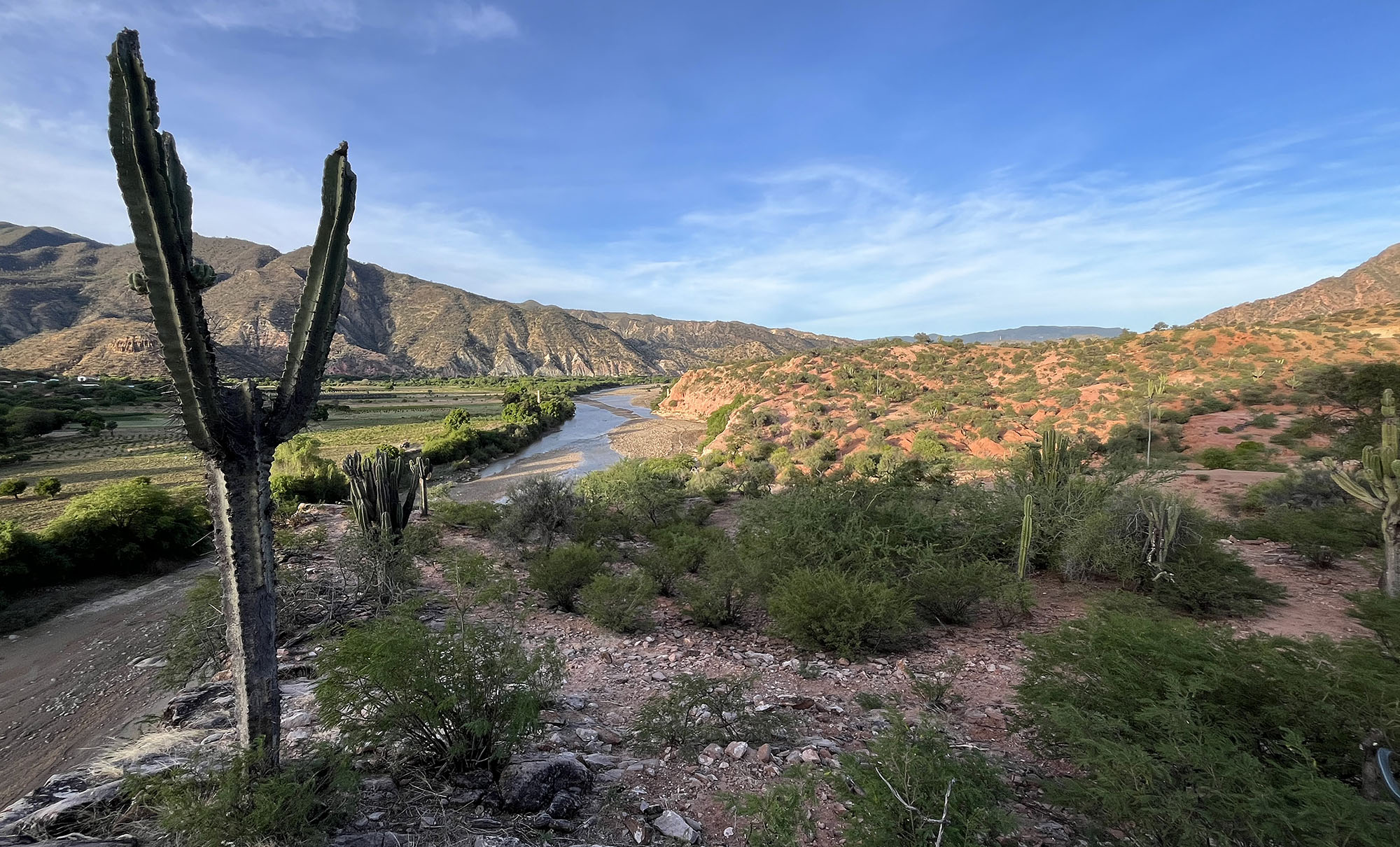 A river splits an Andean valley into agricultural land on the left and natural arid scrub on the right (Bolivia).
One of the most obvious plants of the dry Andean valleys, and indeed many habitats across the Americas, is (are?) Cactus (Cacti?).
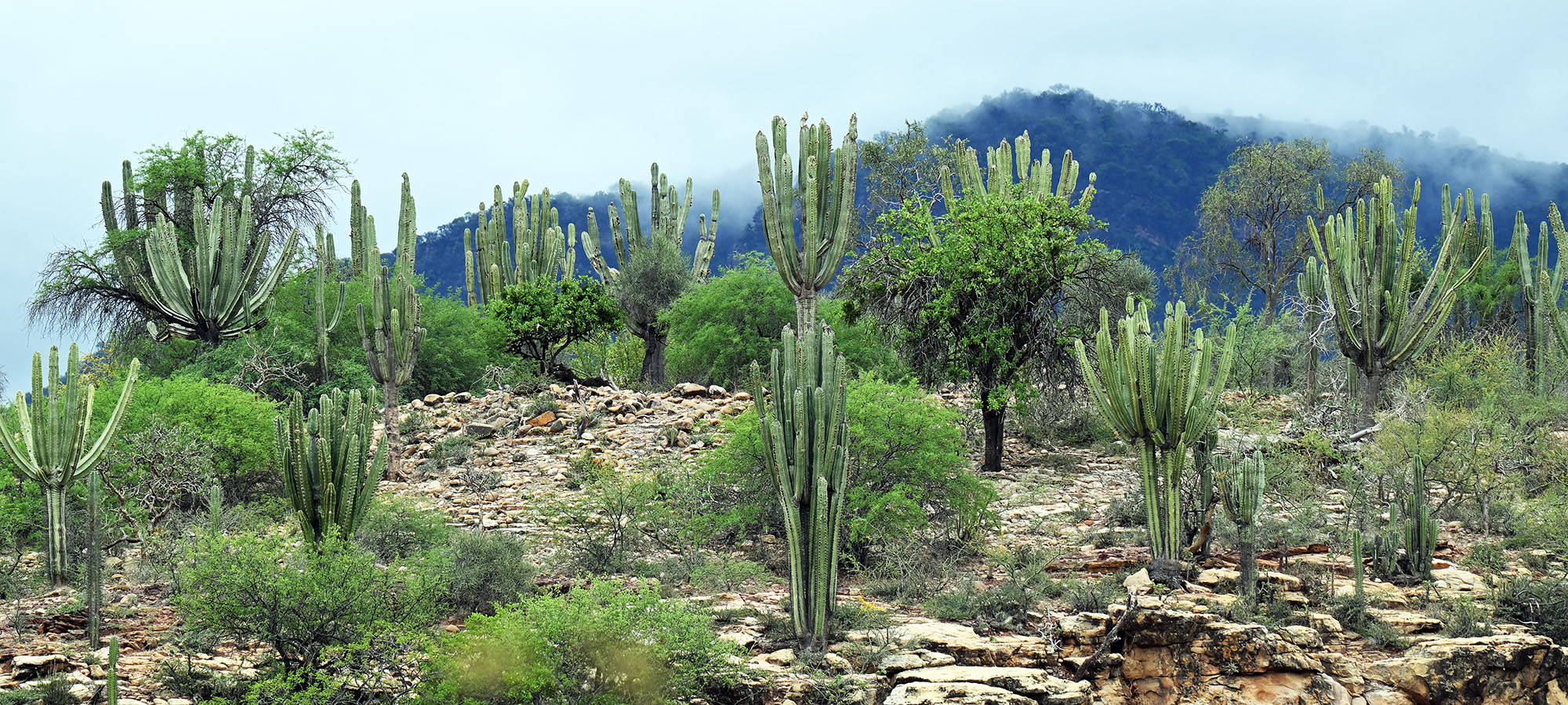
However, there are many different genera and types of cactus, and they range in form from huge trees (below) to climbers.
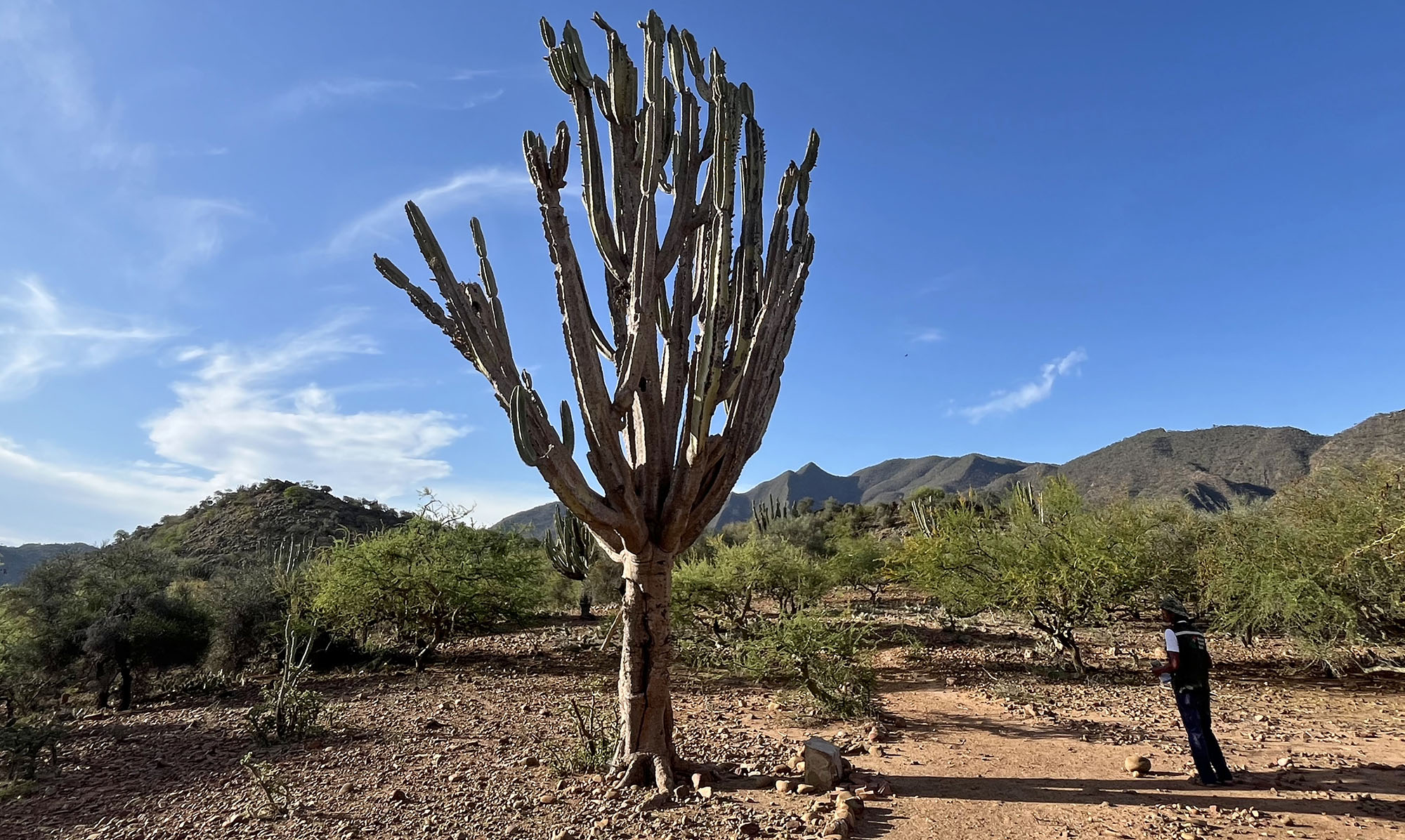 A tree sized Cactus with human guide Armin for scale (Red-fronted Macaw Lodge, Bolivia)
Not only are they physically important, they are also a large part of the ecology: cactus are used by wildlife such as birds for perching, and also to make nesting holes.
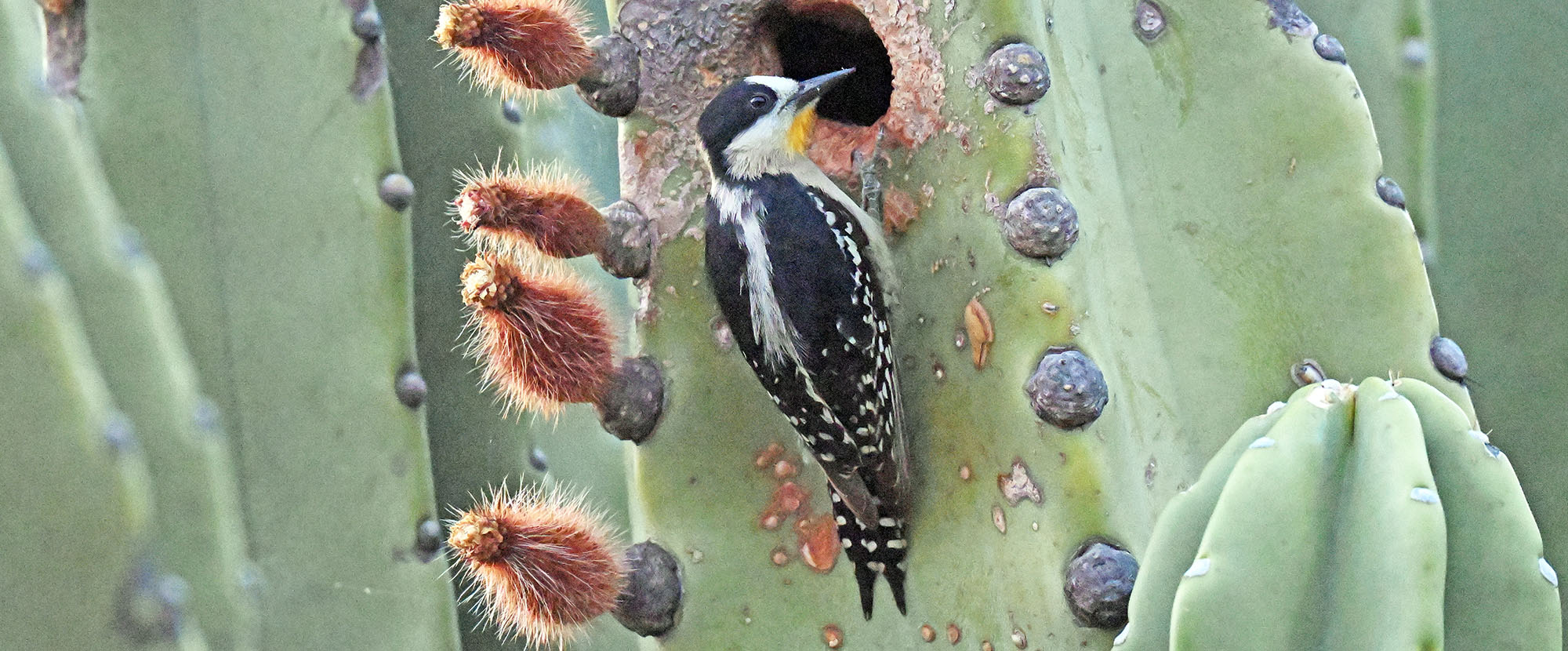 A White-fronted Wooodpecker nests in cactus
One of the best known groups of Cacti are the species of the genus Opuntia. Unfortunately they are mostly known due to their dominance as a weed in many arid and tropical areas around the world where they are not native. They are usually short 'shrubs', with wide cladodes (the green flattened leaf-like structures covered in spines).
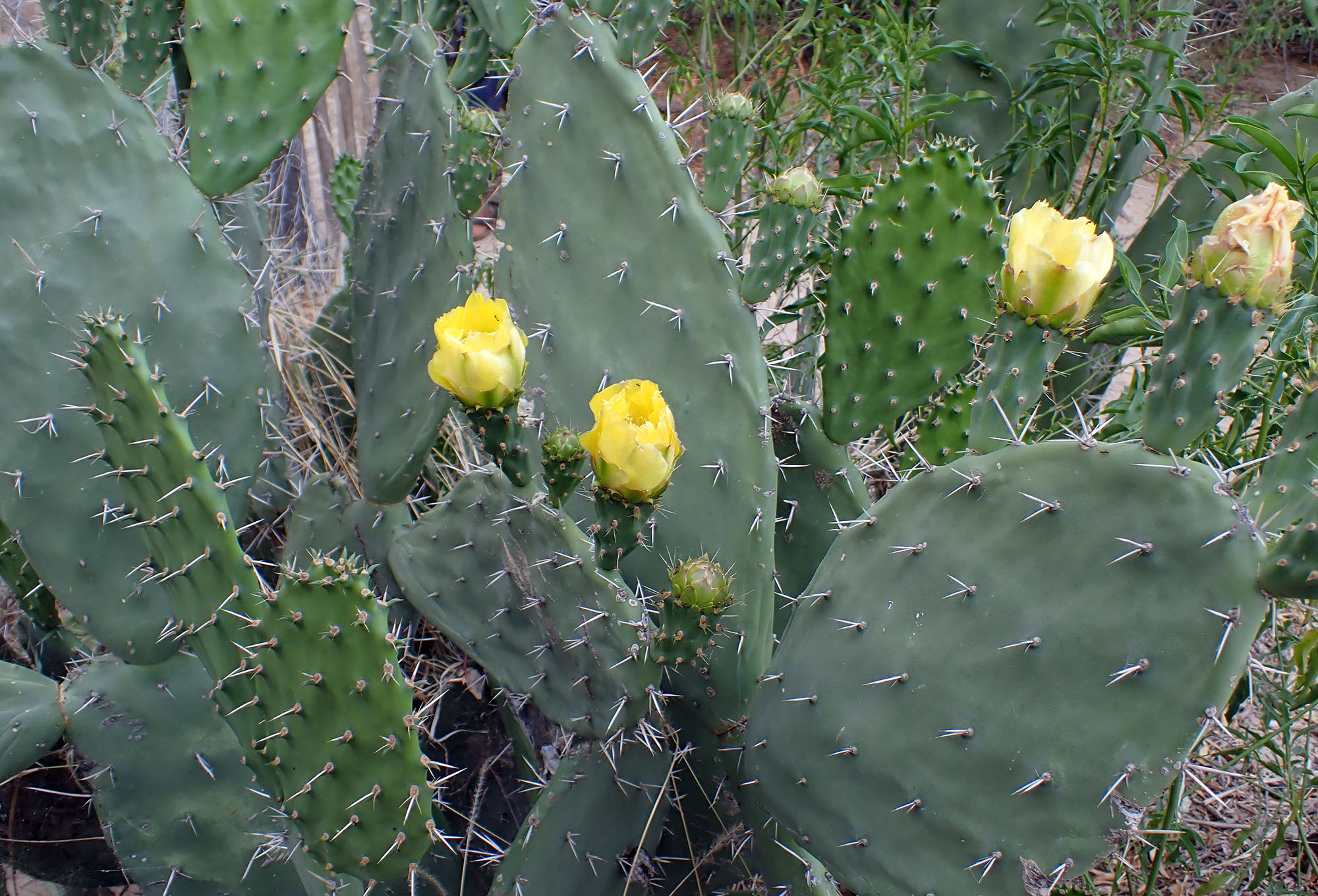 Probably Opuntia sulphurea
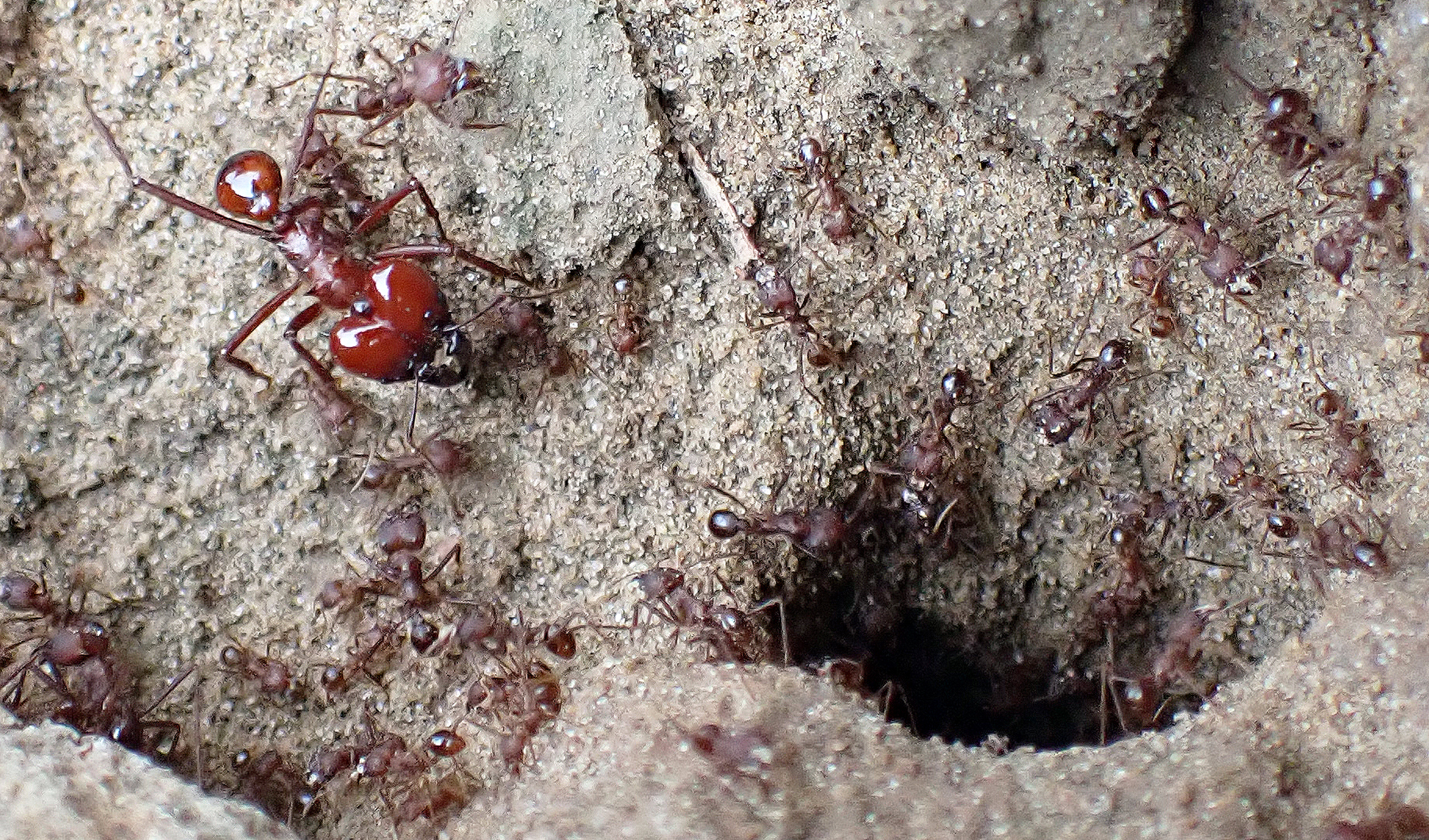
We tend to imagine the rainforest when we think of 'Leaf-cutter Ants', but there are species of Amoimyrmex that do well in the open arid areas...
Being an arid environment, you can expect a few lizards around, from the duller Tropidurus azurduyae....
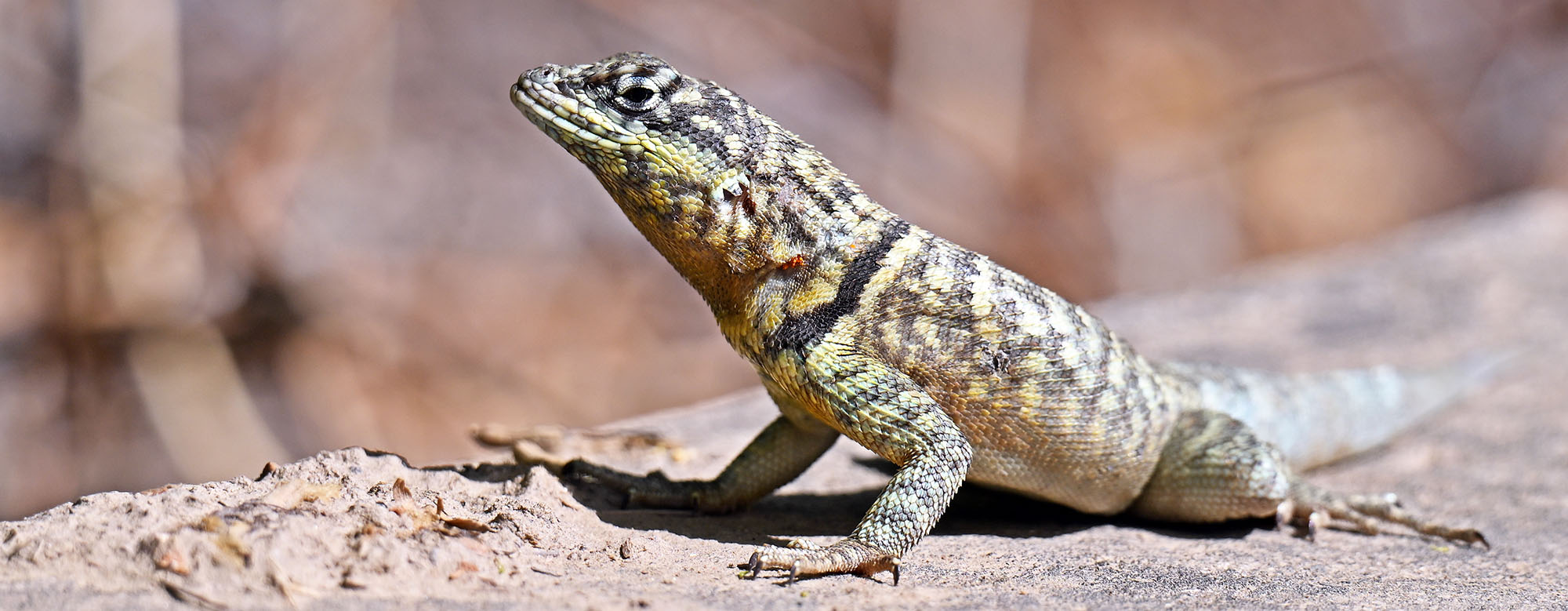 Tropidurus azurduyae
...to the more colourful Teius teyou 'Four-toed Tegu'...
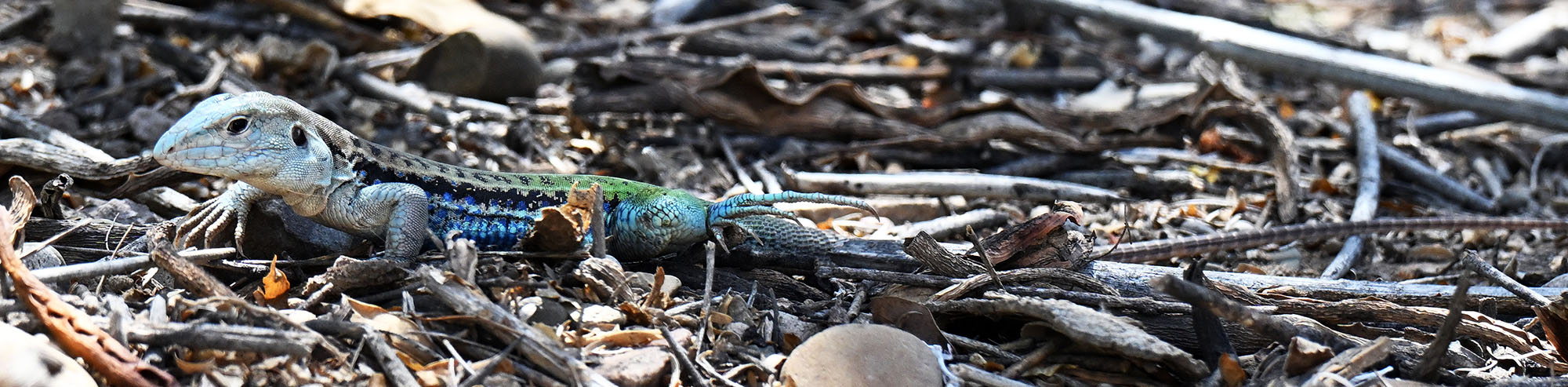 Four-toed Tegu, (Red-fronted Macaw Lodge)
In Bolvia, these dry valleys are a stronghold for the Red-fronted Macaw. They nest in steep cliffs alongside rivers. (You can see these at the Red-fronted Macaw Lodge).
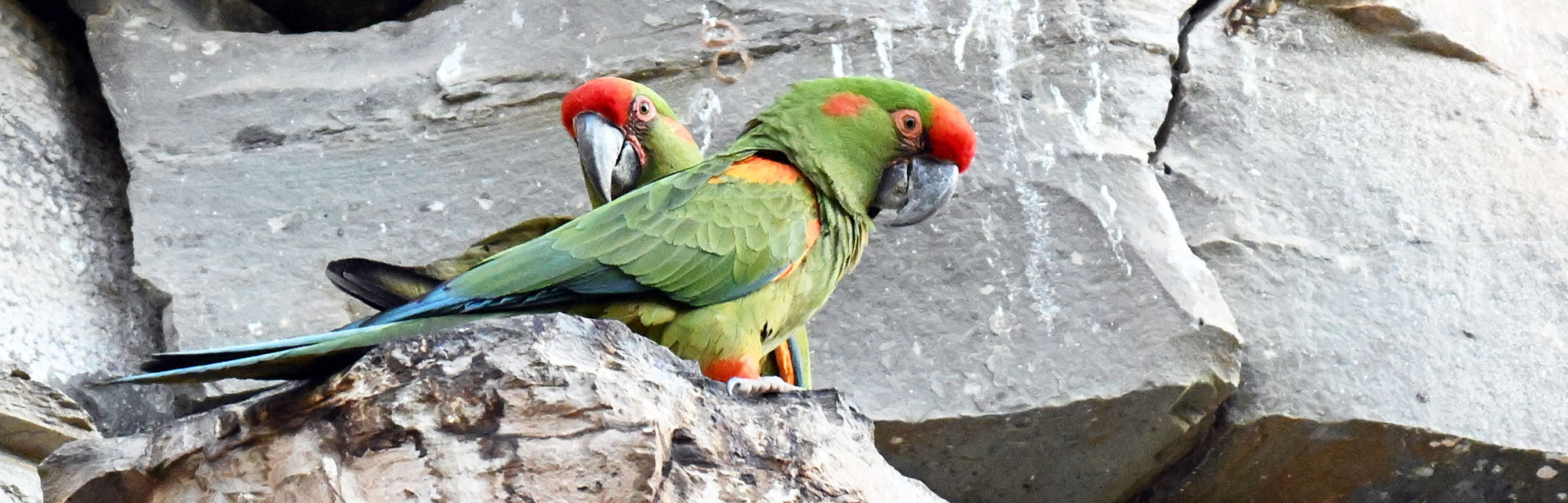 Red-fronted Macaw (Bolivia)
Alongside the large parrots on these cliffs are a smaller more common species, a split from the Monk Parakeet known as the 'Cliff Parakeet'.
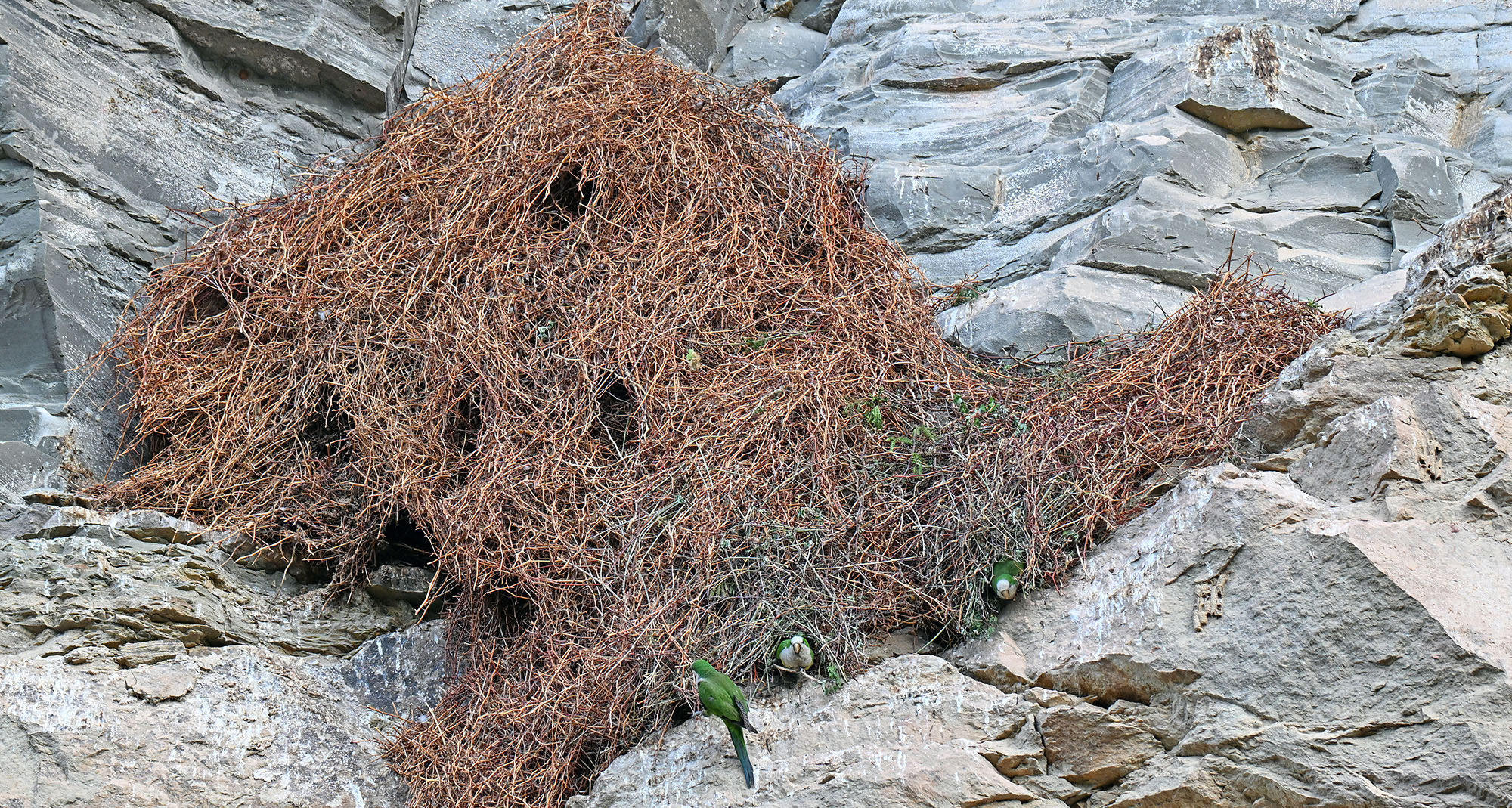
In fact, the drier habitats of South America are quite rich for parrots...
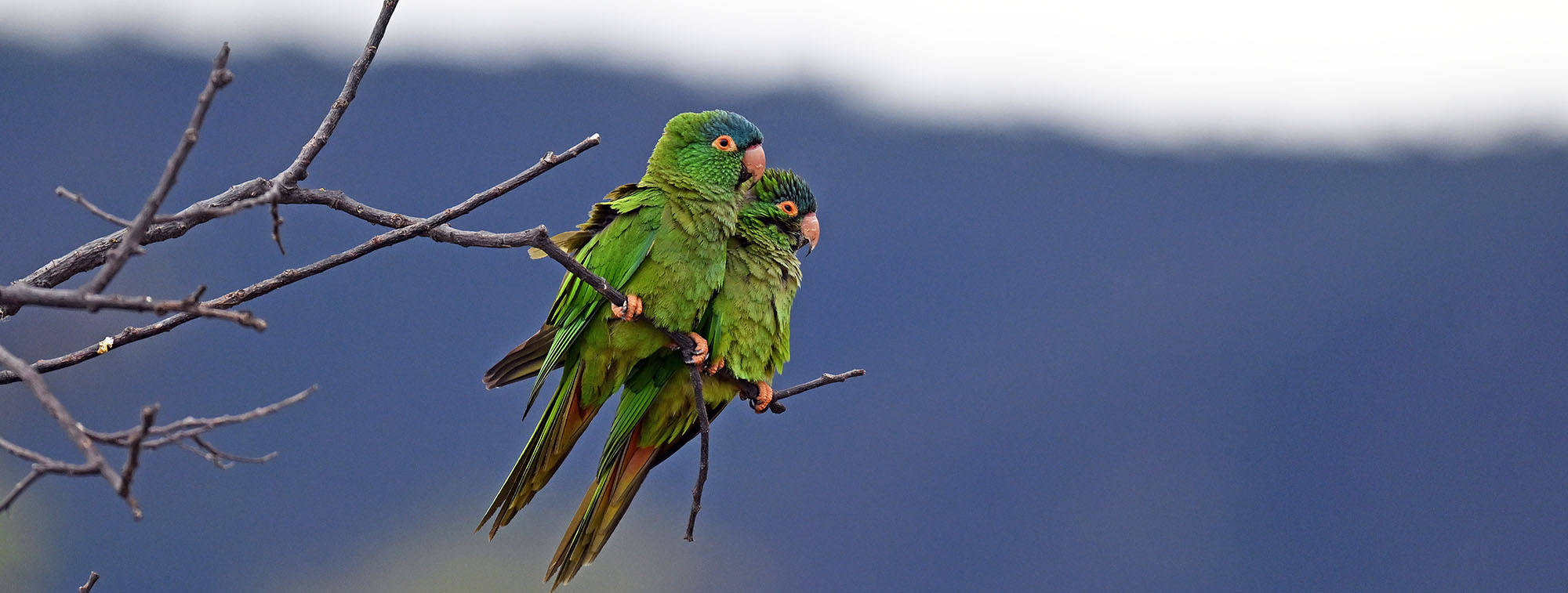 a pair of Blue-crowned Parakeets
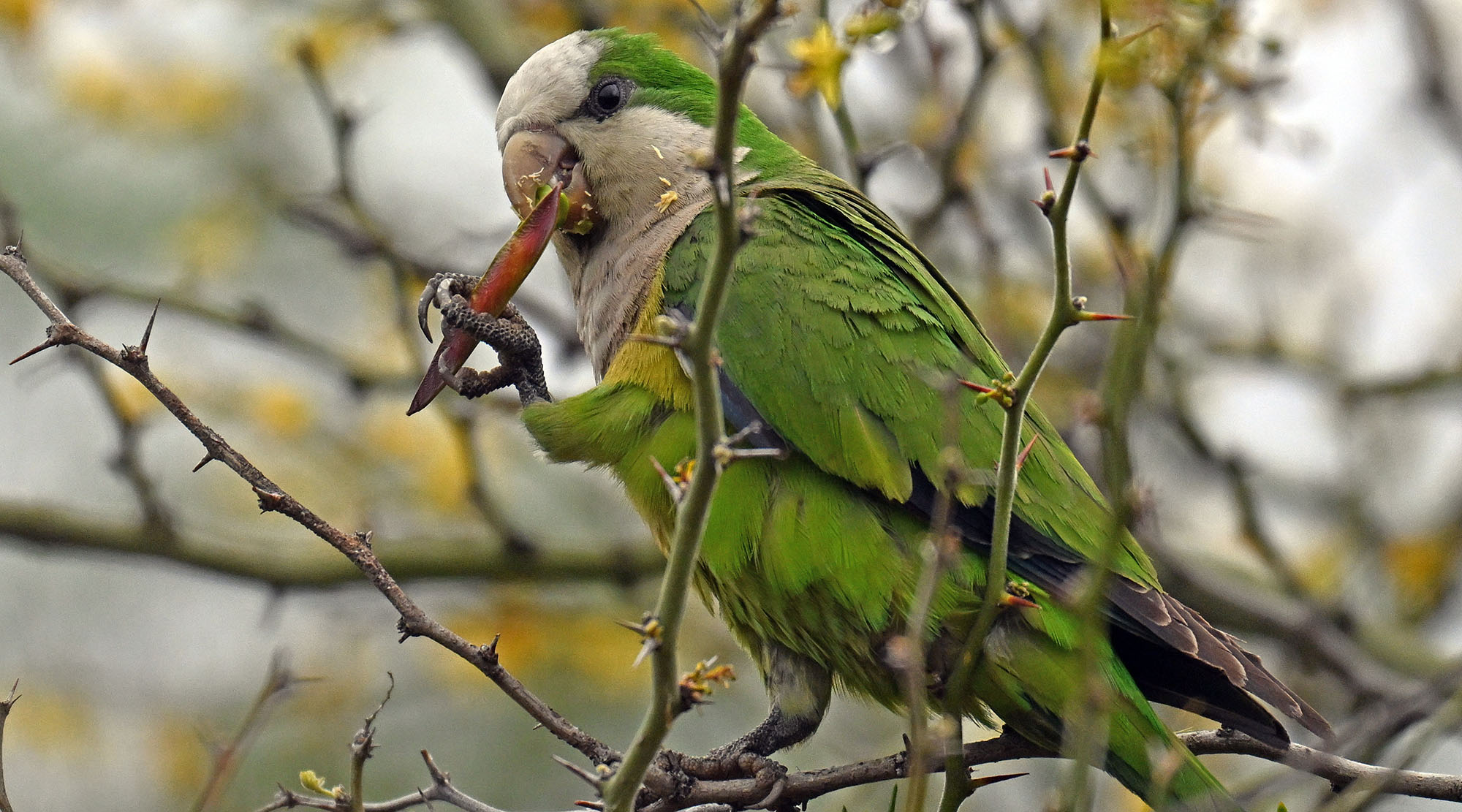
Unlike the wetter rainforest, the arid vegetation doesn't provide fleshy fruits for the birds to eat. In these areas, many avian groups such as pigeons and parrots have evolved onto dry seed eaters...
Much of these arid habitats have been replaced by towns and agriculture, however within these human habitats you can still sometimes see Guira Cuckoo, White-tipped Plantcutter, and Chaco Spot-backed Puffbird (below).
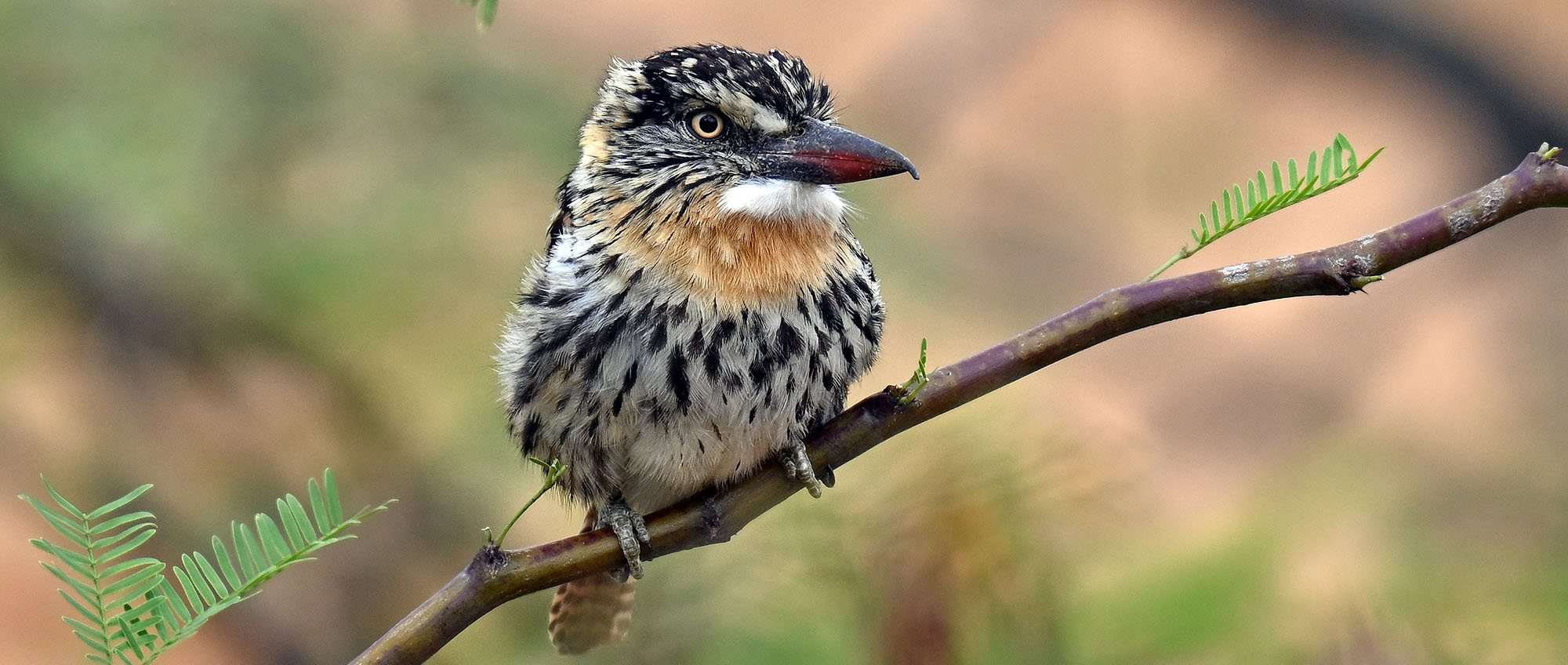 Chaco Spot-backed Puffbird, in one of the small towns in the dry Andean Valleys.
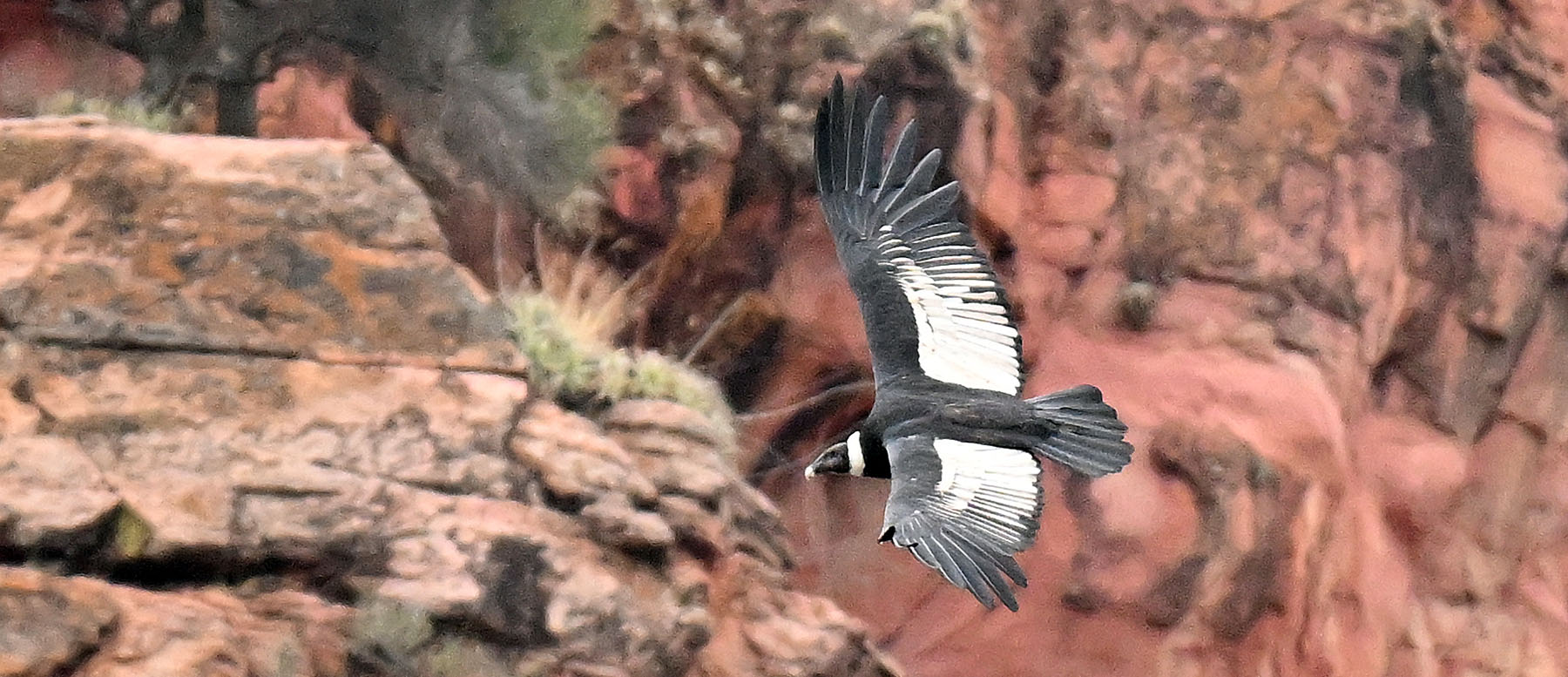
And above the dry valleys fly various large scavengers, such as Turkey Vultures and the famous Andean Condor.
One of the best places to stay and experience these semi-arid habitats and their wildlife in the dry inter-Andean valleys is the Red-fronted Macaw Lodge in Bolivia.
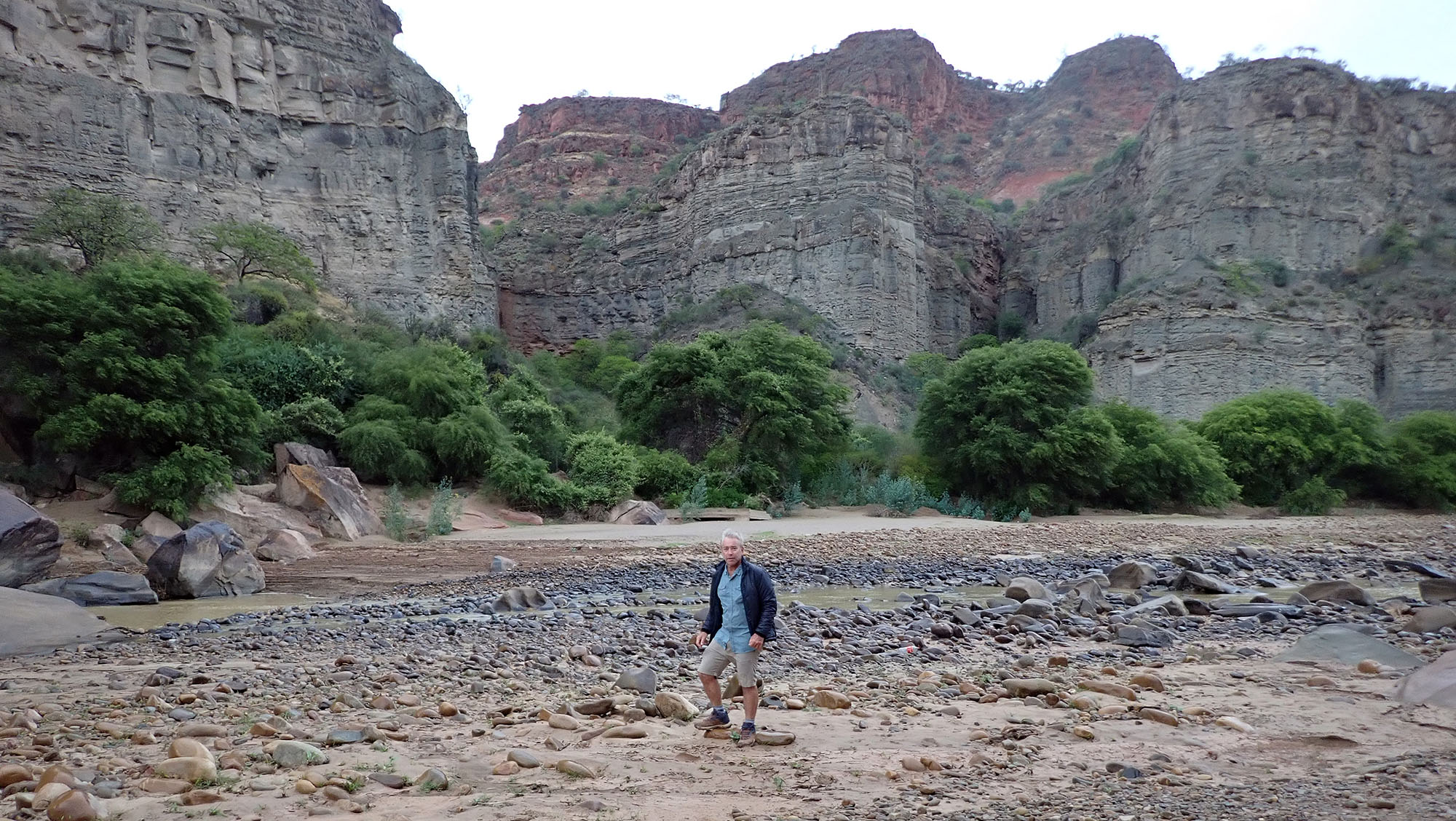 The author stalking the river valleys at the Red-fronted Macaw Lodge, Bolivia.
About the author
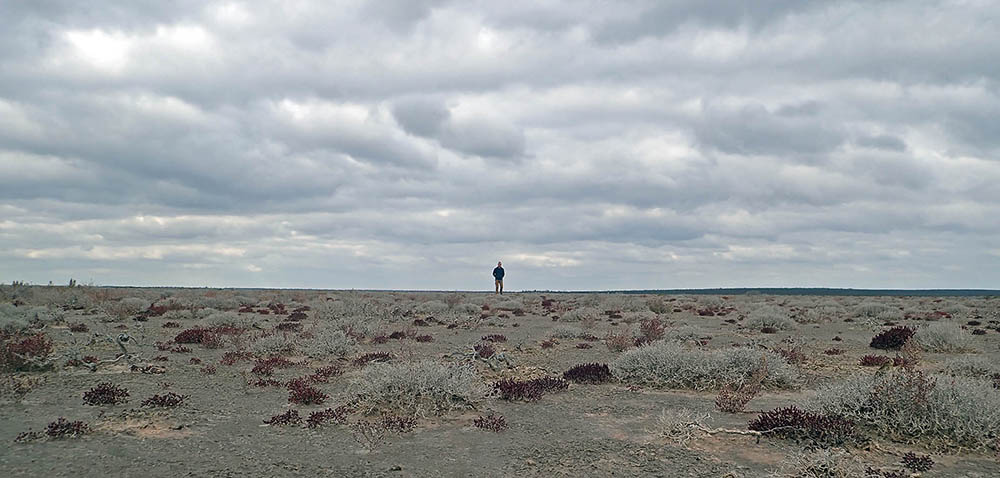 the author isolating during covid in the chenopod shrublands of arid Australia
Written by Damon Ramsey. All photographs by author (unless credited otherwise). This is not AI written. Images and information are added to this website continuously as of 2026. Feel free to copy photographs for educational purposes, but please acknowledge with: www.ecosystem-guides.com. Ecosystem Guides posts pretty shots on Instagram and some sillier photos on Facebook. Contact Email: damon@ecosystem-guides.com
Search this website (and the wider internet):
For books in the "Ecosystem Guides" series on Amazon (international) click on the book cover below
(or go to your country specific Amazon website to order, for example, click here for Amazon Australia)