ecosystem-guides
....exploring the planet's ecosystems
ARCTIC
(open) Ocean
The open waters of the cold Arctic Ocean are not as wildlife rich as they once were, but hopefully the whales are coming back...
During the summer in the Arctic there is a short but impressive explosion of underwater planktonic life. At this time there are several 'Comb Jellies' you might spot, including Beroe cucumis (image below). These are not related to the true Sea Jellies, and have a different structure. They move around by tiny rowing cilia, and when these catch the light they create a pleasing rainbow shimmering...
 The Northern Comb Jelly, Amerlog fjord, Greenland
One of the most entertaining planktonic critters are the ‘Arctic Sea Butterflies’ Limacina helicina. These cute animals are no bigger than a marble and bobble about in jiggling groups. They have a tiny purple black snail shell, which may be difficult to distinguish on first look. And at particular angles you might see luminescent blue stripes. They swim by flapping with little ‘wings’, modifications of their mollusc 'foot'.
 ‘Arctic Sea Butterfly’ (Qeqertarsuaq, Greenland)
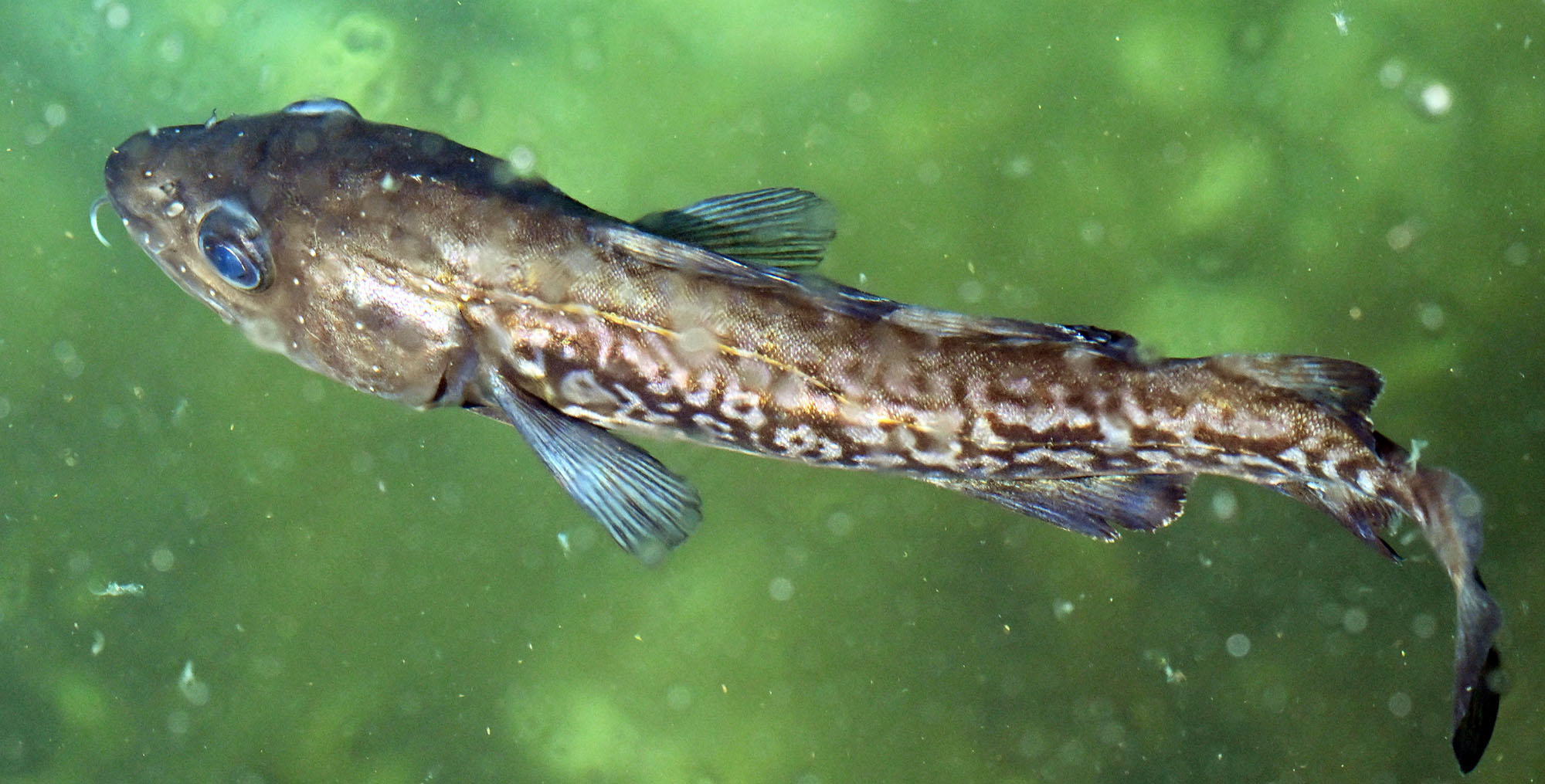
Most fish you see in the Arctic are those that are caught by the humans there and pulled into a boat. One species that has been overfished in the North Atlantic is the 'Atlantic' or 'Northern Cod'. In the slightly less cold waters of the Atlantic they are found in deeper water, but on a clear summer day in protected areas along the Arctic Ocean, you might be lucky enough to see one near the surface. This species and the Greenland Cod are distinguished from the Arctic Char by having a very clear lateral line, and catfish-like barbels.
The 'tubenose' order includes a range of the most open ocean adapted seabirds, such as Albatross, and all the different types of 'petrels'. However, the skies and cold seas of the Arctic are not full of different species of tubenose like the Southern Ocean. This makes sea-bird watching a little easier! By far the most commonly seen species in this region is the Fulmarus glacialis 'Northern Fulmar'.
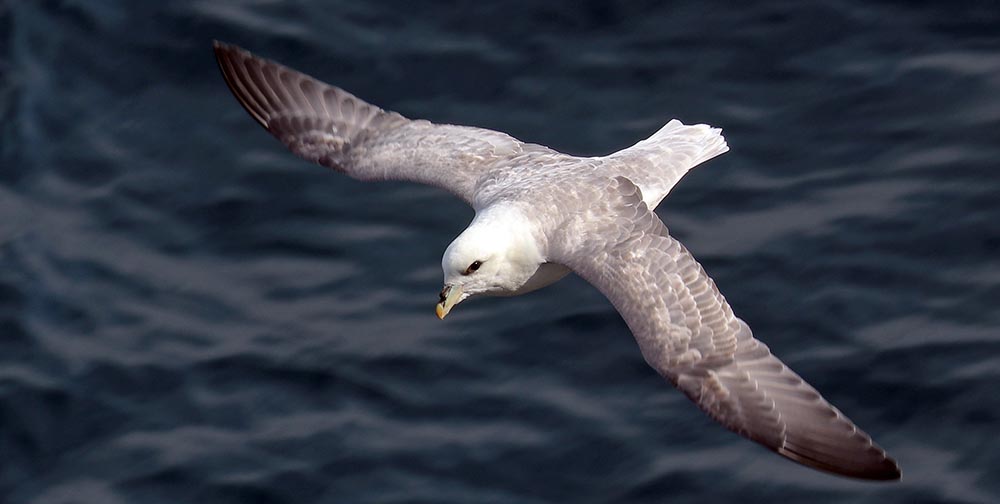 (Baffin Bay, off Greenland)
On the surface of the sea you might be lucky to see one of the species of bird from the Auk family. In the southern Arctic are some colonies of the distinctive Razorbill...
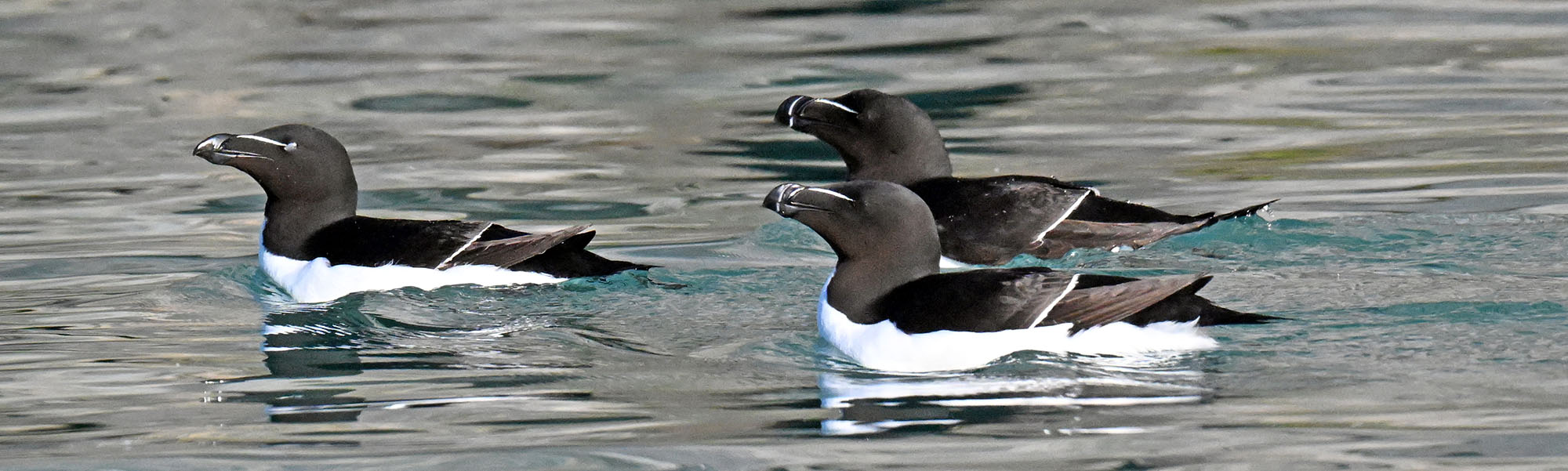 Razorbills (Evighedsfjord, Greenland)
Another more commonly seen species in the same family is Cepphus grylle, the ‘Black Guillemot’. It vaguely resembles a small duck when in the water, and a coot when taking off, with it’s black body, white wings and bright red legs. They feed on fish (large relative to their size), which they catch one at a time.
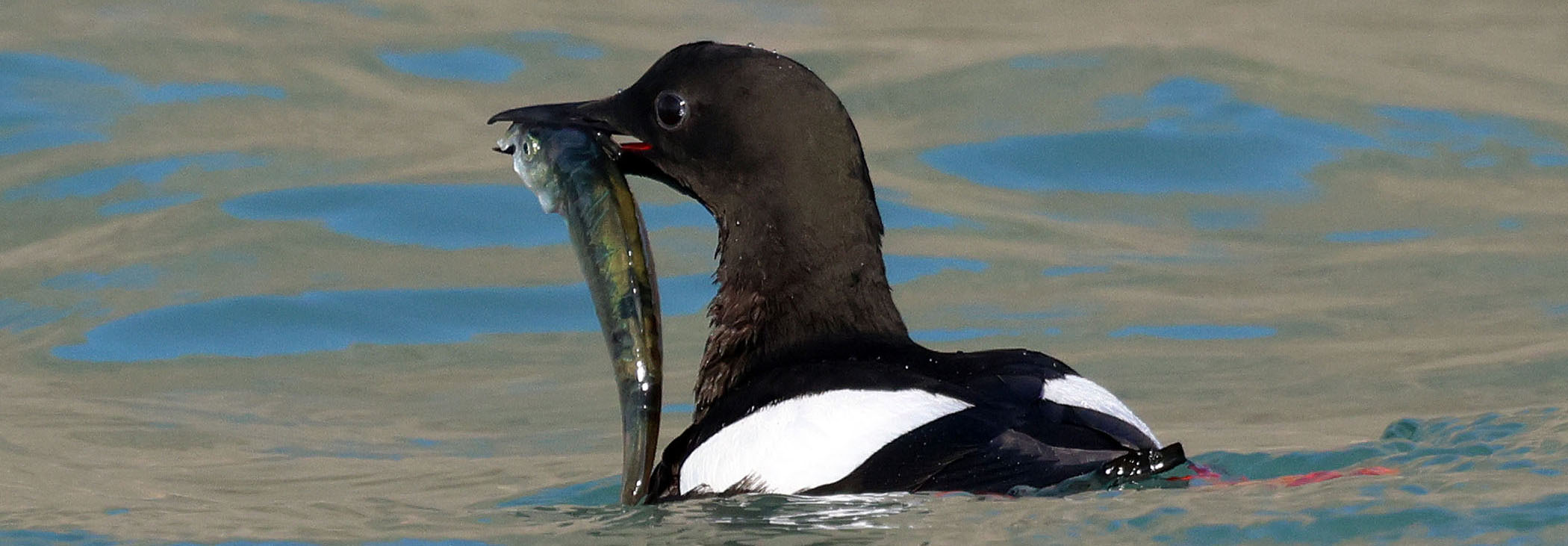 (Svalbard)
Due to historical (and continuing) whaling by humans, none of these whales in Arctic are particuarly 'common', but it is hoped they will slowly start to re-populate the oceans. (Otherwise, Captain Kirk will have to go back in time, again.) The Fin Whale is one of the more commonly seen of the larger whales in Arctic waters. They are the second biggest animal on the planet (after the Blue Whale) and grow to a confirmed length of 25 metres. The dorsal fin is relatively small.
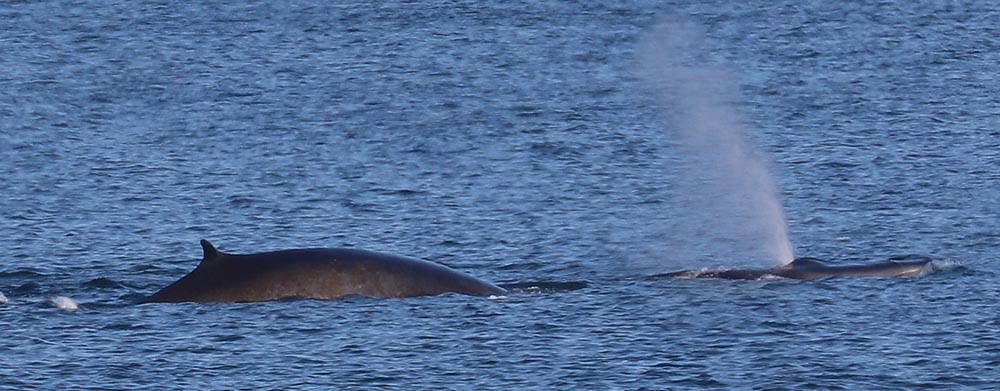 'Fin Whale', (Ilulissat, Greenland)
Places to experience the Arctic sea and shore
With Russia currently effected by war, the main areas of the Arctic to explore are Alaska, northern Canada, Greenland, and Svalbard. One of the results of climate change is the opening up of the north-west passage to ships.
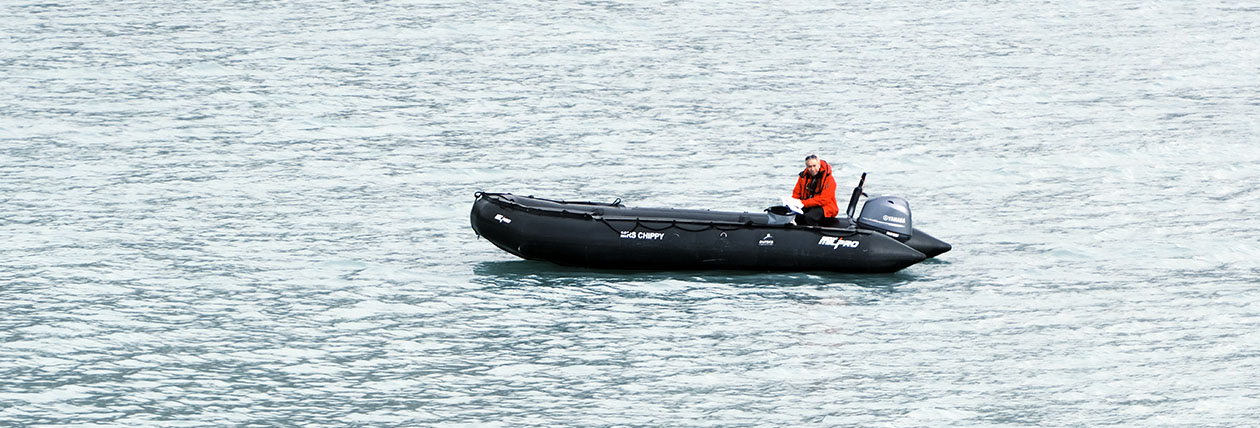 The author all rugged up and doing some last minute reading before a zodiac cruise in the Arctic Ocean
Other related habitats...
In from the open ocean is the Arctic coast and further out is the sea ice. Inland from this cold seashore is the Arctic tundra and the Polar desert. At the other end of the Earth, the southern equivalents are the Subantarctic ocean, the Subantarctic seashore, and the Subantarctic tundra. Even further south are the oceans and shores of Antarctica.
About the author
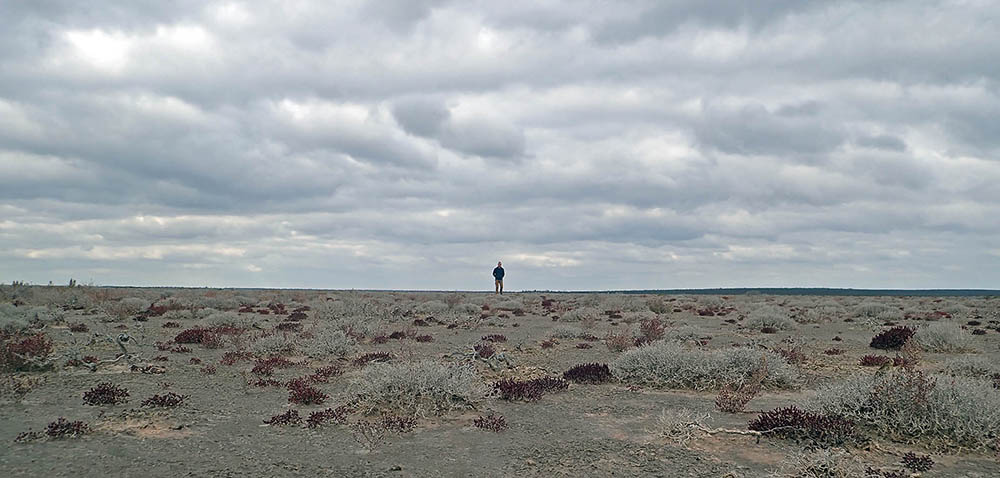 the author isolating during covid in the chenopod shrublands of arid Australia
Written by Damon Ramsey. All photographs by author (unless credited otherwise). This is not AI written. Images and information are added to this website continuously as of 2026. Feel free to copy photographs for educational purposes, but please acknowledge with: www.ecosystem-guides.com. Ecosystem Guides posts pretty shots on Instagram and some sillier photos on Facebook. Contact Email: damon@ecosystem-guides.com
Search this website (and the wider internet):
For books in the "Ecosystem Guides" series on Amazon (international) click on the book cover below
(or go to your country specific Amazon website to order, for example, click here for Amazon Australia)