ecosystem-guides
....exploring the planet's ecosystems
PALEARCTIC (EURASIAN)
Alpine Coniferous Forest
of Europe
The forests of the higher mountains in Europe are dominated by conifers...and great views.
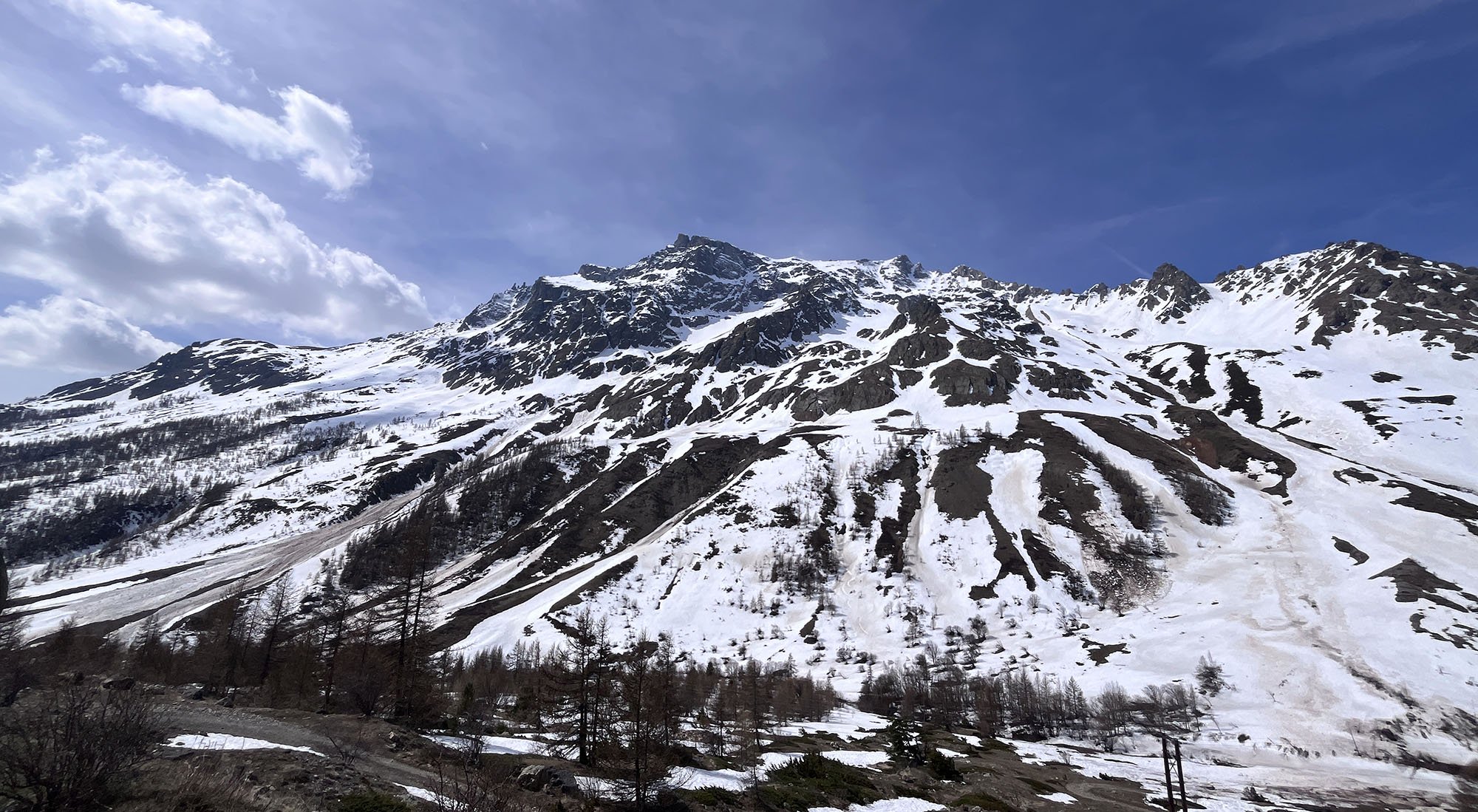
As you travel up into the mountains of Europe, the forests of Willow, Beech and Oak start to lessen, and a few species of conifer begin to dominate (image below). Increasing altitude is the climatic equivalent of increasing latitude, so this shift in species also occurs when heading further north into the boreal forests. Many species are shared between the two separated regions.
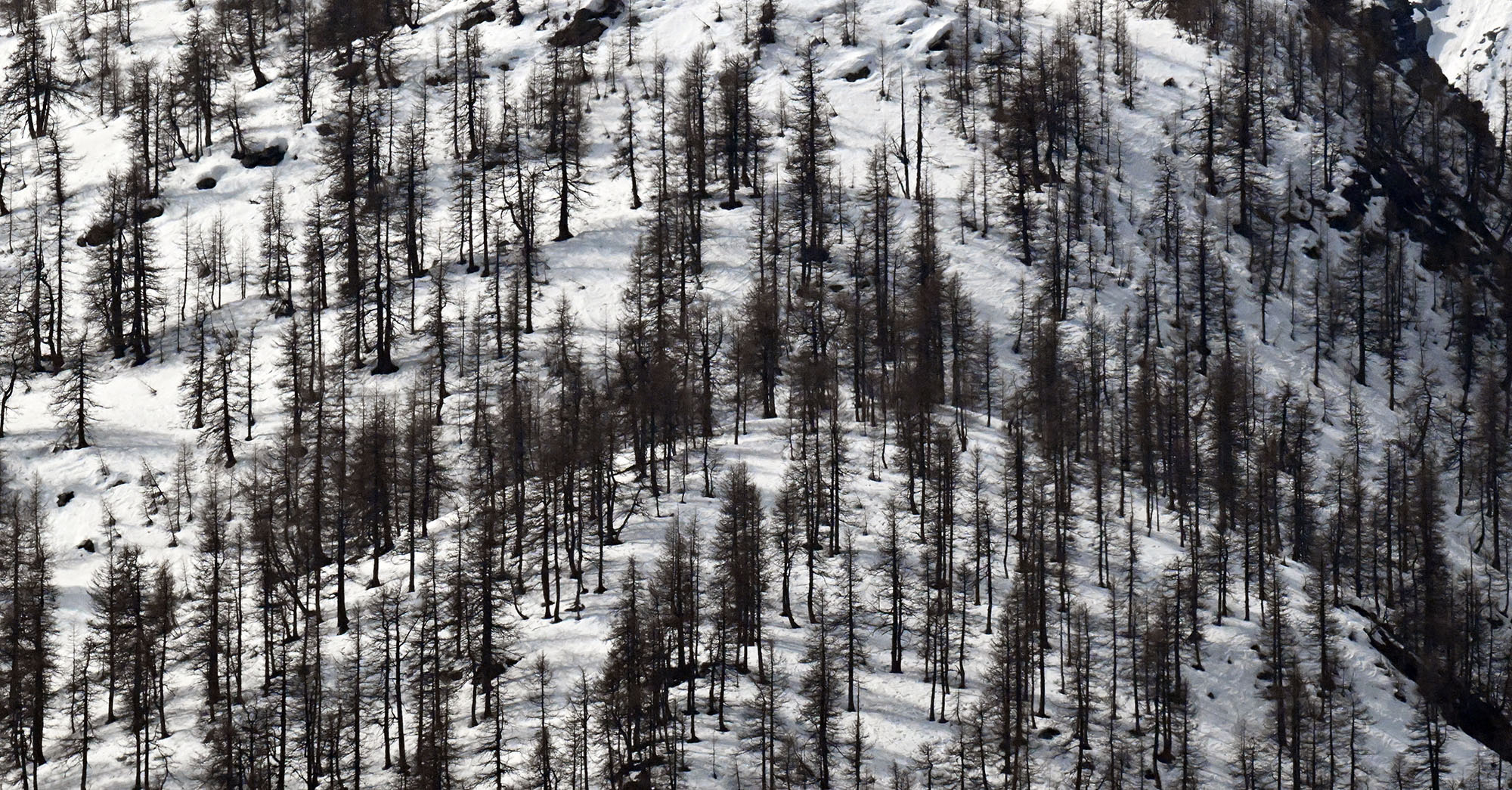
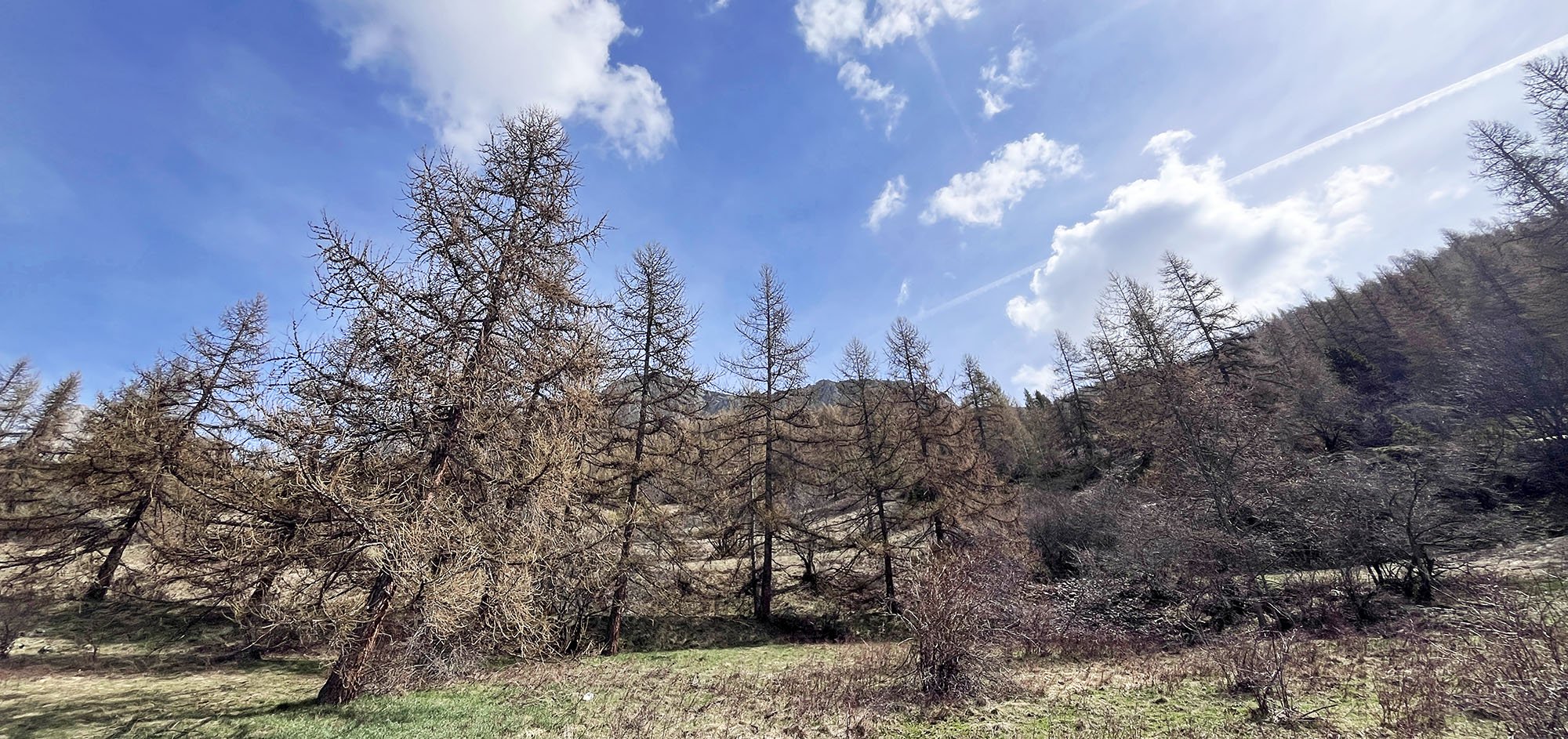
As implied by the name, the conifer forests are dominated by these conifers. There is a range of different types. Some develop the familiar cones, some have small colourful berries. Most are recognised for their evergreen nature, but there are also deciduous species. The most significant leaf-dropping conifers are the 'Larches' Larix, that look scraggly (image below), before their summer regrowth.
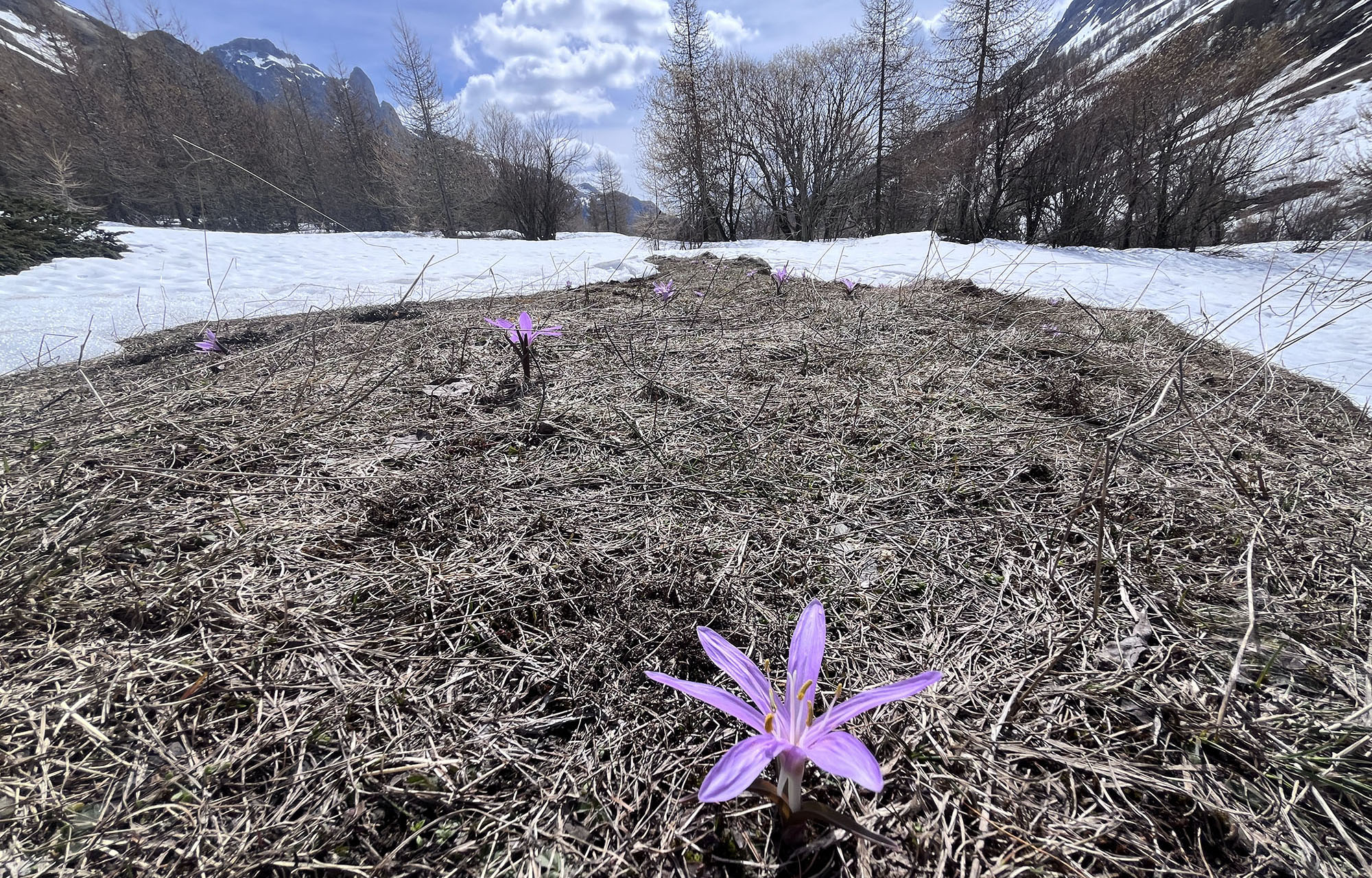
In spring, flowers start to appear as the snow melts from the more sun-exposed parts of the ground. Annual flowers that grow from scratch evry year, such as many temperate daisies, take a while to get going. But the perennial plants, like lilies and Iris (such as the Crocus below) are waiting just under the ground layer, and can send up a flower up as soon the days start to lengthen and the snow above them has melted.
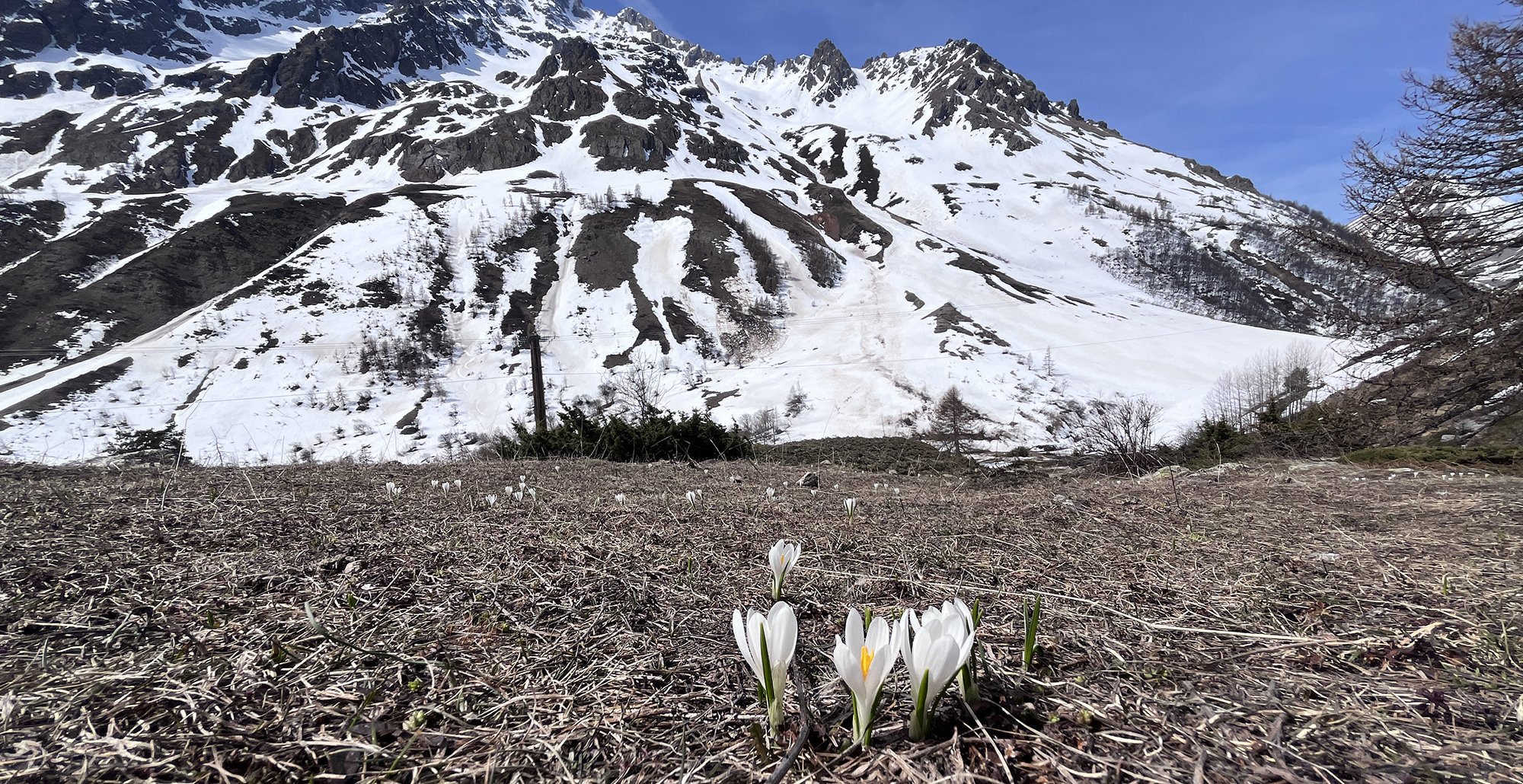 Spring Crocus (French Alps)
Other species of flower you might see emerge in spring are the pretty (but poisonous) pink coloured petals of the 'Spring Meadow Saffron' Colchicum bulbocodium (image below).
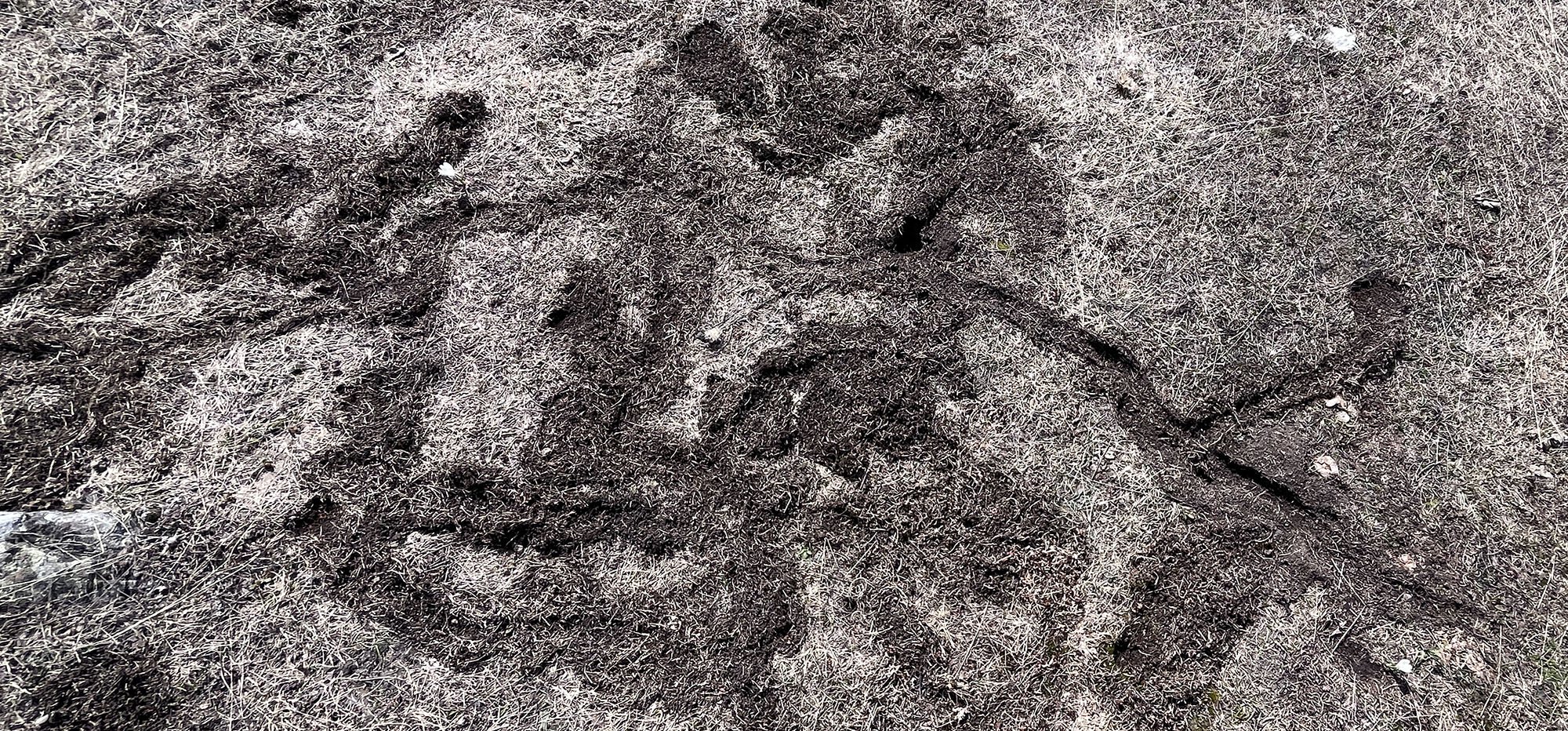
You may not see the smaller mamamls, but their signs are common. When the snow first melts in spring, the tracks and tunnels of small rodents called Voles are revealed (image below).
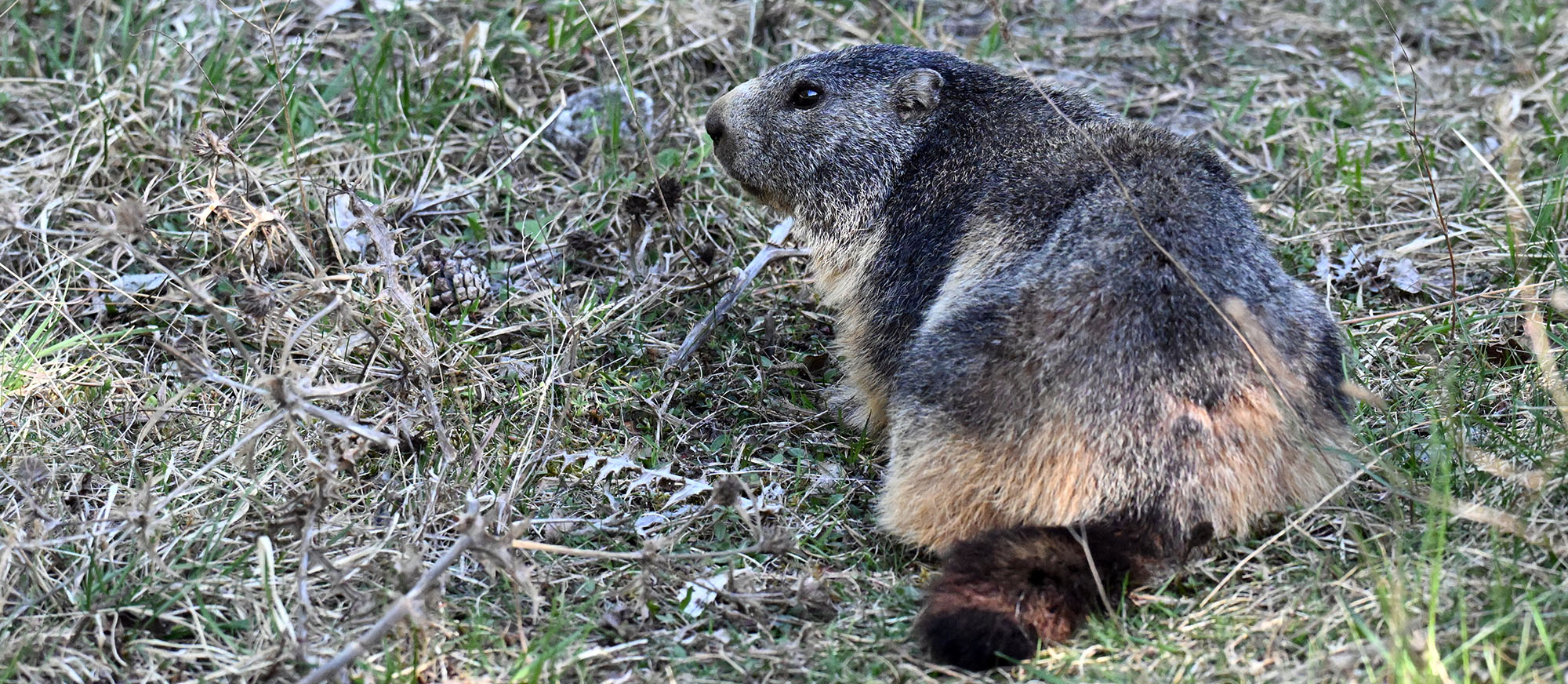
The most obvious native mammal you might see in the European Alps is the Alpine Marmot (image below). They hibernate underground in the winter, but they can also overeat in the summer, so they tend to come out and feed in the morning or afternoon starting from spring. The marmots are chubby cuties found across the mountains of Eurasia and North America, and are the heaviest of all the squirrels.
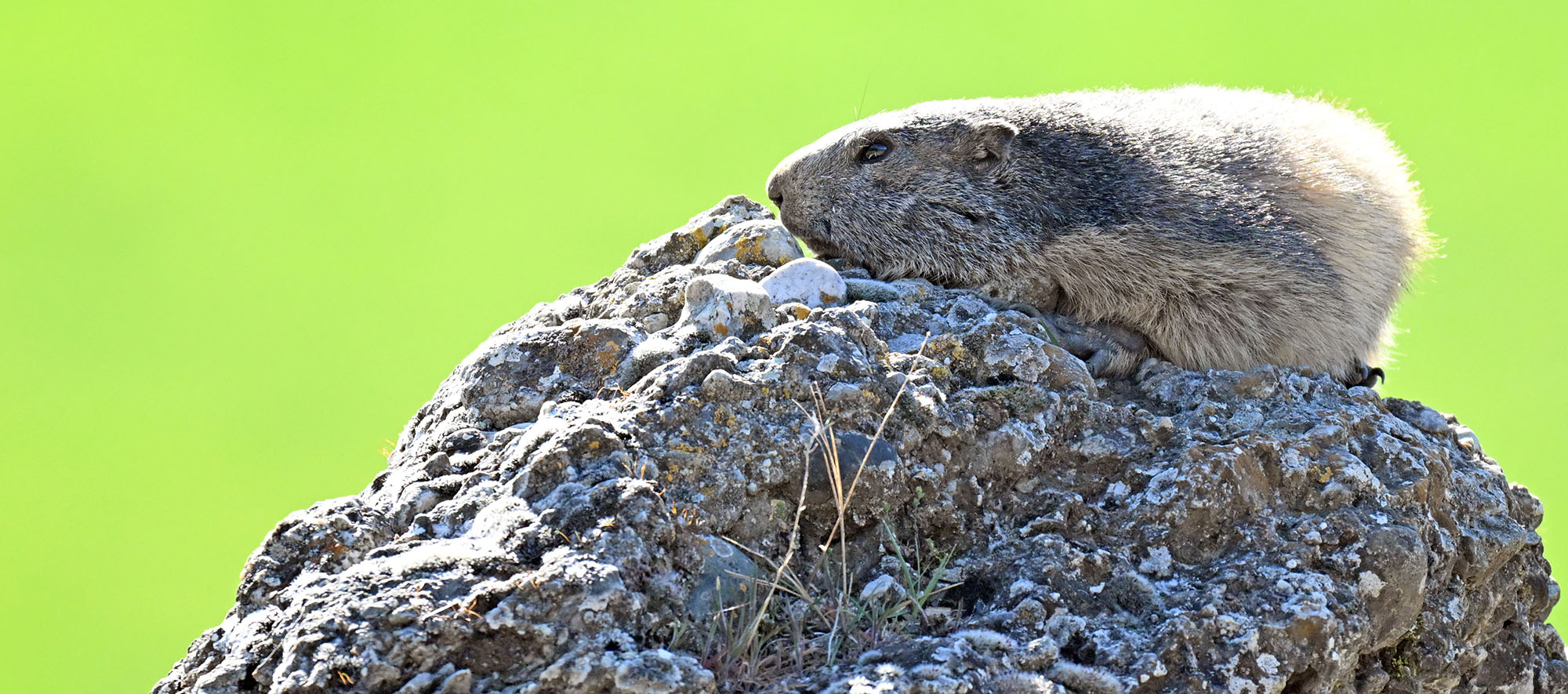
Marmots often rest on boulders in their usually rocky habitat. They use the surface to thermoregulate, heating up or cooling down, depending on the time of the day. It's also a good view point. They blend in quite well, and just look like another rock, as in the image below showing an Alpine Marmot resting on a rock: yes, that is a grassy field behind the mammal, not a green screen!
Places to experience the Alpine conifer forest of Europe
There are several mountain ranges across mainland Europe that have conifer forest with wildflowers to enjoy and marmots to look for, including the Pyrenees between Spain and France, and the Carpathian Mountains in far eastern Europe. The largest and most famous mountains in Europe are of course the Alps of central Europe. They cross (and historically helped define) the borders between France, Italy, Austria and Switzerland. Most of the images here were taken in a very brief couple of days in the alpine areas of eastern France, just half a day's drive from Paris. Here, there are great roads, plenty of hotels, walking tracks, and incredible views.
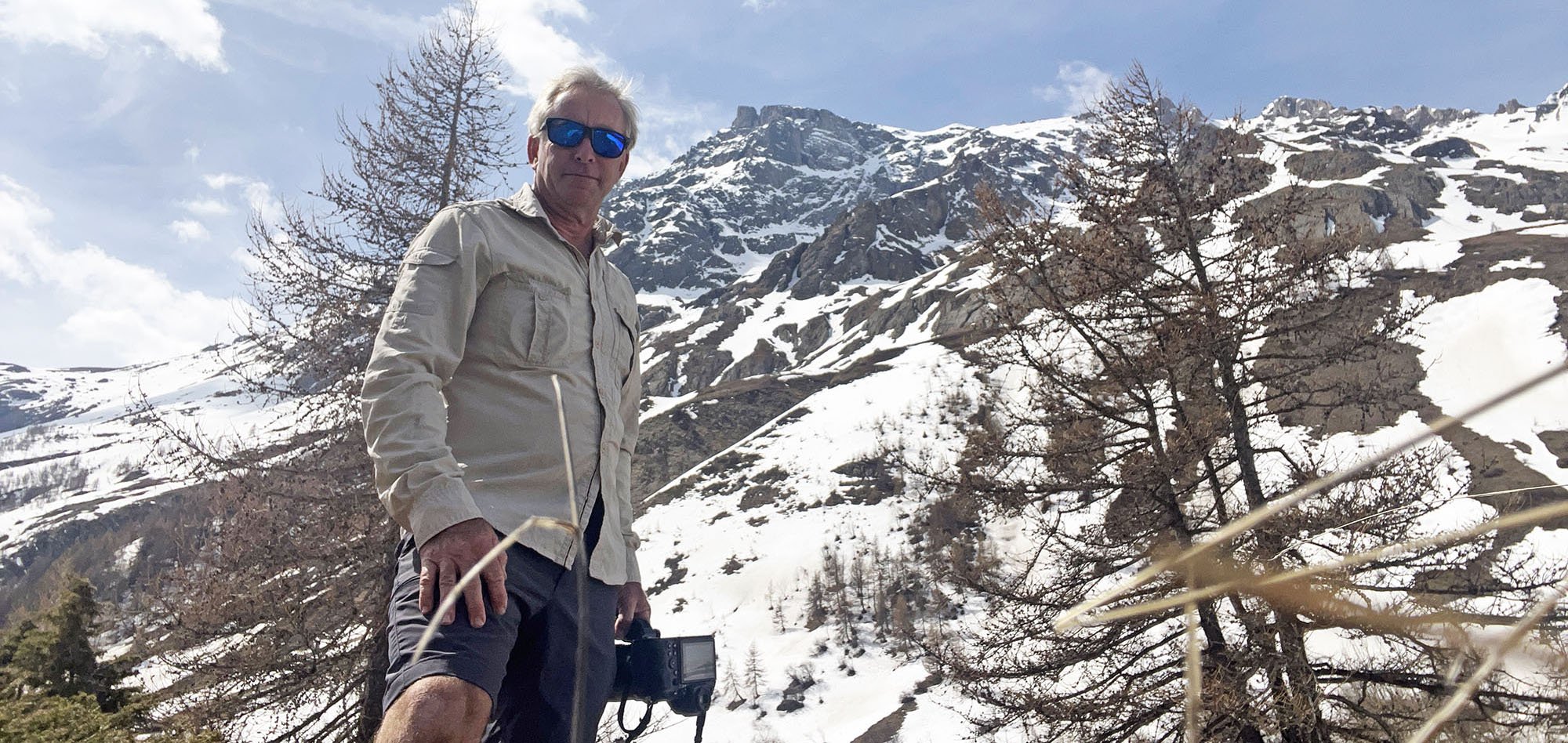
About the author
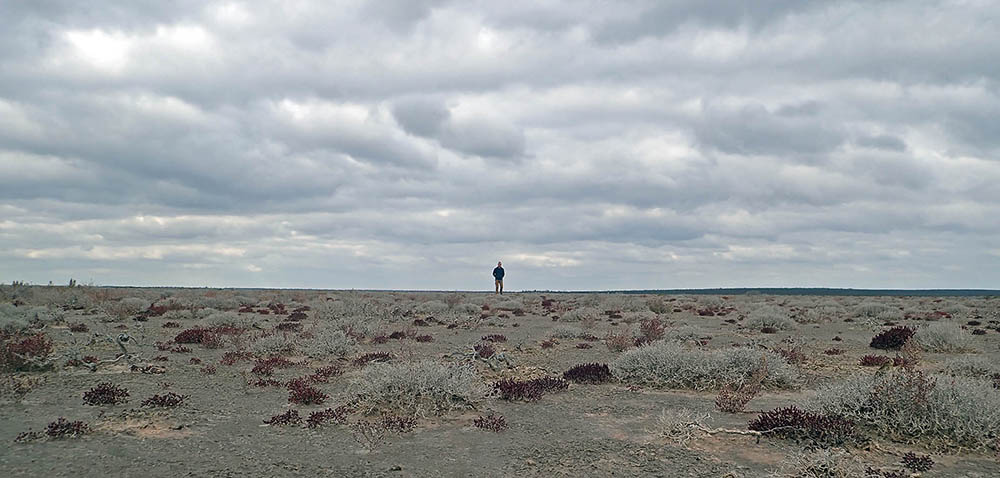 the author isolating during covid in the chenopod shrublands of arid Australia
Written by Damon Ramsey. All photographs by author (unless credited otherwise). This is not AI written. Images and information are added to this website continuously as of 2026. Feel free to copy photographs for educational purposes, but please acknowledge with: www.ecosystem-guides.com. Ecosystem Guides posts pretty shots on Instagram and some sillier photos on Facebook. Contact Email: damon@ecosystem-guides.com
Search this website (and the wider internet):
For books in the "Ecosystem Guides" series on Amazon (international) click on the book cover below
(or go to your country specific Amazon website to order, for example, click here for Amazon Australia)