Home
EcosystemGuides
COUNTRIES
Australia
Costa Rica
French Polynesia
India
Indonesia
Malaysia
New Zealand
Papua New Guinea
Philippines
Solomon Islands
SITES
Bako
Bohol
Bora Bora
Borneo
Cairns
Chambers Lodge
Daintree
Damawewe Caves
Donsol
Etty Bay
GreatBarrierReef
Hinchinbrook
Hypipamee Crater
KinabaluHQ
KinabaluNationalPark
Lizard Island
Maravagi
Marovo Lagoon
Mesilau
Michaelmas Cay
Mt.Kinabalu
New Guinea
Oceans
Orpheus Island
Panagsama
Polynesia
Poring Hot Springs
Possum Valley
Ribbon Reefs
Sepik River
Southern Oceans
South-east Asia
Subantarctic
Sydney
TamanNegara
White Island
WineglassBay
WHERE TO FIND...
Birds
Birds of Paradise
Birds of Prey
BooksOnNature
Butterflies&Moths
Cassowary
Coffee
Dolphins
Expeditions
Field Guides
Fish
Flowers
Insects
Jellyfish
Kangaroos
Koala
Marsupials
Penguins
Rafflesia
RainforestAnimals
RainforestFlowers
Rainforest Plants
Seashells
Sharks & Rays
Snakes
Spiders
TourCompanies
Wallabies
Whales
Whale Sharks
ECOSYSTEMS
AustralianRainforest
EucalyptWoodlands
Mangroves
Rainforest
Savanna
Tropical Seas
TropicalSeashores
DAMON RAMSEY
Services
Qualifications
My Schedule
WorkHistory
Lecturer
Books
Documentaries
Contact Details
Ecotourism
PrinceFrederickHarbour

Wineglass bay...


personal experience...

I have visited Tasmania previously as a guide for wildlife groups. I have recently visited the Wineglass Bay area with the expedition cruise ship Orion. We accessed the beach both by walking trail, and also by zodiac.

Geography and History

Wineglass Bay is one of the more famous 'beautiful' beaches of the world. It is often assumed to be called 'wineglass' due to the circlar shape of a glass and the clear water contained within, but it has also been suggested the name came from the colour of blood and guts resulting from previous whaling activities.

Access

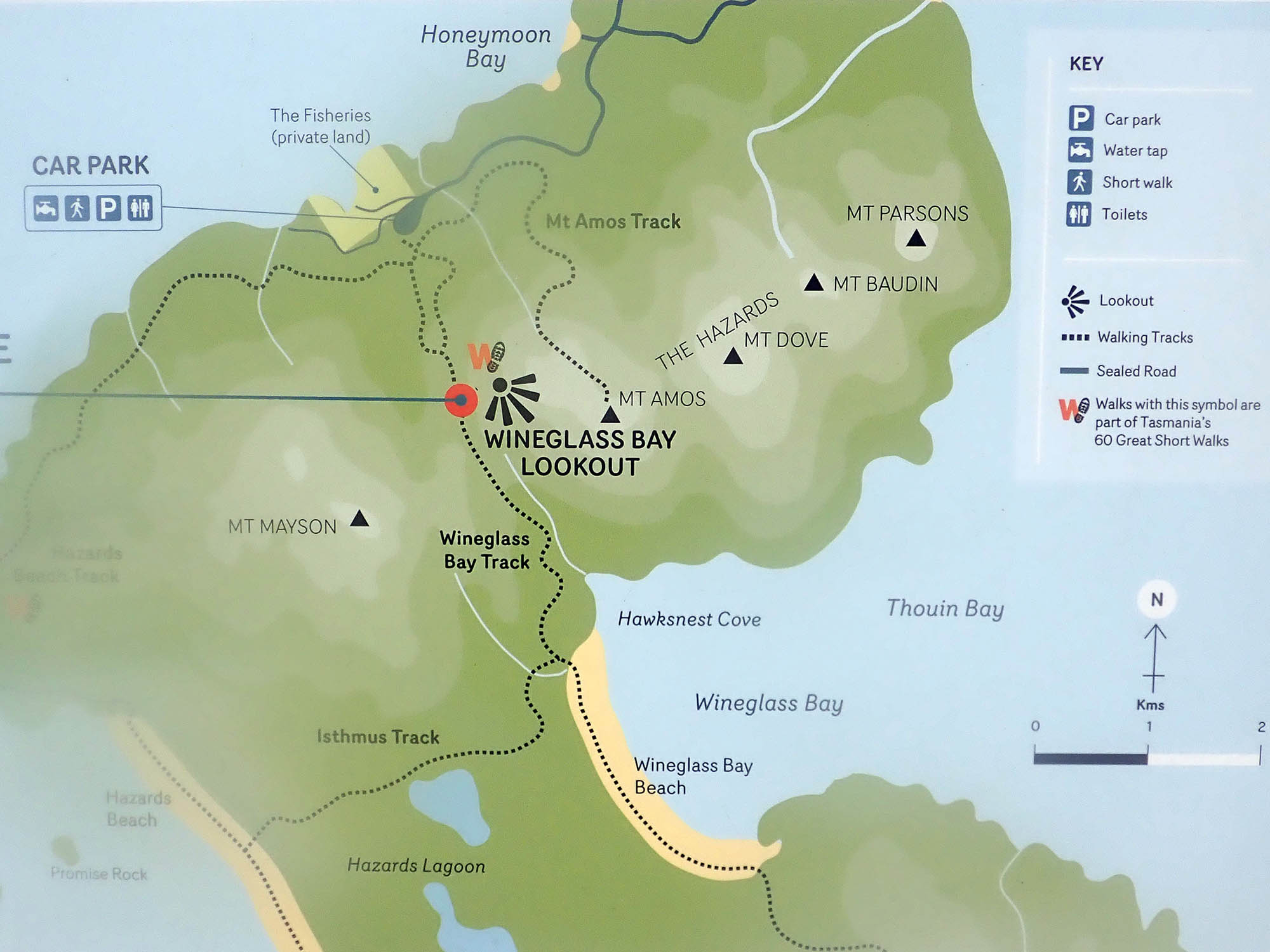
Despite the fame of Wineglass Bay beach, it is perhaps surprisingly that you can not actually drive to it. Perhaps this is part of its appeal; you have to work to get there. The walk leaves from Coles Bay, passes up over a ridge with great views, and takes about an hour and a half to get to the beach (or longer with stops).

Wildlife & Nature

The walk passes through various habitats. in the Spring, there may be loads of Kunzea flowering, and when this happening the first half of the track is covered in bushes with white flowers which are buzzing with various insects. On the way up you go past several eucalypts with 'scribbles' made by moth larvae.

Kunzea flowers at Wineglass bay, Tasmania, photograph by Damon Ramsey, www.ecosystem-guides.com


The views from the ridge, about halfway along the walk, are great. They look down over the white sand of Wineglass Bay. On the way up, there are also great views of the rounded granite walls. Down towards the beach, the walk passes through Casuarina forest.

Casuarina stand, Wineglass Bay, Tasmania, (photograph by Damon Ramsey, www.ecosystem-guides.com)

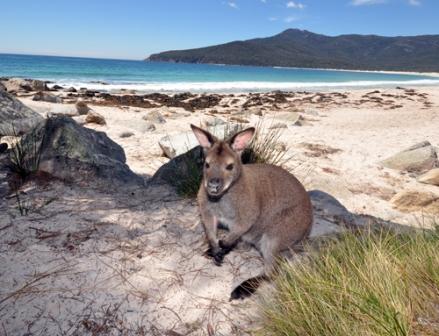
There is often an individual Bennets wallaby on the beach. It bounces along between backpacks looking for a food handout.

Bennets wallaby, Wineglass Bay, Tasmania, (photograph by Damon Ramsey, www.ecosystem-guides.com)

The beach is fine and white in colour. There are dunes behind the beach, and at the other end of the beach, there is backwater which is tea-stained from Leptospermum 'tea tree'. There are often Pacific Gulls and Pied Oystercatchers on the beach, and there are sometimes nests of the latter birds on the beach .

Pied Oystercatcher, Wineglass Bay, Tasmania, (photograph by Damon Ramsey, www.ecosystem-guides.com)


Oystercatcher Eggs, Wineglass Bay, Tasmania (photograph by Damon Ramsey, www.ecosystem-guides.com)


On the day I was last there, recent wild weather meant there was much seaweed washed up, as well as dozens of 'blue bottles'.

Blue bottle washed up on sand, Wineglass Bay, Tasmania, (photograph by Damon Ramsey, www.ecosystem-guides.com)