Hypipamee Crater
Atherton Tablelands, Queensland, Australia
This national park in Queensland has a spectaularly steep volcanic crater to see during the day, and the best highland endemic mammal spotlghing in Australia at night...
Personal experience
I have visited this park many times by day and night as a guide for various wildlife and student groups, and returned there many times for photographs.
geology
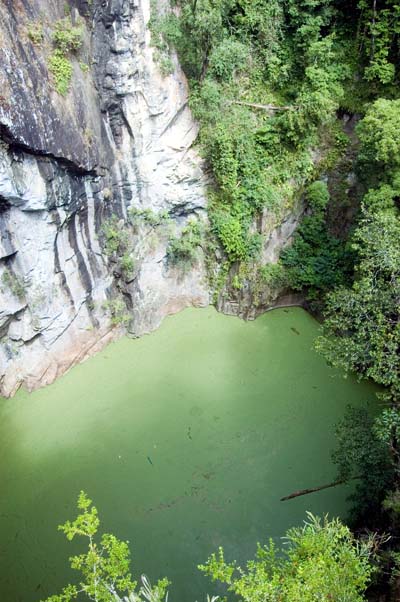
The main feature of this park for most people is the volcanic Crater. This type of crater in known as a diatreme. It is a very steep hole, blasted through the overlying granite when hot molten rock met cool water. Indeed, some people find the name Hypipamee hard to say, so they often just say 'the crater'. Part of the walk extends out over the crater, which can be daunting. A recent diving expedition found that the crater had a maximum depth of 75 metres, and there did not seem to be any tunnels or connections to any other bodies of water.
Rare mammals
So this is THE place to go if you want to spotlight possums, particularly the endemic highland possums of North-east Australia, such as the coppery form of the Brushtail Possum, or the endemic Lemuroid ringtail Possum...
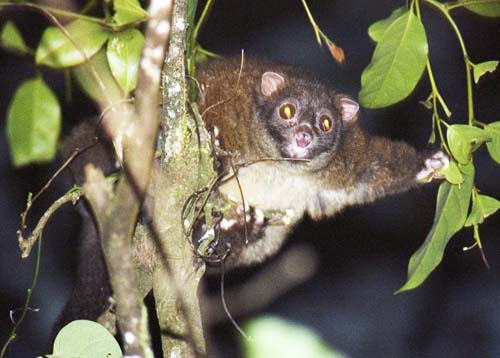
...or the endemic "Green Ringtail Possum"
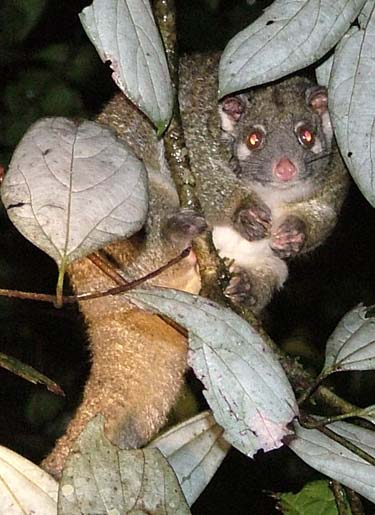 green ringtail possum
birds
Recently a cassowary has been hanging around the carpark and I have also seen it on the road on the way in. It's big. I have been blocked on the track by a cassowary with a bird group many years ago (I had the bird group, not the cassowary). The carpark picnic area is a good place to see Brush Turkeys, bridled Honeyeaters, Spotted Catbirds, and Grey-headed Robins.
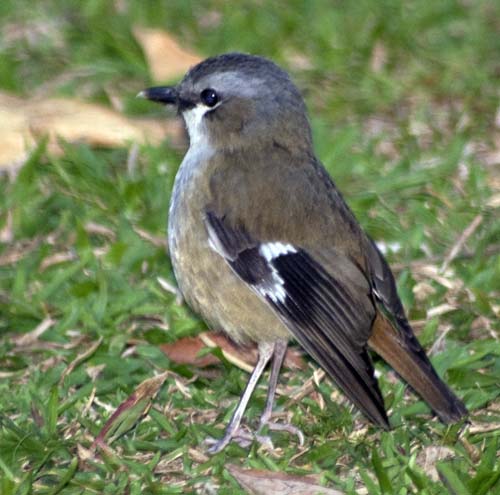
There are also Golden bowerbirds around, but they are hard to see. For them, and other highland rainforest birds, you are better off up the road at Possum Valley, where there is less of the general public.
For more information on the rainforest of Australia, refer to the Ecosystem Guides book: "Tropical Rainforest of Australia".